Read The Times Australia

Daily Bulletin

How rising inequality is stalling economies by crippling demand

  • Written by: Stephen Bell, Professor of Political Economy, The University of Queensland
How rising inequality is stalling economies by crippling demandAggregate demand is being hit by the concentration of income growth among the top earners and is now a drag on economic growth.Shutterstock

Rising inequality is a concern across the developed economies, including Australia where top earners’ pay has soared to a 17-year high while ordinary workers’ wage growth has been the lowest on...

Read more …

How an alien seaweed invasion spawned an Antarctic mystery

  • Written by: Adele Morrison, Research Fellow, Australian National University
How an alien seaweed invasion spawned an Antarctic mysterySouthern bull kelp can drift huge distances before washing ashore.Ceridwen Fraser, Author provided

Two small pieces of seaweed found by a Chilean scientist on an Antarctic beach set in train research that may transform our understanding of ocean drift and reveal what the future holds for Antarctic ecosystems affected by climate change.

It all...

Read more …

A brief history of briefs – and how technology is transforming underpants

  • Written by: Alana Clifton-Cunningham, Lecturer in Fashion and Textile Design, University of Technology Sydney
A brief history of briefs – and how technology is transforming underpants

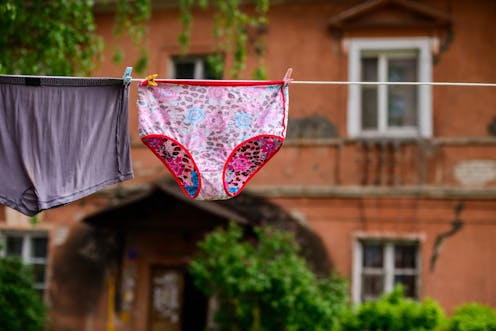
Underpants. We tend not to talk about them but they are a fact of life (unless you go commando). Briefs have a fascinating history and are now being transformed by technology, with high-performance undies that claim to do everything from filtering flatulence to emitting soothing vibrations.

A brief history of briefs – and how technology is transforming underpants

An Egyptian loincloth. 

The first type of underpant was the loincloth worn by ancient Egyptians. Known as a schenti, it was made from woven materials, commonly cotton and flax, kept in place with a belt. The lower classes and slaves were almost naked, so technically this loincloth was often “outerwear”. But Egyptian art from 1189 BC to 1077 BC in the Valley of the Queens shows pharaohs wearing sheer outer garments, rendering the loincloth a type of underpant.

In Europe, during the Middle Ages (500-1500 AD), underwear consisted of a shirt made of fine linen or cotton for both men and women. A form of underpant returned during the 15th and 16th centuries, when men’s leg-hose were bifurcated (split in two).

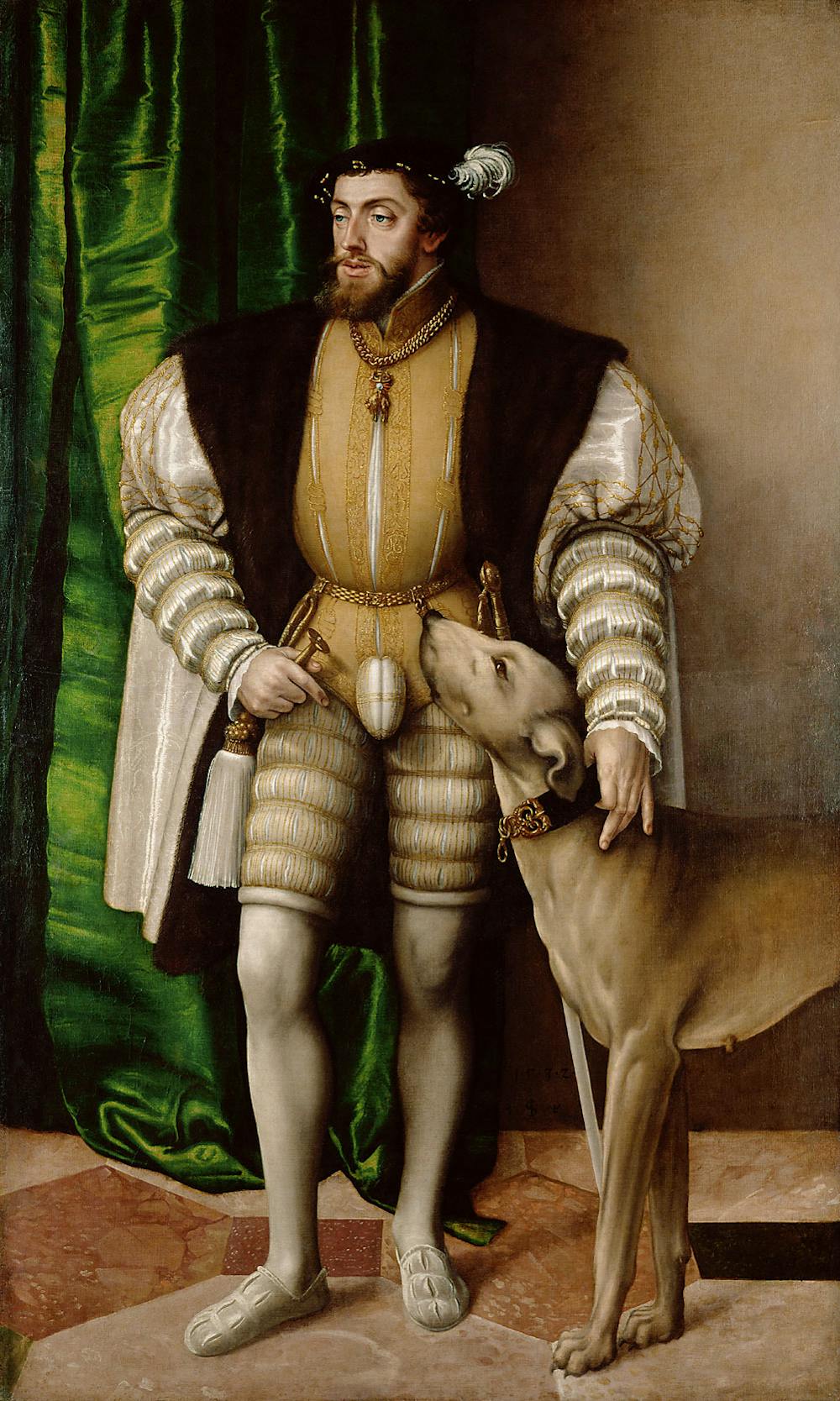
To provide extra protection for the male genitalia, a padded codpiece was added. The codpiece also served as a symbol of sexual energy, designed to enhance rather than conceal the genital area.

A brief history of briefs – and how technology is transforming underpants

Jakob Seisenegger’s Portrait of Emperor Charles V with Dog (1500-1558) also features a prominent codpiece. 

The arrival of drawers

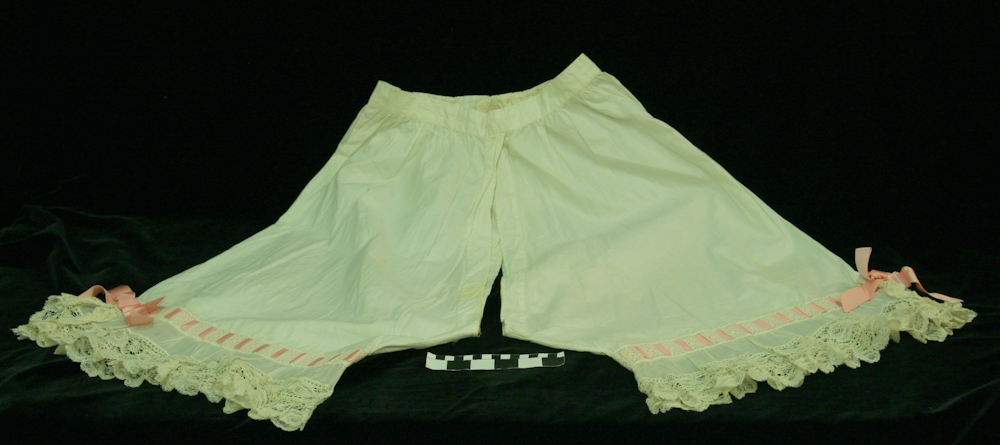
In the early to mid 19th century, both men and women wore bifurcated drawers with separate legs – a loose type of knee-length trousers suspended from the waist. This simple style of underpant made relieving oneself more manageable, especially if several layers of petticoats or breeches were worn.

A brief history of briefs – and how technology is transforming underpants Woman’s batiste lace-trimmed drawers, circa 1896. Wikimedia Commons

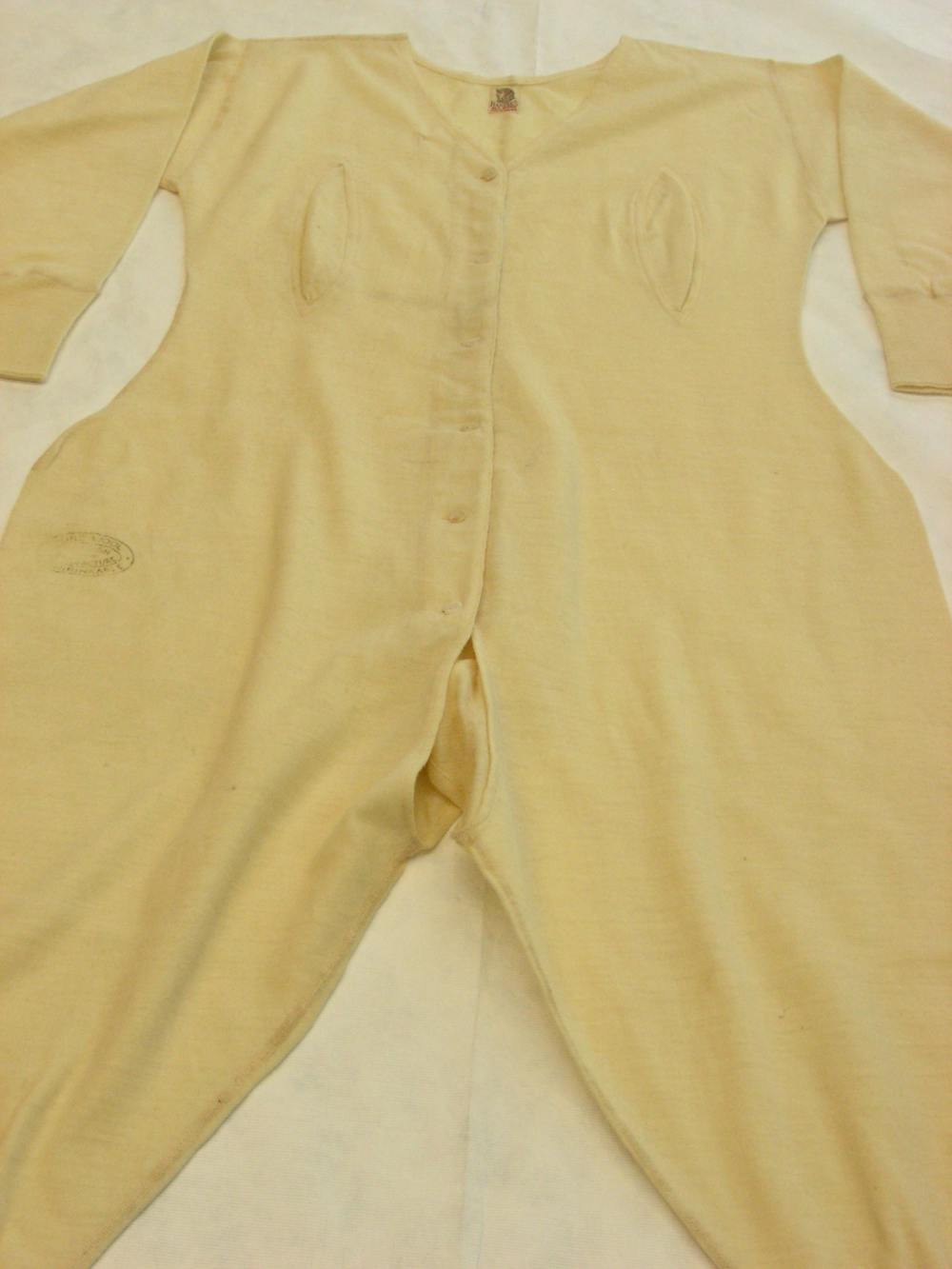
Closed crotched underpants for women (pantalettes) emerged in the mid to late 19th century. In 1882, dress reformer Dr Gustave Jaeger argued that wearing natural woollen fibres next to the skin would help disperse bodily poisons by allowing the skin to breathe. He also felt the elasticised qualities of knitted garments were more likely to promote exercise.

A brief history of briefs – and how technology is transforming underpants


Woollen all-in-one, cream woman’s long johns; made in England, date unknown. Wikimedia Commons

Also in the 19th century, the popularity of long-legged trousers for men led to a change in men’s underpants, with hose (long johns) extending to the ankle. These were made of silk for the wealthy and flannel, or later wool, for the masses.

For women in the early 1900s, getting dressed involved multiple layers of undergarments including chemise and drawers followed by a constrictive corset. During the first world war more women undertook physical labour in factories, mines and farms, and thus needed utilitarian garments. The silhouette of outerwear such as loose trousers and boiler suits paved the way for knickers, which women began wearing from around 1916. From the 1920s, the corset was gradually replaced by less restrictive elasticated versions such as the girdle and “step-ins” gradually replaced the corset.

Latex, a rubber yarn introduced in 1930, allowed stretch undergarments to become more figure-hugging. These eventually evolved into underpant styles similar to those worn today. In 1938, after the invention of the synthetic fibre nylon, lightweight easy-to-launder underwear started to appear.

Shorter, crotch-length underpants or trunks for men appeared after 1945. In 1959, a new man-made elastomeric fibre called Lycra™ was invented. Combined with cotton or nylon, it was strong, stretchable and recovered well. The result was more body-conscious underpants for men and women.

A brief history of briefs – and how technology is transforming underpants

Underpants have become more form-fitting. BishopA4 XTG_Extreme_Game/

In the more permissive 1960s, underpants became briefer for both sexes and the Y-front was largely eliminated from men’s undies. By the 1970s, underpants were virtually seamless. (The thong, or G-string, I would argue, is hard to define as an underpant – its chief popularity seems to be that it offers wearers an invisible pant line.)

Undulating futures

With advancements in fibre technologies and knitting manufacturing, underpants today can be as unassuming as a pair of Aussie Bonds briefs, or high-tech with the inclusion of haptic communication.

A brief history of briefs – and how technology is transforming underpants

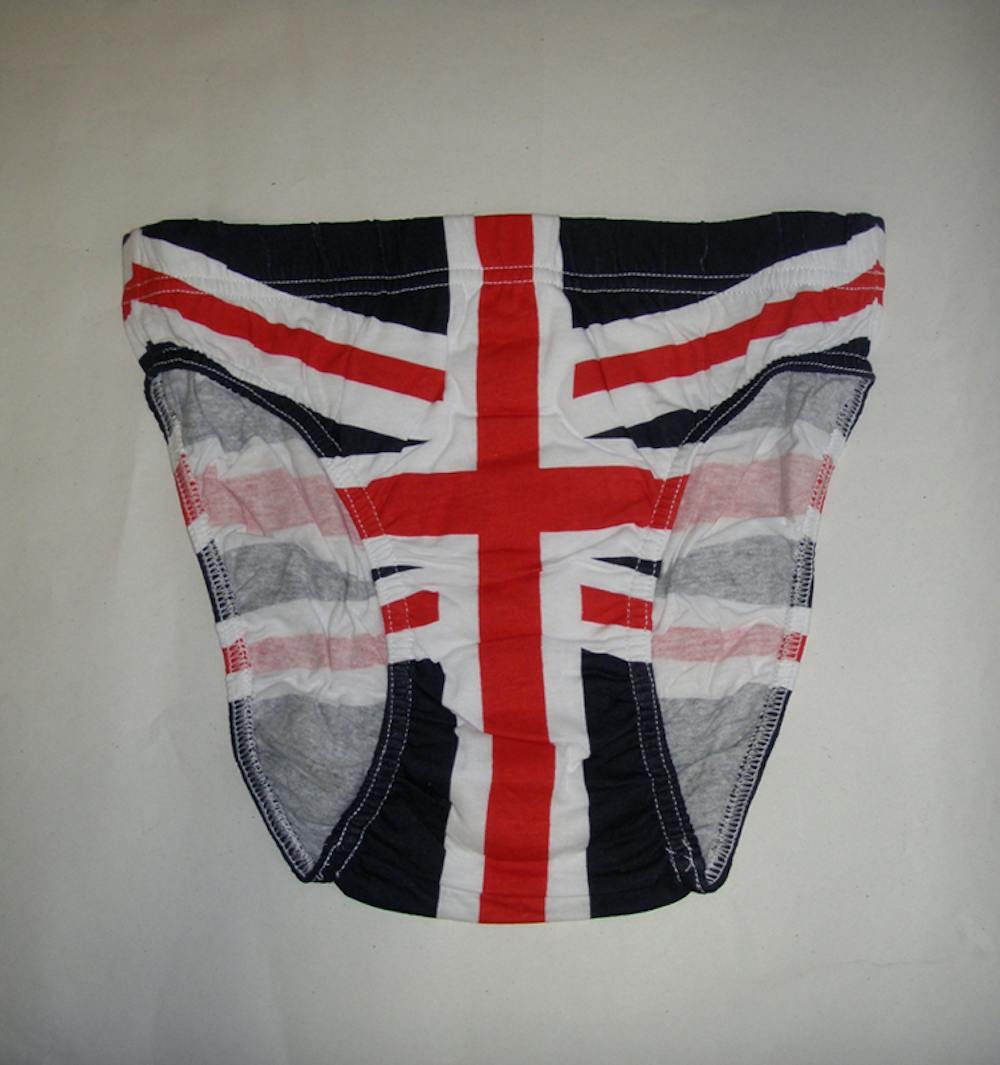
Union Jack briefs. 

For instance, Sydney-born, NY-based company Wearable-X has teamed with condom manufacturer Durex to create interactive underwear called Fundawear. Fundawear has a “vibrating touch” that can be transferred from anywhere in the world through a smartphone app. The underwear contains actuators (which are similar to the devices that make smart phones vibrate). Couples wearing it converse via the app, transferring sensations to each other’s undergarments.

Meanwhile, brands Modibodi and Thinx have developed reusable underpants for women menstruating or experiencing incontinence. Manufactured from bamboo, merino wool and microfibre fabrics, the breathable and moisture-wicking layers draw fluids away from the body, securing them in a waterproof outer layer. The fabric technology allows the underpants to be rinsed in cold water, machine-washed and, once dry, ready for reuse. Since launching in 2014, Modibodi has become an Australian market leader for reusable period underwear.

A brief history of briefs – and how technology is transforming underpants

Shreddies’ ‘flatulence-filtering’ underpants. https://www.myshreddies.com

UK brand Shreddies has even developed “flatulence-filtering” underwear for men and women using carbon-absorbing cloth. According to its website, the underwear uses “the same activated carbon material used in chemical warfare suits”. Which is good to know.

Medical underwear for postoperative and postnatal patients is also widely available in Western hospitals providing infection control and wound care.

Advances in material manufacturing, additive fabric coatings and body-centred smart textile applications have the ability to monitor patient physiological conditions and offer personalised care and direct user feedback to medical specialists. Researchers at the University of California have developed a textile-based, printable electrochemical sensor, which has the capacity to be used for a variety of medical and safety applications. The flexible textile sensors, for example, when printed onto the elastic waistband of underpants, can recognise chemical substances secreting from the skin.

Science is adding functions to underwear that could scarcely have been envisaged 50 years ago. The loincloth has come a long way.

Authors: Alana Clifton-Cunningham, Lecturer in Fashion and Textile Design, University of Technology Sydney


Read more http://theconversation.com/a-brief-history-of-briefs-and-how-technology-is-transforming-underpants-97674

Russia's World Cup widely hailed as success, but will the good vibes last for Putin?

  • Written by: Alexey D Muraviev, Associate Professor of National Security and Strategic Studies, Curtin University

Even before the final whistle had been blown at the 2018 World Cup, the world media were already proclaiming it a huge success. The New York Times asked whether Russia 2018 was the “greatest of all World Cups”, while The Independent gushed the World Cup helped Russia put on its best face, and “the world smiled back”.

There&rs...

Read more …

More Articles …

  1. Australian jobs aren't becoming less secure
  2. CRISPR/Cas9 gene editing scissors are less accurate than we thought, but there are fixes
  3. The new national housing agreement won't achieve its goals without enough funding
  4. who really deserves the rewards from success?
  5. New Treasury secretary rolls the dice on his future
  6. the case for opting in
  7. the case for opting out
  8. How ideas of 'adulthood', its rights and responsibilities, are changing around the world
  9. tracing the cultural history of the monstrous Lambton Worm
  10. The off-topic Conversation #164
  11. You've heard of a carbon footprint – now it's time to take steps to cut your nitrogen footprint
  12. Why Australia's homelessness problem is getting worse, despite a rise in housing stock
  13. How quantum computers could steal your bitcoin
  14. Why plastic bag bans triggered such a huge reaction
  15. As Trump meets Putin, expectations may be high but the prospects are poor
  16. Curious Kids: Why do birds sing?
  17. The science and art of reef restoration
  18. William Faulkner diagnosed modern ills in As I Lay Dying
  19. Getting an initial specialists' appointment is the hidden waitlist
  20. Government senator Dean Smith urges national debate about population
  21. is Australia's population the 'highest growing in the world'?
  22. New Zealand's zero carbon bill: much ado about methane
  23. why the ACCC says household solar subsidies should be abolished
  24. Breastmilk alone is best for the first six months – here's what to do next
  25. Michelle Grattan on Latham's liaison with One Nation in Longman, live sheep exports and the ACCC's criticism on energy
  26. Officers 'sanctioned' for 'human error' in filing cabinet affair
  27. How we can protect the women who make most high-quality footballs
  28. It's a busy night sky this July, so make sure you look up
  29. Why the ABC, and the public that trusts it, must stand firm against threats to its editorial independence
  30. from convicts to contemporary convictions – 200 years of Australian crime fiction
  31. A silent career killer – here's what workplaces can do about menopause
  32. How to break up with plastics (using behavioural science)
  33. Carbon monoxide exposure in homes is a risk – here's how to protect yourself
  34. Whether teams win or lose, sporting events lead to spikes in violence against women and children
  35. Peer review has some problems – but the science community is working on it
  36. When to trust (and not to trust) peer reviewed science
  37. an evidence-based guide for students, supervisors and universities
  38. Little upside for Malcolm Turnbull in debate over religious freedom
  39. Eradicating cattle disease M. bovis in New Zealand may be costly, even impossible, but we must try
  40. Changing of the guard at the Treasury department
  41. Rethinking _Homo sapiens_? The story of our origins gets dizzyingly complicated
  42. Audit found Vikki Campion was owed travel money
  43. a strikingly prescient morality tale about banking
  44. 'Ideological masculinity' that drives violence against women is a form of violent extremism
  45. Think carefully before buying Bitcoin – and don't buy the 'safe haven' claims
  46. Why New Zealanders are feeling the hard edge of Australia's deportation policy
  47. Médiation scientifique : le rêve américain ?
  48. Five women to watch (and listen to) in Australian hip hop
  49. Humankind's odyssey from Africa began more than two million years ago
  50. Why Australia does not need a Religious Discrimination Act

Business News

How Businesses Can Prepare for Unexpected Power Outages

Power failures can occur quickly. The supply may be interrupted by bad weather, issues with the electricity network, damaged equipment or local construction work. This can be just a hassle for a fam...

Daily Bulletin - avatar Daily Bulletin

How Chatswood Tutoring Can Fit Into a Student’s Weekly Routine

Create a Predictable Weekly Structure A consistent weekly routine can make study easier to manage when students are balancing several subjects. Chatswood tutoring can provide a fixed learning point a...

Daily Bulletin - avatar Daily Bulletin

The Rise of Digital Marketplaces in the Australian Trade Sector

For decades, the Australian trade and construction sector operated almost entirely on word-of-mouth recommendations and local community networks. Small business owners typically relied on local newspa...

Daily Bulletin - avatar Daily Bulletin

How Immigration Lawyers Can Help

Introduction Visa decisions can shape employment, family life, study plans, travel, and future residence. A small omission can lead to delay, added expense, or refusal. Immigration lawyers assess l...

Daily Bulletin - avatar Daily Bulletin

How Industrial Drying Equipment Supports Efficient Processing

Many industrial processes require moisture to be removed from compressed air, products or process materials before they move to the next stage. Excess moisture can affect equipment performance, produc...

Daily Bulletin - avatar Daily Bulletin

Practical Ways a Whiteboard Can Improve Workplace Communication

Effective communication helps teams stay organised, share ideas and keep track of important information. While digital tools are now common in many workplaces, a whiteboard continues to provide a simp...

Daily Bulletin - avatar Daily Bulletin

Designing Eco-Friendly Custom Water Bottles for Your Next Event

The Evolution of Sustainable Event Merchandise Event planning has undergone a massive transformation over the last decade. Gone are the days when organizers could hand out cheap, single use plastic...

Daily Bulletin - avatar Daily Bulletin

Why Choosing a Professional Florist Melbourne Makes Flower Delivery Impactful

Flowers have a great power to speak when humans cannot express their feelings with right words. Flowers are the best gifts when you are celebrating a birthday or welcoming a newborn child into your fa...

Daily Bulletin - avatar Daily Bulletin

The Business Case for Choosing Australian Fabricators Over Imported Alternatives

For a long time, you might have defaulted to overseas suppliers when sourcing fabricated metal components for a project. The unit price was lower on paper, and the maths seemed straightforward. That...

Daily Bulletin - avatar Daily Bulletin

The Daily Magazine

How to Set a Budget Before Bidding at Auction

Placing a bid at an online art auction is an exciting way to discover rare paintings, home content...

Does a Modern James Bond Exist?

Image Credit: MysteryShot What the Movies Get Right About Private Investigators There are a few mov...

How Australian Businesses Can Effectively Manage Tax Audits and Disputes

Managing a small business in Australia is inherently challenging, but recent shifts in regulatory ...

From Coastal Calm to Classic Comfort: The Right Carpet for Every Style of Home

Carpet is often chosen near the end of a room makeover, after the walls, furniture, and lighting h...

How to Add a Heart to a Photo in Seconds

Visual storytelling has rapidly evolved in the digital age, transforming how we share our daily expe...

Why Small-Denomination Physical Gold is Becoming the Ultimate Defensive Asset

In a landscape of lingering macroeconomic uncertainty and rising domestic living costs, everyday i...

Why Your Feet Spread During Running and What That Means for Shoe Fit

The trainers felt brilliant in the shop. You walked around, bounced on your toes, checked the mirror...

How to Vet and Hire the Right Property Expert in the Australian Market

Navigating the Australian real estate market has become a highly strategic exercise. Recent nation...

Moving From Australia to Wellington: The Practical Settling-In Checklist

Wellington has a lot going for it. It's compact, walkable and full of cafes, with a harbour that r...