

The Hidden Pitfalls of Owning a Holiday Rental in Australia - and How Professional Management Pays for Itself
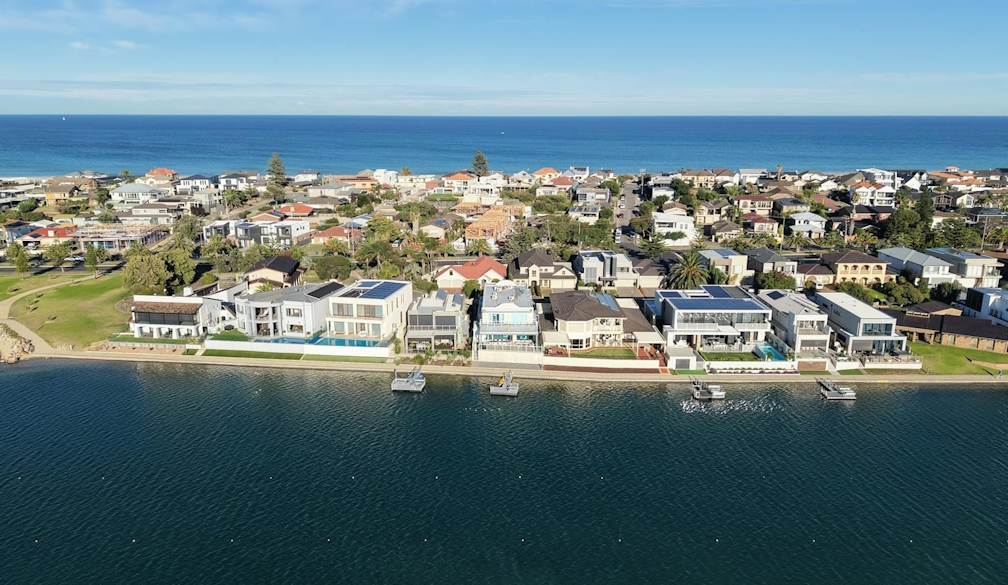
Owning a holiday rental sounds like the dream: a coastal cottage in Byron, a ski chalet near Mount Buller, a beach house on the Fleurieu Peninsula, all quietly paying for themselves while you're not using them. The reality for many Australian owners is messier. Between 2024 and 2026, NSW, Victoria and South Australia have each rewritten the rules around short-term letting, and owners who are still running things the way they did five years ago are increasingly getting caught out — through fines, lost bookings, angry strata committees, or simply properties that sit half-empty because the listing hasn't kept pace with the market.
This article walks through the main pitfalls owners face in these three states, and where a reputable holiday rental management service (or "short-term rental accommodation" — STRA) genuinely earns its commission rather than just skimming one.
Pitfall #1: Not knowing you need to register — or letting registration lapse
NSW has the country's most mature framework. Every property used for short-term letting must be registered on the STRA Register via the NSW Planning Portal before it's ever advertised, at a cost of 65initiallyand25 a year to renew. Registered properties get a unique STRA Property ID that must appear on every listing — Airbnb, Stayz, Booking.com, all of them. Miss it, and platforms can pull your listing entirely.
What trips owners up isn't the registration itself, it's the detail: the 12-month registration period runs from the date you registered, not from 1 January, so owners who assume a calendar-year reset can unknowingly blow through their day limits. In Greater Sydney and several other prescribed areas (Ballina, Byron, parts of the Clarence Valley and Muswellbrook), non-hosted STRA — where you don't live on site — is capped at 180 days a year. Byron Shire is stricter again, at just 60 days outside two mapped precincts. Bookings of 21 consecutive nights or more don't count toward the cap, which is a useful (and often overlooked) planning lever.
Victoria takes a different approach — there's no statewide night cap, but from 1 January 2025 a 7.5% Short Stay Levy applies to the total booking fee (including cleaning fees and GST) for any stay under 28 consecutive nights, unless the property is your principal place of residence. If bookings come through a platform, the platform generally remits the levy; if you take direct bookings, you have to register with the State Revenue Office and lodge returns yourself — quarterly if you earn over $75,000 a year, annually if you're under that threshold. Owners who take even the occasional direct booking (a repeat guest who messages you outside the platform, for instance) are often surprised to learn they're personally on the hook for registering and remitting.
South Australia is the outlier: there is still no statewide registration or licensing scheme for short-term rentals, though this is very likely to change — a state inquiry into the short-stay accommodation sector has been underway, and Airbnb itself has publicly backed the introduction of a mandatory registration scheme and code of conduct modelled on NSW. In the meantime, individual councils are filling the gap: Adelaide City Council has floated a paid permit scheme for the CBD and North Adelaide, and other councils, including Norwood Payneham & St Peters, already have by-laws restricting short-term letting. Owners in SA who assume "no state rules" means "no rules at all" can still fall foul of local council requirements, particularly around Adelaide, Victor Harbor and other tourist towns.
The pitfall in practice: owners set up a listing once, get it registered, and then never revisit it. Registrations lapse, day-cap tracking gets forgotten, and a levy return is missed — all invisible until a platform notice, a council letter, or a fine arrives.
Pitfall #2: Falling foul of strata and owners corporation rules
If your holiday rental is an apartment or townhouse in a strata scheme, the building itself may have more power over your income than the state government does.
In NSW, an owners corporation can ban non-hosted STRA in a scheme with a 75% special resolution vote, though it cannot restrict hosted STRA where the owner genuinely lives on site, and it cannot override the rule for a lot that is someone's principal residence.
In Victoria, the same 75% special-resolution power now exists under changes to the Owners Corporations Act, again with an exemption for principal places of residence. Given that a large share of Melbourne's short-stay stock sits in CBD, Southbank, Docklands and Carlton towers — precisely where owners corporations are large, active and organised — this is not a theoretical risk. A scheme can vote to ban short stays outright, and an owner who bought specifically for the Airbnb income can be left with a property that no longer legally earns it.
The pitfall in practice: owners buy or list a property without ever reading the by-laws, or without monitoring owners corporation meeting notices, and only discover a ban has been passed when their listing income disappears.
Pitfall #3: Underestimating insurance and safety obligations
Standard home and contents insurance is generally written for owner-occupiers or long-term tenancies, not paying strangers cycling through every few nights. Many owners don't discover the gap until they need to make a claim — a guest injury, a break-in, malicious damage — and find the policy simply doesn't respond because the use wasn't disclosed.
NSW has gone further and built safety compliance into the regulatory framework itself: STRA properties must meet a dedicated Fire Safety Standard (interconnected smoke alarms, evacuation diagrams and the like) as a condition of registration, and non-compliance carries its own penalty notices separate from any insurance issue. A mandatory Code of Conduct also applies across the industry, with a two-strike system that can see repeatedly non-compliant hosts placed on a public Exclusion Register and banned from the industry for five years — a real risk for owners who don't take guest complaints or safety issues seriously.
The pitfall in practice: an owner assumes their existing home insurance "probably covers it," discovers otherwise after an incident, and is simultaneously in breach of registration conditions they didn't know applied.
Pitfall #4: Tax and levy complexity
Short-term rental income is taxable, and the ATO now receives booking and income data directly from platforms including Airbnb, Stayz and Booking.com under sharing-economy reporting obligations — so income you don't declare is increasingly easy for the ATO to cross-check. In 2026 the ATO finalised new guidance (Taxation Ruling TR 2026/1, alongside two Practical Compliance Guidelines) clarifying how it assesses rental income, apportions deductions where a property has mixed personal and rental use, and determines whether a property counts as a genuine "holiday home" for tax purposes — an area that has historically been a source of both innocent errors and deliberate over-claiming.
On top of federal tax, Victorian owners now carry the 7.5% Short Stay Levy as a separate state-level obligation that has to be tracked, calculated and, for direct bookings, lodged and paid to the State Revenue Office on its own schedule. Getting the interaction between platform-remitted levies, direct-booking levies and income tax deductions right is genuinely fiddly, and errors compound quietly over a full financial year before an owner notices.
The pitfall in practice: owners either under-claim legitimate deductions out of caution, or over-claim by not properly apportioning private use, and both create problems — one quietly costs money every year, the other creates ATO exposure.
Pitfall #5: Underpricing, poor presentation and empty calendars
Regulation aside, the single biggest reason owner-managed holiday rentals underperform is far more mundane: static pricing, mediocre photography, slow guest response times and listings that haven't been refreshed in years.
Owners who set a single nightly rate and leave it untouched miss the swings in demand around long weekends, school holidays and local events that can be worth 30–50% more per night with dynamic pricing. Listings with amateur photos, thin descriptions or inconsistent availability across multiple platforms (Airbnb, Stayz, Booking.com, VRBO) rank lower in search results and convert fewer browsers into bookings. And an owner juggling a day job, guest messages at 11pm, and cleaner scheduling is more likely to make mistakes that show up in reviews — which, in a review-driven market, has a compounding effect on future bookings.
How a reputable holiday rental management service addresses each of these
A good management company isn't just someone who changes the sheets between guests. In these three states in particular, the value tends to show up in a few concrete areas:
- Compliance handled for you. A reputable manager keeps your STRA registration current, tracks your day-cap usage against the correct 12-month period (not the calendar year), monitors owners corporation and strata rule changes, and manages levy registration and lodgement in Victoria on your behalf. This alone removes the single biggest source of fines and delisting risk.
- Insurance and safety compliance. Established operators typically hold or arrange appropriate short-term letting insurance, and manage fire safety compliance (smoke alarms, evacuation diagrams, extinguishers) as a matter of course, rather than as an afterthought discovered during a claim.
- Dynamic, multi-platform pricing. Professional managers use pricing tools and local market data to adjust nightly rates in real time across events, seasons and demand spikes, and to keep the calendar synced correctly across every platform so you're never double-booked or under-listed.
- Professional presentation. Quality photography, well-written listing copy, and consistent branding across platforms measurably lift both search ranking and conversion rate — this is one of the more direct ways management fees turn into extra income rather than just extra cost.
- 24/7 guest communication. Fast responses to enquiries and in-stay issues improve both booking conversion and review scores, and take the operational burden off owners who don't want a second, unpaid job.
- Local market expertise. A manager operating across, say, the NSW South Coast, Victoria's Mornington Peninsula, or SA's Fleurieu Peninsula and Barossa will generally have a clearer read on realistic seasonal pricing, local council quirks, and what guests in that specific market actually want, than an individual owner managing one property from a distance.
What owners should look for before signing up
Not every management company is equal, and given how much regulatory knowledge now matters, owners should specifically ask:
1. Do they actively manage STRA/short-stay registration and renewal on your behalf, or leave it to you?
2. How do they track night caps and levy obligations across each platform you list on?
3. What insurance do they hold or require, and does it explicitly cover short-term letting?
4. Do they use dynamic pricing tools, and can they show historical performance data for properties similar to yours?
5. What's the fee structure — flat percentage, tiered, or with extra charges for things like professional photography or cleaning coordination?
6. Are they familiar with your specific council or strata scheme's rules, not just the state-level framework?
The bottom line
The regulatory environment for holiday rentals in NSW, Victoria and South Australia has become genuinely complex, and it keeps moving — SA in particular looks likely to introduce statewide registration in the near future, following the model NSW has run since 2021. For an owner managing one or two properties alongside a full-time job, staying on top of registration windows, night caps, levy returns, strata votes and insurance requirements — while also keeping pricing and presentation competitive — is a lot to carry. A reputable holiday rental management service earns its fee by absorbing that compliance burden and, at the same time, applying the pricing and marketing expertise that tends to lift income well beyond what the fee costs. For most owners, the real question isn't whether to get help, but how to choose a manager who genuinely understands the rules in their specific state and council area.
This article is general information only and does not constitute legal, tax or financial advice. Short-term rental regulations vary by state, council and strata scheme, and change frequently — always confirm current requirements with the relevant state government, your local council, and a qualified adviser before making decisions about your property.


 Daily Bulletin


