

How Wide Should Running Shoes Be? Signs Your Shoes Are Too Narrow
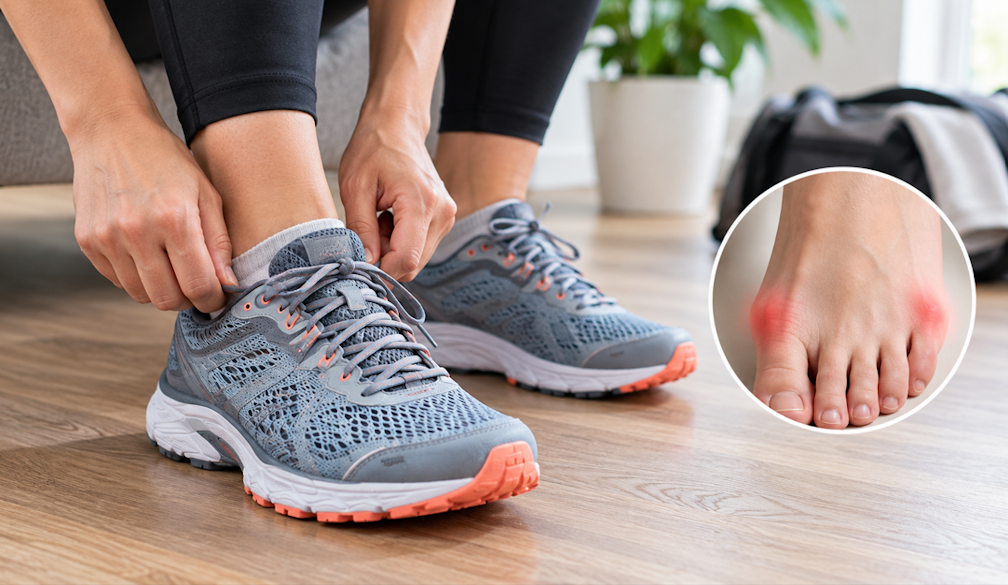
Running shoes should be wide enough for the forefoot and toes to sit naturally under load, but not so roomy that the foot slides inside the shoe.
That sounds straightforward until you try to buy a pair. Foot width varies considerably between people who wear exactly the same shoe length, and the letters printed on a box do not tell the whole story. Toe-box shape, instep volume, heel width and the shape of the shoe's last can make two supposedly identical widths feel completely different.
For runners, a marginal fit becomes more noticeable once the foot is repeatedly loaded. A shoe that feels merely snug while standing in a shop may become uncomfortable several kilometres into a run.
How Wide Should a Running Shoe Actually Be?
The widest part of your forefoot should sit comfortably within the widest part of the shoe rather than pressing against its sides.
The American Orthopaedic Foot & Ankle Society advises that the ball of the foot should fit comfortably into the broadest part of a shoe. For athletic footwear, it also recommends enough room to wiggle the toes and at least roughly a thumb's width between the longest toe and the end of the toe box.
That front clearance addresses length, not width. A runner can have perfect toe clearance and still be wearing a shoe that is far too narrow.
This distinction matters because foot dimensions do not scale uniformly. An analysis of more than 1.2 million three-dimensional foot scans from North America, Europe and Asia found considerable variation in foot width, instep height and heel width among people in the same length category. The researchers estimated that at least three widths per length class would be needed to fit 90% of customers properly.
What Are the Signs That Running Shoes Are Too Narrow?
Persistent side pressure is the clearest clue.
You may notice the little toe being pushed inward, pressure around the ball of the foot, tingling, burning or numbness as the run progresses. The upper may bulge noticeably over the edge of the midsole, or your toes may feel crowded together even though there is plenty of space in front of them.
Repeated blisters, corns or irritated skin along the sides of the forefoot also deserve attention.
Poor footwear fit is common beyond running. A systematic review of 18 studies found that 63% to 72% of participants wore shoes that failed to accommodate either their foot length or width. Incorrect fit was associated with foot pain and problems including corns, calluses and lesser-toe deformities.
None of those symptoms proves width is the only cause. Lacing, socks, foot conditions and the shoe's internal construction also matter. But recurring side pressure in an otherwise correctly sized shoe is a strong reason to try a wider model.
Do Your Feet Need Room to Spread While Running?
They need enough room to function without being compressed.
Running repeatedly loads the foot, and the forefoot changes shape under weight. A shoe should accommodate that loaded shape rather than fitting only when the foot is unloaded.
Toe-box geometry matters here. A 2024 randomised crossover study involving 25 male marathon runners compared conventional running shoes with shoes whose toe boxes were extended by 8 mm vertically and 3 mm in the sagittal direction. The altered design changed in-shoe foot displacement, toe deformation and ground-reaction-force measures during running.
The study does not establish a universal ideal toe-box dimension. It does demonstrate something runners often experience firsthand: relatively small changes to the space around the toes can change how the foot behaves inside a running shoe.
When considering wide running shoes, look beyond a “wide” label and examine whether the forefoot platform and toe-box shape actually match your foot.
Why Sizing Up Is Usually the Wrong Fix for Narrow Shoes
If a size 10 has adequate length but pinches at the sides, buying a size 11 solves the wrong measurement.
Going longer may create some additional room because larger shoes usually become somewhat broader as well. The cost is unwanted space elsewhere. The heel may begin to move, the foot can slide forward, and the ball of the foot may no longer line up with the intended flex area of the shoe.
It is more precise to keep the correct length and change width.
This is especially important for runners with a broad forefoot and relatively narrow heel. They may need substantially more room in front without wanting a larger heel pocket.
Shoe shape also matters enough that width cannot be reduced to one measurement. Research comparing foot and shoe outlines found strong relationships between perceived forefoot fit and dimensional differences at specific regions around the forefoot.
Is Toe-Box Width the Same as Shoe Width?
No.
Overall shoe width commonly refers to dimensions around the ball of the foot. The toe box is the space farther forward where the toes sit.
A shoe can have a broad forefoot platform yet taper quickly around the toes. Another may provide an unusually generous toe shape while remaining relatively fitted through the midfoot and heel.
That difference can be important for people with naturally splayed toes, bunions or a broad first and fifth metatarsal region.
Research on toe-box shapes has shown that shoe contours can alter pressures around the toes and forefoot. In one study comparing round, square and pointed toe boxes, researchers found significant differences in contact and pressure patterns among the designs.
Running shoes look less extreme than pointed dress shoes, but the underlying lesson still applies: shape influences fit.
How Should a Running Shoe Feel Through the Midfoot and Heel?
The forefoot needs room, but the rest of the shoe should not feel loose.
Your heel should remain reasonably stable without excessive lifting. Around the midfoot, the upper and laces should hold the shoe securely without creating numbness or a hard band of pressure across the instep.
Lacing can make a measurable difference. A controlled study comparing conventional laces with an elastic shoe-cover condition found that traditional lacing produced better perceived ratings for width, heel fit and overall comfort while also reducing lateral forefoot pressure and maximum rearfoot pronation in the tested conditions.
That does not mean lacing can rescue every narrow shoe. If the underlying sole platform is too narrow for the foot, loosening the laces simply reduces pressure from the upper while leaving the basic mismatch intact.
Should You Try Running Shoes Later in the Day?
It is a sensible approach.
Foot and ankle specialists recommend trying athletic shoes after exercise or toward the end of the day, when the feet are closer to the size they may reach during activity. They also recommend fitting the larger foot and wearing the same type of socks you intend to run in.
Try both shoes and walk or jog in them if the shop allows it.
Pay particular attention to the little-toe side, the first metatarsal joint and the tops of the toes. There should be no obvious pinching when standing, and the heel should not lift excessively when moving.
Do not rely on a painful pair stretching into shape. FootCareMD specifically advises choosing shoes that fit properly when purchased rather than expecting them to become suitable later.
Do Feet Change During Long Runs?
Yes, and this can expose a borderline fit.
Long-distance running can alter foot morphology and temperature enough to change the space between the foot and shoe. A 2024 study examining bruised-toenail risk during prolonged running investigated changes in foot dimensions, temperature and the gap between the big toe and the shoe's toe box.
The practical lesson is not to buy dramatically oversized footwear “for swelling.” It is to avoid starting a long run in a shoe that already feels close to its width or volume limit.
Your normal running socks matter as well. A thick sock can noticeably alter internal space in a shoe that is already tight.
Wide, 2E and 4E: What Do the Labels Mean?
Width letters provide a useful starting point, but they are not a universal measurement system.
Men's standard athletic footwear is commonly labelled D, with 2E often used for wide and 4E for extra-wide. Women's systems commonly start narrower, so the same letter may represent a different category.
The actual internal dimensions still vary by manufacturer and model.
A runner who feels cramped in one brand's standard shoe may fit another standard model comfortably because the lasts are shaped differently. Likewise, moving from D to 2E may increase space in different parts of the shoe depending on how that particular model is constructed.
This is why trying the shoe matters more than chasing a particular letter.
Can a Shoe Be Too Wide?
Certainly.
A shoe with excessive width can allow lateral movement, particularly when cornering, running downhill or changing pace. Heel stability may also suffer if the wider version increases volume throughout the shoe rather than only at the forefoot.
Watch for your foot sliding sideways or your socks rubbing despite having no obvious pressure points.
The ideal fit is not maximum room. It is enough room.
Runners looking at wide running shoes should aim for a forefoot that is free from compression while retaining a secure connection between the heel, midfoot and shoe.
Does a Wider Shoe Affect Running Performance?
There is no good evidence that simply choosing a wider shoe makes someone faster or prevents running injuries by itself.
Footwear research is more complicated than that. A Delphi study involving 24 experienced footwear experts identified several shoe characteristics considered important for different levels of runners, including upper breathability, forefoot bending stiffness, heel-to-toe drop, torsional stiffness and crash-pad design. Even experts did not reach agreement on every heavily researched feature.
A wider fit should therefore be viewed as a fitting solution, not a performance technology.
If your foot needs extra space, the benefit is straightforward: removing unnecessary compression allows you to run in a shoe that better matches your anatomy.
FAQs About Running Shoes
Should your toes touch the sides of running shoes?
Your toes should not feel compressed against the sides. A light contact may occur depending on foot shape and upper material, but persistent pressure, rubbing or numbness suggests insufficient space.
Is 2E wide enough for most men with wide feet?
For many men it is, but not everyone. Some need 4E or a shoe with a differently shaped toe box. Brand-specific fit matters as much as the width letter.
Should runners buy half a size larger?
Only if additional length is genuinely required. Extra length should not be used as a substitute for extra width. Check toe clearance and forefoot width separately.
Why do running shoes feel tighter after several kilometres?
The foot can change in volume and shape during prolonged running, while heat and repeated loading can make a marginal fit more noticeable. A shoe that starts the run already tight is more likely to become uncomfortable later.
Fit the Width Before You Chase Other Shoe Features
Running-shoe discussions quickly move toward cushioning, heel-to-toe drop, carbon plates and stability systems. None of those features changes the basic requirement that the shoe has to fit the foot inside it.
For runners with broad feet, that means resisting the temptation to create width by adding unnecessary length. Start with the correct length, then find a model whose forefoot width, toe shape and internal volume suit your anatomy while keeping the heel secure.
A running shoe should not force your foot into its shape. The closer the shoe's shape is to yours from the beginning, the less time you will spend thinking about it once the run starts.


 Daily Bulletin


