

Why Is My Switchboard Buzzing? What a Humming Breaker Is Telling You
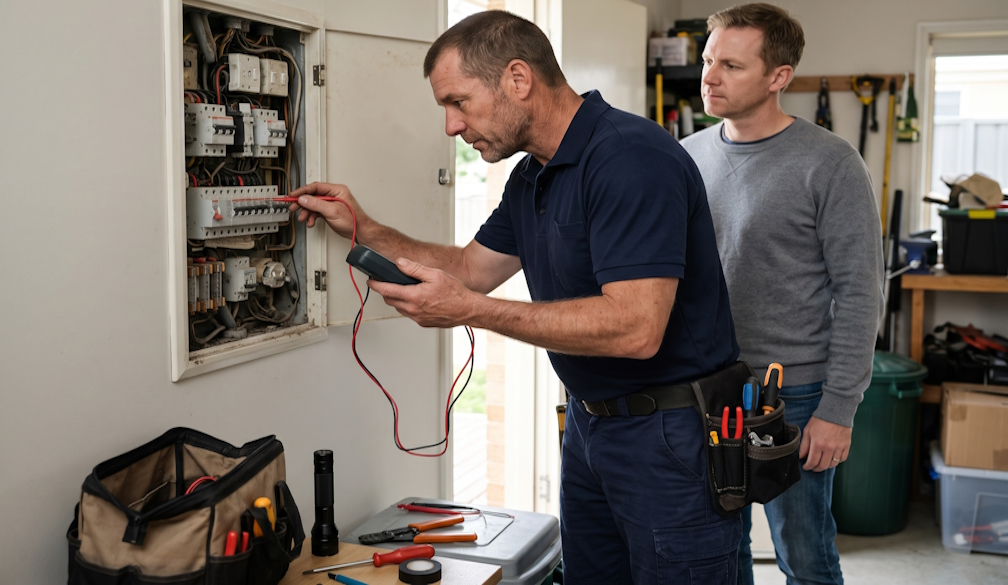
Most people never hear their switchboard. It sits quietly in a cupboard, a hallway or a meter box outside, and only gets attention when the power goes off. So when it starts to buzz, hum or crackle, it is natural to wonder whether that is normal or something to worry about.
The honest answer is that it depends on the sound, where it is coming from and what else is happening at the same time. Some noises are part of normal operation. Others are early warnings of a fault that can lead to heat damage or a fire if it is left alone.
Some sounds are normal
Not every noise from a switchboard means trouble. Many NSW homes have an off-peak hot water system controlled by a time switch or a relay at the board. These can click when they switch on, often late at night, and some produce a faint hum while they are working.
Some older meters and certain control devices also make a low, steady hum. If the sound is soft, consistent, has been there for years and nothing else seems wrong, it may simply be part of how that equipment operates.
The sounds to take seriously are new ones, louder ones, and anything that crackles, sizzles or changes with the load in the house.
Loose connections are the usual culprit
The most common cause of a buzzing switchboard is a loose connection. Every wire on the board is held in place by a terminal screw. Over years of heating and cooling, those connections can gradually loosen.
When a connection is loose, electricity has to jump across a tiny gap. That can create a buzzing or crackling sound, and it produces heat at the terminal. Over time, the heat can damage the insulation, discolour the breaker and eventually cause a fire inside the board.
This is why a buzzing sound that seems to come from one particular breaker deserves attention. It often means the connection on that circuit is not as tight as it should be.
A breaker that buzzes before it trips
Sometimes the buzzing comes from a breaker that is struggling. If a circuit is regularly carrying more current than it was designed for, such as a heater, an oven and a kettle sharing one circuit, the breaker may hum as it approaches its limit before eventually tripping.
Circuit breakers also wear out. An older breaker may buzz, feel warm to the touch on its cover, or trip without an obvious reason. In that case, the breaker itself may need replacing, and the circuit should be checked to make sure the load is reasonable.
If the noise is louder when particular appliances are running, that is a strong clue the problem is linked to that circuit.
When buzzing comes with other warning signs
A buzzing switchboard becomes urgent when it comes with heat, smell or visible damage. A burning or hot plastic smell, scorch marks or discolouration around a breaker, crackling sounds, flickering lights across the house or a switchboard cover that feels warm are all signs that something is overheating.
At that point, it is no longer a question of whether to get it checked. It needs attention as soon as possible, including after hours if the smell or heat is getting worse.
Older and coastal switchboards are more exposed
Switchboards in older Newcastle homes, particularly those with ceramic fuses or boards that have been added to many times, are more likely to have tired connections. Every extra circuit squeezed onto an old board adds to the heat and crowding inside it.
Homes near the coast face another factor. Salt in the air slowly corrodes terminals and metal parts, especially in external meter boxes. Corroded connections behave much like loose ones, creating resistance, heat and sometimes noise.
Insects can also cause problems. Ants, spiders and even geckos find their way into switchboards, and nests built across terminals can lead to tracking, buzzing and faults.
What to do safely
Do not remove the switchboard cover or the panels around the breakers. Everything behind them is live, and the main switch does not make the incoming side of the board safe.
If you smell burning or see smoke and it is safe to reach the board, switch off the main switch and call for help. If there are flames, leave the house and call 000.
If there is no smell or heat, you can still gather useful information. Notice whether the sound comes from one area of the board. Note whether it gets louder when certain appliances are running, and whether it happens at a particular time of day. Turning off large appliances on the affected circuit can reduce the load until someone checks it.
Repair or replacement?
In many cases, a buzzing switchboard can be repaired. An electrician can tighten or remake loose connections, replace a failing breaker, clean out insect damage and check that each circuit is carrying a sensible load.
If the board is old, heavily crowded, heat damaged or still running on ceramic fuses, replacement is often the better option. A modern switchboard gives each circuit proper protection, including safety switches, and removes years of accumulated wear in one job.
The right answer depends on what is found when the board is opened and tested, which is why a proper inspection should come before any decision.
Getting it checked
A switchboard should be one of the quietest parts of your home. If yours has started buzzing, crackling or humming in a way it never used to, it is worth getting someone who repairs switchboards locally to inspect it before a loose connection turns into heat damage.
The good news is that most buzzing switchboards are caught at the noisy stage, long before anything fails. Acting while it is still just a sound is the easiest and safest time to fix it.


 Daily Bulletin


