

Why Your Feet Spread During Running and What That Means for Shoe Fit
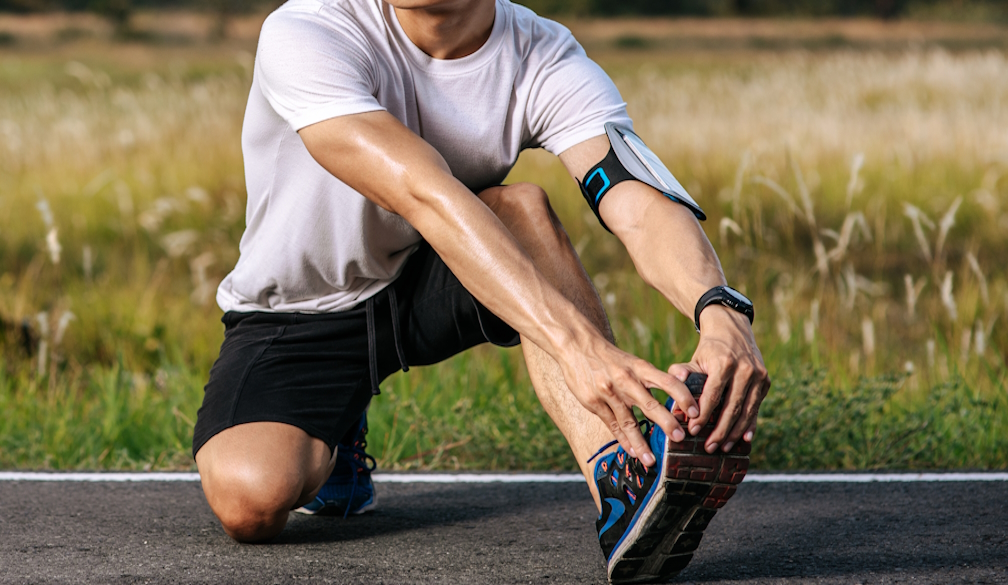
The trainers felt brilliant in the shop. You walked around, bounced on your toes, checked the mirror, and decided they were the right pair. Then came your first proper run.
Three kilometres in, your little toes started rubbing. By the time you got home, the sides of your feet were aching, despite having plenty of space at the front of the shoes.
It's a frustrating experience, particularly when you've bought your usual size.
What many runners overlook is that feet don't keep exactly the same shape while moving. They flatten and spread under load, then change position again as you push away from the ground. Add the swelling that can develop during a longer run, and a shoe that seems roomy enough while sitting may become uncomfortable outdoors.
Understanding those changes can make choosing running footwear considerably less of a guessing game.
What Happens to Your Feet Every Time You Run?
Take your shoes off and stand barefoot on a hard floor. Watch what happens to the outline of your feet when you shift your weight from one leg to the other.
The foot carrying more weight may look slightly broader.
Now imagine that process happening repeatedly while running.
The foot does not stay fixed when it meets the ground. It gives a little under your weight, with the arch, joints, muscles, and ligaments all helping to manage the force of each step.
Researchers at Hong Kong Polytechnic University examined foot dimensions under different weight-bearing conditions in a study published in the Journal of Rehabilitation Research and Development in 2003.
Under full weight-bearing conditions, the researchers recorded an average foot-width increase of approximately 6% compared with the unloaded position.
That figure describes the participants and measurement conditions of the study, not a universal increase that occurs with every running step.
Still, it helps explain why measuring a foot while sitting can give a misleading impression of how much room it needs during activity.
Why Your Forefoot Spreads When You Land
Running involves much more than repeatedly lifting your feet off the ground.
As you land, the arches deform under load and the forefoot changes shape. The joints around the ball of the foot also move as you progress towards the next step.
This spreading is often called foot splay.
That movement is normal when the foot takes your weight, but it will not look the same for everyone. A more flexible foot may spread noticeably under load, while a stiffer one may change very little.
Foot structure, running technique, footwear, and the forces involved all influence what happens.
The American College of Sports Medicine recommends running shoes with sufficient toe-box space to accommodate natural forefoot spreading during running.
That's particularly useful advice for someone whose toes feel comfortable while standing but become crowded several kilometres into a run.
Why Running Shoes Can Feel Tighter After Several Kilometres
Imagine setting off for a Saturday morning ten-kilometre run.
Your shoes feel comfortable leaving home. Halfway around the route, however, the uppers begin pressing against the sides of your feet.
Some of that discomfort may come from the repetitive loading involved in running. Foot volume can also change during prolonged exercise.
A 2018 study examining 26 runners measured foot shape before and after 10-kilometre and 20-kilometre runs.
They watched for changes in the foot over the course of the run, from the width at the front to the height of the arch and the foot’s overall size.Runners also reported that the way their shoes felt changed over the longer distances.
The researchers observed changes in pressure beneath the foot, particularly around the metatarsal region.
The findings don't suggest that every runner's feet expand by the same amount. They do show why a shoe that feels acceptable at the beginning of a run may fit differently after sustained activity.
For someone already wearing a narrow model, relatively small changes can become uncomfortable.
Why Buying Longer Running Shoes Can Backfire
Suppose your usual size 9 trainers squeeze the outside of your forefoot.
You try a 9.5, hoping the extra space will solve the problem.
The pressure feels better, but your heel now slips slightly. Tightening the laces helps until the upper begins pressing against the top of your foot.
You may have needed a different width, not a longer shoe.
Running shoes are built around lasts, the three-dimensional forms that establish their shape. A narrow last can produce a restrictive forefoot even when the shoe has sufficient length.
For runners whose toes are crowded from the sides, wide running shoes may provide extra room without unnecessarily extending the toe box.
But width labels aren't identical across manufacturers.
A shoe with a rounded front might feel generous in a standard fitting, while a wide model from another brand could still taper too sharply near the little toe.
Try the shoes rather than assuming the label tells the whole story.
The Difference Between Toe Room and Forefoot Width
There's a simple reason two running shoes in the same size can feel entirely different.
One may provide a long, pointed toe box. The other might be slightly shorter internally but considerably broader across the front.
Length tells you how much room exists beyond the longest toe. Width describes the space across the foot, particularly around the joints behind the toes.
Neither measurement replaces the other.
The American Academy of Orthopaedic Surgeons recommends leaving approximately half an inch, or 12.7 millimetres, beyond the longest toe when fitting athletic footwear.
That's a useful starting point, especially because the foot can move forward inside a shoe during running.
But don't stop checking once you've found enough length.
Your little toe shouldn't be pressed into its neighbour, and the upper shouldn't stretch tightly around the ball of your foot.
A shoe can meet the recommended length allowance and still fit badly.
Why Heel Security Matters Just as Much
A roomy forefoot is welcome. A heel that keeps slipping out of place is less appealing.
During running, your foot moves repeatedly through landing and push-off. If the heel isn't held securely, the shoe may rub against the skin.
Some runners compensate by tightening their laces excessively.
That can create pressure across the instep without properly correcting the fit.
Johns Hopkins Medicine recommends checking heel security and adjusting lacing patterns to accommodate different foot shapes.
For someone with a broad forefoot and narrow heel, a suitable last and careful lacing may provide a better solution than buying an oversized trainer.
A runner's loop, sometimes called heel-lock lacing, can help certain shoes hold the heel more securely.
It won't rescue a shoe that's fundamentally the wrong size, but it's worth trying when the overall fit is otherwise comfortable.
How Foot Width Affects Blisters and Toenails
You finish a run and discover a blister beside your little toe.
The same spot was irritated last week, and your shoes are beginning to show wear around that area.
Repeated friction may be the culprit.
If the front of the shoe is too tight, raised joints can end up rubbing against the upper as you walk. A narrow toe area can also crowd the toes and push them against each other.
Toenails can suffer from poor fit as well.
A shoe that's too short may repeatedly drive the toes against the front, particularly during downhill running. Excessive movement inside a loose shoe can create similar trouble.
Blackened toenails aren't always a sign that the shoe needs more width. Also look at whether the shoe is long enough, how much your foot slides forward on descents, how tightly it is laced, and whether your toenails are trimmed properly.
If blisters keep returning despite changing socks, examine exactly where the footwear is making contact.
Does Running Distance Change the Width You Need?
Someone running three kilometres twice a week may never notice the fitting problem that troubles a marathon trainee.
Longer distances create more opportunities for friction, pressure, and changes in foot volume to become noticeable.
The 2018 study of runners completing 10 and 20 kilometres found measurable changes in foot dimensions and perceived comfort after sustained running.
But distance alone doesn't determine the ideal width.
A runner with naturally broad feet might need a wider shoe for a short jog. Someone with narrow feet may remain comfortable in a standard fitting throughout a longer event.
The more useful question is whether the footwear continues to feel comfortable during the kind of run you actually do.
Don't judge marathon shoes solely from a few steps around a shop.
How to Measure Your Feet for Running Shoes
If you haven't measured your feet since school, a visit to a specialist running shop may be worthwhile.
Measurements are best taken while standing, because your feet spread under body weight.
Check both feet. One may be slightly longer or broader than the other.
Johns Hopkins Medicine recommends trying athletic shoes after exercise or towards the end of the day, when feet may be fuller.
Wear the socks you normally run in, and bring any orthotic inserts you use.
Once the shoes are fastened, walk around and jog if the shop allows it.
Notice whether the heel lifts, the toes feel squeezed, or a seam presses against the outside of your forefoot.
The shoes should feel comfortable without requiring several weeks of painful breaking in.
Choosing Running Shoes for Broad Feet
A broad forefoot doesn't automatically call for the widest shoe available.
You may only need a less tapered toe box or a different shape around the ball of the foot.
Some runners benefit from 2E or 4E width options, while others find sufficient room in a naturally broad standard-width model.
With wide running shoes, the first thing to check is how much room you actually have around the toes and forefoot.
Check that your toes can move without pressing against the upper. Then examine the heel and midfoot.
A shoe that's generous everywhere may allow unwanted movement if your heel is relatively narrow.
Cushioning and stability deserve consideration too, but neither makes up for inadequate width.
There's little value in buying an expensive, heavily cushioned trainer if your little toe begins aching after the first kilometre.
When Foot Pain Needs More Than a Wider Shoe
Not every painful forefoot is suffering from poor shoe fit.
A runner experiencing burning or tingling between the toes may have nerve irritation, while pain over a particular metatarsal bone can sometimes indicate a stress injury.
Persistent swelling, worsening pain, or discomfort that continues after removing the shoes deserves attention.
If one foot suddenly looks different or hurts when you put weight on it, buying a wider trainer may not solve the problem. It is better to have the foot checked by a podiatrist or sports medicine clinician, who can look at the painful area, the shape of the foot, and the way you run.
Sometimes the solution involves footwear. Other cases need changes to training, rehabilitation, or further investigation.
Your Running Shoes Need to Fit a Moving Foot
A foot measured while sitting on a chair isn't quite the same foot that lands on the pavement halfway through a morning run.
Weight changes its shape. The forefoot spreads, the arches move, and longer periods of activity may alter how much room feels comfortable inside the shoe.
That's why length alone is a poor way to judge running footwear.
A good pair has enough space around the toes, holds the heel securely, and accommodates the foot as it moves.
You shouldn't have to choose between cramped toes and trainers that feel loose around the back.
FAQs About Running Shoe Width
Do feet actually get wider during running?
They spread under load as the arches and forefoot move. The amount differs between runners, and longer runs can bring additional changes in foot volume.
How much do feet spread when running?
There's no single percentage that applies to every runner. A 2003 weight-bearing study recorded an average width increase of about 6% under full loading compared with the unloaded foot.
Should running shoes be wider than everyday shoes?
Possibly, especially if your everyday footwear is narrow. Judge the fit while standing and moving rather than assuming both types should have identical dimensions.
Why do my trainers feel tight after five kilometres?
Feet can swell a little during a run, so a shoe that already feels snug at the front may start to feel much tighter. If the upper keeps rubbing the same spot, that irritation can build as the run goes on.
Should I buy a bigger running shoe size?
Check the space beyond your longest toe first. If there's already enough length but the sides pinch, try a wider fitting before moving up a full size.
Are wide running shoes useful for preventing blisters?
They may help when blisters come from pressure along the sides of the forefoot. Poor heel fit, damp socks, or excessive movement can still produce friction elsewhere.
How much space should running shoes have around the toes?
The American Academy of Orthopaedic Surgeons recommends roughly half an inch beyond the longest toe. Your toes also need enough room to move sideways.
Can running shoes be too wide?
Certainly. If your foot slides around or the heel repeatedly lifts, the overall fit may be too loose even when the forefoot feels comfortable.
Does arch height affect running shoe width?
It can influence how the foot spreads under weight. But arch height alone doesn't tell you which width to buy; actual measurements and comfort during running are more useful.
When should I replace running shoes that feel too narrow?
If the sides are squeezing your feet from the first run, don't wait for the upper to stretch. A better-fitting model is preferable to continuing in shoes that repeatedly cause pain.


 Daily Bulletin


