

Coronavirus weekly: as virus numbers peak, governments are charting the path out of lockdown
- Written by: Fron Jackson-Webb, Deputy Editor/Senior Health + Medicine Editor
As the world approaches 2.5 million coronavirus cases, some regions have reached the peak of the virus and the number of new cases and deaths is slowing.
This includes New York, the epicentre of the pandemic in the United States. It has had almost 15,000 deaths so far, but is seeing fewer deaths each day. Meanwhile, case numbers in Europe have surpassed a million, with the virus claiming more than 100,000 lives so far. But numbers are now declining.
In many regions, it’s too early to lift lockdown restrictions, but the planning for this is underway. Over the past week on The Conversation, experts from around the world have delivered advice to governments based on local trends, threats and resources available.
The situation is different for each region, but most experts agree any exit needs to be a staged response, with a strong focus on testing and tracking to avoid a second wave of infection.
 This is our weekly roundup of expert info about the Coronavirus.
The Conversation, a not-for-profit group, works with a wide range of academics across its global network. Together we produce evidence-based analysis and insights from across academia. The articles are free to read – there is no paywall – and to republish.
This seventh weekly column by our team of international health editors highlights some of the recently published articles from The Conversation’s global network.
Exit strategy considerations
Some countries appear to have reached the peak of their coronavirus cases but before easing restrictions, it’s important to ensure it’s not just a temporary suppression of cases.
Here’s what governments need to keep in mind when planning their exit strategies:
Don’t rush it. Without a vaccine or effective treatments, relaxing the lockdown too early could lead to a second wave of infections. As Jasmina Panovska-Griffiths from UCL warns, in some past pandemics, the second wave has killed more people than the first.
Learn from other countries. Rather than a total lockdown, South Korea implemented border closures, extensive social distancing, and focused on testing and tracing contacts, explains Alex van den Heever and his colleagues at the University of the Witwatersrand in South Africa. This allowed it to keep a larger proportion of its economy open.
This is our weekly roundup of expert info about the Coronavirus.
The Conversation, a not-for-profit group, works with a wide range of academics across its global network. Together we produce evidence-based analysis and insights from across academia. The articles are free to read – there is no paywall – and to republish.
This seventh weekly column by our team of international health editors highlights some of the recently published articles from The Conversation’s global network.
Exit strategy considerations
Some countries appear to have reached the peak of their coronavirus cases but before easing restrictions, it’s important to ensure it’s not just a temporary suppression of cases.
Here’s what governments need to keep in mind when planning their exit strategies:
Don’t rush it. Without a vaccine or effective treatments, relaxing the lockdown too early could lead to a second wave of infections. As Jasmina Panovska-Griffiths from UCL warns, in some past pandemics, the second wave has killed more people than the first.
Learn from other countries. Rather than a total lockdown, South Korea implemented border closures, extensive social distancing, and focused on testing and tracing contacts, explains Alex van den Heever and his colleagues at the University of the Witwatersrand in South Africa. This allowed it to keep a larger proportion of its economy open.
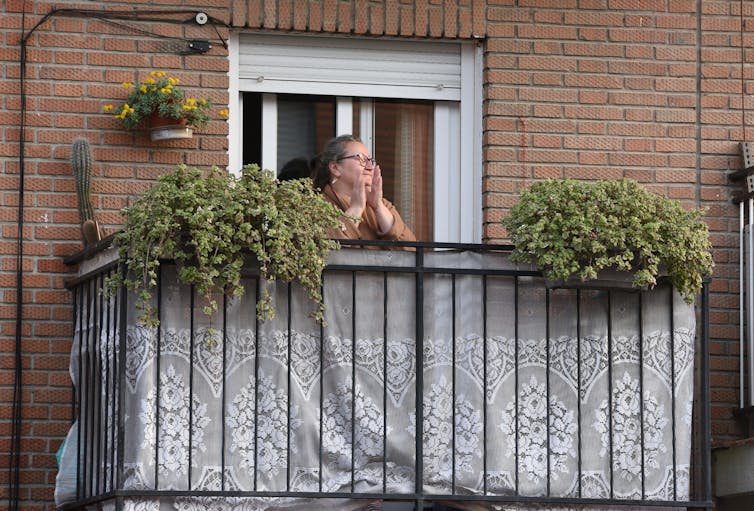 Relaxing restrictions too early could lead to a second wave of infections.
Sipa USA Jorge Sanz/SOPA Images/AAP
Work out who has immunity. The economy can be gradually and carefully reopened by testing to see who has been infected in the past and developed immunity, argues Eric Muraille and colleagues (in French) from the Free University of Brussels. They say those with immunity could return to work, minimising the risk of additional waves, while others stay at home.
Tailor the response. New Zealand has among the strictest lockdown measures in place and will scale back these restrictions from April 28. This will strike the right balance between protecting people’s health and livelihoods, writes Martin Berka from Massey University.
One step forward, two steps back
Donald Trump recently halted US funding to the World Health Organization, accusing it of “mismanaging and covering up the spread” of the virus.
Adam Kamradt-Scott from the University of Sydney warns such cuts could cause the WHO to go bankrupt in the middle of a pandemic. This would mean having to lay off staff and being less able to assist efforts in low and middle-income countries.
Relaxing restrictions too early could lead to a second wave of infections.
Sipa USA Jorge Sanz/SOPA Images/AAP
Work out who has immunity. The economy can be gradually and carefully reopened by testing to see who has been infected in the past and developed immunity, argues Eric Muraille and colleagues (in French) from the Free University of Brussels. They say those with immunity could return to work, minimising the risk of additional waves, while others stay at home.
Tailor the response. New Zealand has among the strictest lockdown measures in place and will scale back these restrictions from April 28. This will strike the right balance between protecting people’s health and livelihoods, writes Martin Berka from Massey University.
One step forward, two steps back
Donald Trump recently halted US funding to the World Health Organization, accusing it of “mismanaging and covering up the spread” of the virus.
Adam Kamradt-Scott from the University of Sydney warns such cuts could cause the WHO to go bankrupt in the middle of a pandemic. This would mean having to lay off staff and being less able to assist efforts in low and middle-income countries.
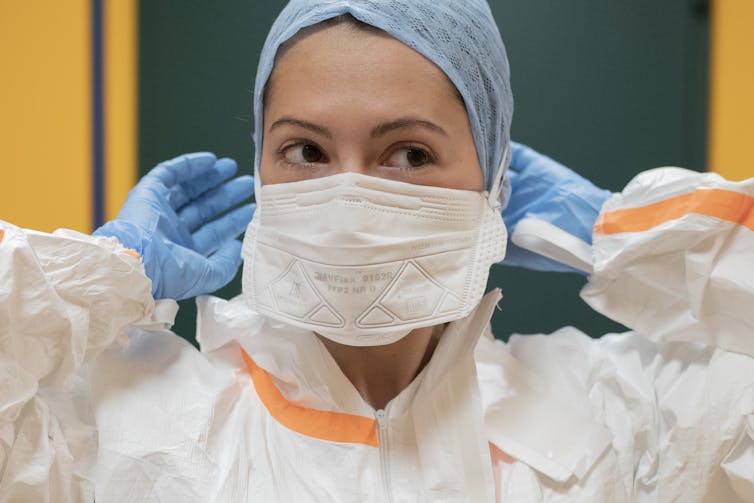 Some countries are just at the start of their coronavirus virus pandemic and will rely on the World Health Organization.
Pacific Press/Sipa USA/AAP
How have countries responded so far?
We hear a lot about the coronavirus response in the UK, US, China and parts of Europe. But what’s the situation in other parts of the world?
Calls for assistance in Indonesia. Coronavirus has hit Indonesia hard – it now has the highest death toll in South-East Asia. China has committed to helping Indonesia but to make a real difference, this should also include sending experienced medical staff and testing technology, argues Muhammad Zulfikar Rakhmat from Universitas Islam Indonesia.
Some surprises in Greece. Greece appears to have been lightly hit by coronavirus, with just over 100 deaths so far, despite just coming out of a ten-year financial crisis. Stella Ladi from Queen Mary University of London explains that the country learned from the financial crisis and acted quickly to close schools, ban public gatherings and ensure consistent messaging.
Financial constraints in Cuba. Cuba’s success at keeping case numbers to just over 1,000 so far can be attributed to its thorough planning, swift response and ability to scale up measures as needed. But what happens next depends on its access to test kits, write Emily Morris and Ilan Kelman from UCL.
Some countries are just at the start of their coronavirus virus pandemic and will rely on the World Health Organization.
Pacific Press/Sipa USA/AAP
How have countries responded so far?
We hear a lot about the coronavirus response in the UK, US, China and parts of Europe. But what’s the situation in other parts of the world?
Calls for assistance in Indonesia. Coronavirus has hit Indonesia hard – it now has the highest death toll in South-East Asia. China has committed to helping Indonesia but to make a real difference, this should also include sending experienced medical staff and testing technology, argues Muhammad Zulfikar Rakhmat from Universitas Islam Indonesia.
Some surprises in Greece. Greece appears to have been lightly hit by coronavirus, with just over 100 deaths so far, despite just coming out of a ten-year financial crisis. Stella Ladi from Queen Mary University of London explains that the country learned from the financial crisis and acted quickly to close schools, ban public gatherings and ensure consistent messaging.
Financial constraints in Cuba. Cuba’s success at keeping case numbers to just over 1,000 so far can be attributed to its thorough planning, swift response and ability to scale up measures as needed. But what happens next depends on its access to test kits, write Emily Morris and Ilan Kelman from UCL.
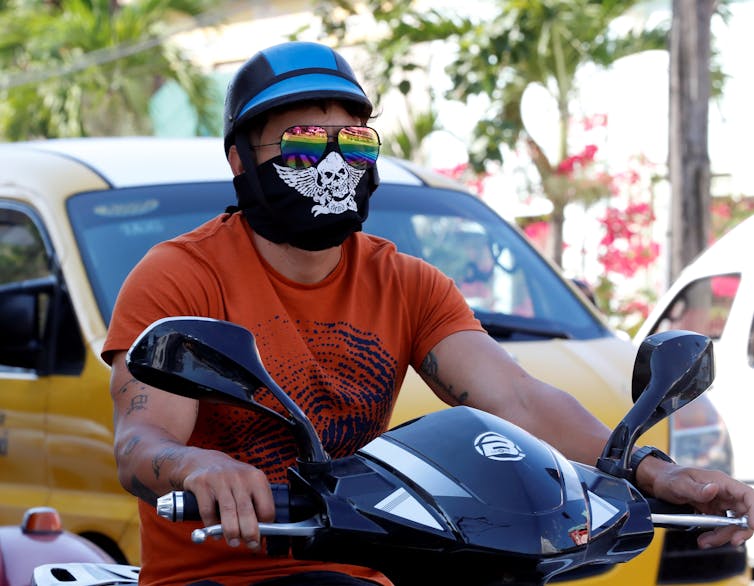 Cuba’s coronavirus response so far has been impressive.
Ernesto Mastrascusa/EPA/AAP
Welfare buffer in Mauritius. The tiny island nation of Mauritius has been under a curfew since March 24 and the impact of coronavirus has devastated its economy. But with a strong social welfare system, it heads into the epidemic on a stronger footing than many sub-Saharan African countries, argues Myriam Blin from Charles Telfair Campus in Mauritius.
What’s the latest evidence on COVID-19 and pets?
Cuba’s coronavirus response so far has been impressive.
Ernesto Mastrascusa/EPA/AAP
Welfare buffer in Mauritius. The tiny island nation of Mauritius has been under a curfew since March 24 and the impact of coronavirus has devastated its economy. But with a strong social welfare system, it heads into the epidemic on a stronger footing than many sub-Saharan African countries, argues Myriam Blin from Charles Telfair Campus in Mauritius.
What’s the latest evidence on COVID-19 and pets?
 You don’t need to worry about getting coronavirus from your pet.
Shutterstock
Pets are vulnerable in other ways, too. More people are adopting pets to keep them company while in isolation. But these pets are at risk of abandonment after lockdowns ease and owners either no longer want them or can’t afford to keep them, writes Heather Fraser from Queensland University of Technology in Australia and her colleagues.
Lessons from history
On conspiracy theories. Despite science delivering more answers about coronavirus every day, conspiracy theories abound. Humans have always found explanations for the unknown, writes Hanna Tervanotko from McMaster University in Canada, and we can look at how the ancient Israelites dealt with epidemics to help understand why.
Learning from mistakes. The course of human history has been shaped by infectious diseases, and the current crisis certainly won’t be the last time. David Griffin from the Doherty Institute and Justin Denholm from Melbourne Health in Australia outline what we’ve learnt from past pandemics.
You don’t need to worry about getting coronavirus from your pet.
Shutterstock
Pets are vulnerable in other ways, too. More people are adopting pets to keep them company while in isolation. But these pets are at risk of abandonment after lockdowns ease and owners either no longer want them or can’t afford to keep them, writes Heather Fraser from Queensland University of Technology in Australia and her colleagues.
Lessons from history
On conspiracy theories. Despite science delivering more answers about coronavirus every day, conspiracy theories abound. Humans have always found explanations for the unknown, writes Hanna Tervanotko from McMaster University in Canada, and we can look at how the ancient Israelites dealt with epidemics to help understand why.
Learning from mistakes. The course of human history has been shaped by infectious diseases, and the current crisis certainly won’t be the last time. David Griffin from the Doherty Institute and Justin Denholm from Melbourne Health in Australia outline what we’ve learnt from past pandemics.
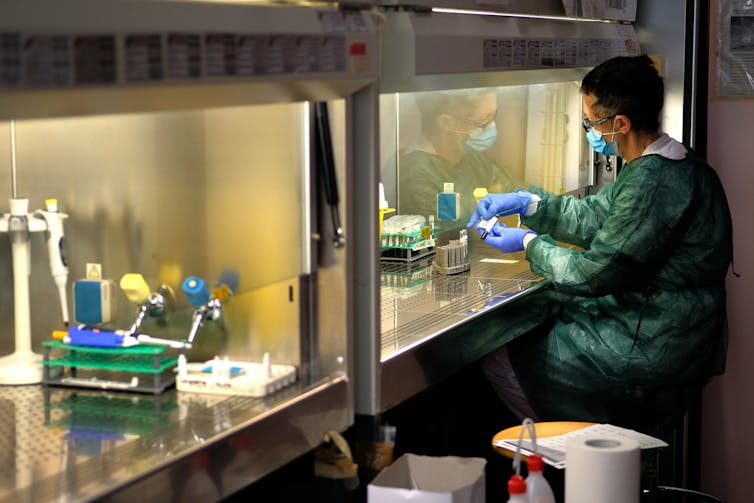 We got a head start on some aspects of COVID-19 because of what we learned from SARS and MERS.
LaPresse/Sipa USA/AAP
How socioeconomic status affects your coronavirus risk. In this pandemic, the poor are packed into small living quarters and compelled to keep showing up to work, while the wealthy work remotely and flee to their second homes. This has eerie similarities to how the rich reacted during the bubonic plague, explains Kathryn McKinley from the University of Maryland, Baltimore County in the United States.
We got a head start on some aspects of COVID-19 because of what we learned from SARS and MERS.
LaPresse/Sipa USA/AAP
How socioeconomic status affects your coronavirus risk. In this pandemic, the poor are packed into small living quarters and compelled to keep showing up to work, while the wealthy work remotely and flee to their second homes. This has eerie similarities to how the rich reacted during the bubonic plague, explains Kathryn McKinley from the University of Maryland, Baltimore County in the United States.
 Get the latest news and advice on COVID-19, direct from the experts in your inbox. Join hundreds of thousands who trust experts by subscribing to our newsletter.
Authors: Fron Jackson-Webb, Deputy Editor/Senior Health + Medicine Editor


 Daily Bulletin


