Read The Times Australia

Daily Bulletin

What will freight and supply chains look like 20 years from now? Experts ponder the scenarios

  • Written by: Roberto Perez-Franco, Senior Research Fellow – Supply Chain Strategy, Deakin University

The Australian government is developing a national freight and supply chain strategy. As part of that effort, we created a set of scenarios describing what Australia’s freight future might look like 20 years from now. In evaluations by a large number of experts of all the future drivers of change we identified, two emerged as the most powerful and uncertain: widespread use of automation, and increased pressure to become environmentally sustainable.
What will freight and supply chains look like 20 years from now? Experts ponder the scenarios

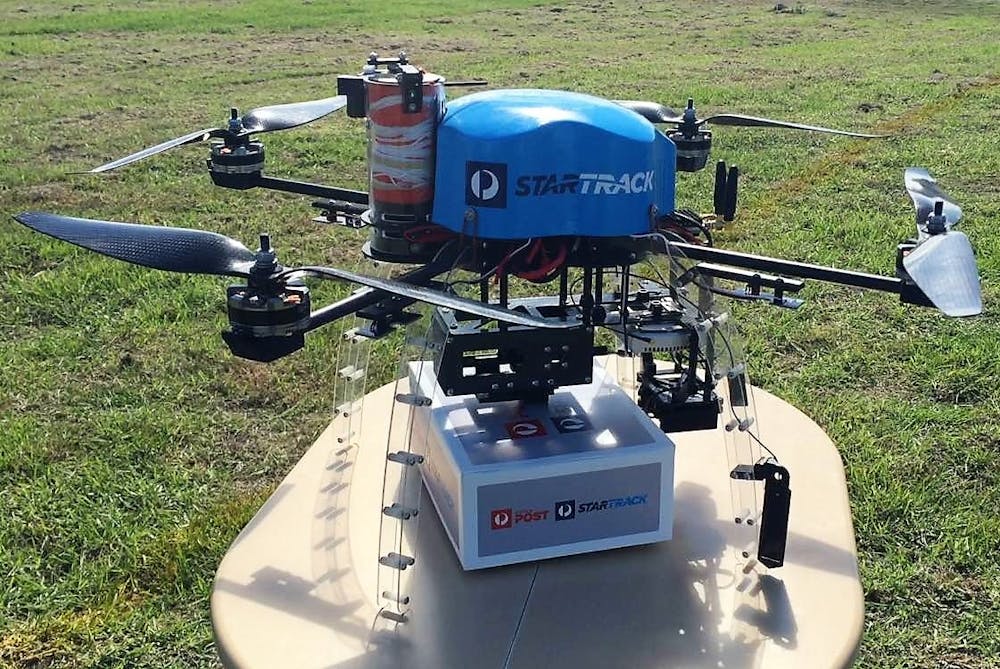
Australia Post demonstrated its first parcel delivery drone in 2016. Luke Costin/AAP

We also explored what Australia should do to remain successful in each of these possible futures. Each scenario was crafted as a rich description of the future, full of elements relevant to supply chains and freight.

To illustrate what the world might look like in each of these futures, several “news articles” accompany the scenarios. They tell us of a fleet of robots that deliver parcels by air and ground directly to Australian homes. They describe a container of Australian wines travelling from Victoria to Shanghai without human intervention, using autonomous ships and vehicles.

Read more: Guilt-free online shopping: can parcel deliveries ever be truly carbon-neutral?

In one scenario, China has become the sole dominant power in its half of the planet. In another, the world economy has fragmented into blocks, with barely any trade between them. Cyber-attacks, terrorism and slander are used as weapons to disrupt supply chains in one scenario. In another, a whole new generation of consumers, the Alphas, demands high levels of service and fast delivery in everything they buy.

What will freight and supply chains look like 20 years from now? Experts ponder the scenarios

Container terminals have long used autonomous vehicles and machinery, and autonomous ships are on the way. Quistnix/Wikimedia, CC BY

How did we create these scenarios?

We started by asking 52 experts in freight and supply chains about things they expect will be different two decades from now. These interviews revealed more than 200 future drivers of change. We validated these in a survey with an even larger group of experts.

We then used 32 families of these drivers as the building blocks to create four scenarios:

  1. The Rise of the Machines – a world where technology dominates everything we do
  2. Enter the Dragon – China is the dominant force in an increasingly fragmented world
  3. Flat, Crowded and Divided – Australia’s population has soared, to the point that easy access to cheap labour has nullified any hopes of a technological revolution
  4. Big Brother Goes Green – the effects of climate change are increasingly real, and both governments and savvy consumers demand that companies meet high environmental standards.
What will freight and supply chains look like 20 years from now? Experts ponder the scenarios Australian miners are increasingly reliant on automation, including ore trucks, but resource exploitation also adds to sustainability pressures. Rio Tinto/AAP

We made sure that each scenario was plausible and internally consistent. The scenarios were designed to be very different from the present and from each other, and to complement each other as a group.

While these scenarios are fun to read and thoroughly grounded in data, they are not predictions. Their purpose is not to forecast what the world will look like in 20 years.

Instead, the scenarios present us with several versions of what the world might look like. Their purpose is to help us prepare for what the future could bring. I like to think of scenario planning as a vaccine against future surprises.

Read more: To service global trade, today's ships and cargo are smarter than ever

The four scenarios served as the stage for a series of workshops conducted across Australia with a total of 90 experts. In these workshops, the experts discussed the challenges and opportunities each scenario presents for Australia’s freight and supply chains. They proposed ways for Australia to be successful in each scenario, and compared notes on suggestions that worked well across multiple scenarios.

We collected more than 15,000 words’ worth of handwritten expert recommendations in our four workshops. We transcribed and analysed all of them, and prepared a complete summary of the most frequent and robust ideas. These are included in our project’s final report.

So what do the experts recommend?

In the experts’ recommendations, it is easy to identify three major themes that are common to all four scenarios.

The first is the ever-growing importance of data. For Australia to be successful in any of the futures we envisioned, large amounts of relevant, timely and reliable data must be gathered and shared. This will require open and common data standards to be developed. The need to protect confidentiality will have to be balanced with the need to share data.

The second major theme is the need to educate for the future. Training in robotics, automation, artificial intelligence (AI) and data analysis should be widely available. A focus on science, technology, engineering and maths (STEM) should start in Year 1. Workers who are displaced by new technologies should be retrained, so they can re-enter the workforce.

Read more: Coming soon to a highway near you: truck platooning

The third major theme is the need to rethink regulation. For Australia to be successful in any of the futures we explored, it is necessary to simplify, standardise and harmonise regulations across levels of government and geographies. Regulations, and the process to create them, must become more flexible and agile, so as to promote innovation.

There are other robust recommendations that, according to the experts, are necessary in all four scenarios.

One is to make exports a strategic priority of national importance. Making exports faster and easier was recommended.

Another is the need for cities to include logistics in their plans from the start, not as an afterthought.

The many insights obtained in our project are informing the freight and supply chain strategy that the Australian government is creating. These will help those making long-term decisions to avoid future surprises that might not have been anticipated without a systematic examination of the many possible futures before us.

Authors: Roberto Perez-Franco, Senior Research Fellow – Supply Chain Strategy, Deakin University

Read more http://theconversation.com/what-will-freight-and-supply-chains-look-like-20-years-from-now-experts-ponder-the-scenarios-98249

why do people get haemorrhoids and how do you get rid of them?

  • Written by: Vincent Ho, Senior Lecturer and clinical academic gastroenterologist, Western Sydney University
why do people get haemorrhoids and how do you get rid of them?Almost half of all people will experience haemorrhoids at some point.from shutterstock.com

You may think of piles as those dreaded things your mum said you’d get if you kept sitting on cold concrete. But actually, every healthy person has piles, or haemorrhoids.

They are columns of cushioned tissue and blood vessels found close to the opening...

Read more …

Scientists create new building material out of fungus, rice and glass

  • Written by: Tien Huynh, Senior Lecturer in the School of Sciences, RMIT University
Scientists create new building material out of fungus, rice and glassFungal bricks have the potential to create safer and more sustainable buildings. V Anisimov / Shutterstock

Would you live in a house made of fungus? It’s not just a rhetorical question: fungi are the key to a new low-carbon, fire-resistant and termite-deterring building material.

This type of material, known as a mycelium composite, uses the...

Read more …

Do cats and dogs lose baby teeth like people do?

  • Written by: Anne Fawcett, Lecturer, University of Sydney
Do cats and dogs lose baby teeth like people do?

This is an article from Curious Kids, a series for children. The Conversation is asking kids to send in questions they’d like an expert to answer. All questions are welcome – serious, weird or wacky!

I just had a baby tooth fall out. Do cats and dogs lose baby teeth like people do? – George Mulhern, aged 7 (nearly 8), Brunswick.

Dear George,

The short answer is yes.

Like young humans, puppies and kittens have baby teeth. We call them “deciduous” or temporary teeth.

Puppies and kittens are born without teeth but have a full set of baby teeth by the time they are two months old. These fall out and are replaced with adult teeth by the time the puppies and kittens are about six months old.

Most of the time you won’t be able to tell if a puppy or kitten’s tooth falls out. Often they fall out in food, or your pet might even swallow them.

Read more: Curious Kids: What makes the Earth spin on its axis every day?

Grown-up humans normally have 32 teeth (unless they lose some or have some extra ones). Puppies have 28 temporary teeth, and when they grow up they have 42 teeth. Kittens have 26 teeth, and when they grow up they have 30 teeth.

Do cats and dogs lose baby teeth like people do? Puppy and kitten baby teeth may be temporary, but they are sharp. Shutterstock

Their teeth are differently shaped to ours. Unlike us, dogs and cats have very long canine teeth, which look a bit like fangs.

The bit of the tooth you can see above the gum is called the crown. But each tooth has at least one root - a part extending below the gum. This can be as big as the crown, sometimes bigger.

Dentists and veterinarians do X-rays on their patients to see whether the tooth roots are healthy, or if there are extra roots, or whether teeth need to be removed.

Do cats and dogs lose baby teeth like people do? The bit of the tooth you can see above the gum is called the crown. This dog has some plaque on its teeth. Regular dental check-ups at the vet are important to keep dog and cat teeth healthy. Shutterstock

They may be only temporary, but the baby teeth of puppies and kittens can be sharp, so I don’t recommend getting too close to have a look. Next time your pet goes to the vet for a check-up, the vet can carefully open your pet’s mouth and show you the teeth.

Sometimes a baby tooth does not fall out before the adult tooth starts to emerge. This means that two teeth are trying to squeeze into one space in the mouth. It can cause pain and other problems, like food getting stuck between the two teeth. That can lead to really stinky breath. So sometimes veterinarians need to remove these stubborn baby teeth.

Do cats and dogs lose baby teeth like people do? There is special toothpaste made just for dogs and cats - and it comes in meaty flavours. Shutterstock

Puppies and kittens don’t brush their own teeth. The best way to keep their teeth clean is to give them a healthy diet, as chewing helps to keep the teeth clean. Regular dental check-ups at the vet are also important. Some pets will let their owners clean their teeth, but this should only be done by a grown up. Not every dog and cat likes having their teeth cleaned.

Read more: Curious Kids: Why do our ears pop?

They can’t use human toothpaste because they don’t know how to spit it out. Instead, there is a special cat and dog toothpaste.

Hello, curious kids! Have you got a question you’d like an expert to answer? Ask an adult to send your question to us. They can:

* Email your question to curiouskids@theconversation.edu.au * Tell us on Twitter

Do cats and dogs lose baby teeth like people do? CC BY-ND Please tell us your name, age and which city you live in. You can send an audio recording of your question too, if you want. Send as many questions as you like! We won’t be able to answer every question but we will do our best.

Authors: Anne Fawcett, Lecturer, University of Sydney

Read more http://theconversation.com/curious-kids-do-cats-and-dogs-lose-baby-teeth-like-people-do-98380

More Articles …

  1. Fossil fish with platypus-like snout shows that coral reefs have long been evolution hotspots
  2. Mothers have little to show for extra days of work under new tax changes
  3. Turbulence isn't just a science problem
  4. How men are embracing 'clean eating' posts on Instagram
  5. here's what to do if your child has oppositional defiant disorder
  6. Overcrowded housing looms as a challenge for our cities
  7. The politicisation of English language proficiency, not poor English itself, creates barriers
  8. China challenge is the issue of the moment in Australian foreign policy
  9. It's not clear where Trump's 'Space Force' fits within international agreement on peaceful use of space
  10. Could playing Fortnite lead to video game addiction? The World Health Organisation says yes, but others disagree
  11. Coalition's record Newspoll losing streak, and Rebekha Sharkie has large lead in Mayo
  12. Proposed NSW logging laws value timber over environmental protection
  13. it's time to rethink satire
  14. Love them or loathe them, private label products are taking over supermarket shelves
  15. How old is too old for surgery, and why?
  16. ABC contributes as much to the economy as it costs the taxpayer: Michelle Guthrie
  17. rejecting neoliberalism shouldn't mean giving up on social liberalism
  18. Patriarchs on pedestals? How doctors are taught to improve their bedside manner
  19. Creating research value needs more than just science – arts, humanities, social sciences can help
  20. How the Anglican Church has hardened its stance against same-sex marriage
  21. Australia must embrace transformation for a sustainable future
  22. apartments are Australia at its most multicultural
  23. the unmissable films of Sydney Film Festival
  24. Clive Palmer's back on the trail, with Brian Burston in tow
  25. Bees get stressed at work too (and it might be causing colony collapse)
  26. you don't know who else could be watching
  27. Why stereotypes of sexy women fans persist at the World Cup
  28. should healthy people take probiotic supplements?
  29. Transgender kids get their own health-care guidelines
  30. Greer is right to say rape law has failings, but wrong to suggest its decriminalisation
  31. Hobart's poorer suburbs are missing out on the 'MONA effect'
  32. Technology is both a weapon and a shield for those experiencing domestic violence
  33. Why your local supermarket is getting smaller
  34. To design safer parks for women, city planners must listen to their stories
  35. China and India’s border dispute is a slow-moving environmental disaster
  36. Three issues language proficiency can hide for students from non-English speaking backgrounds
  37. Threat to the ABC is not sale but more bullying
  38. Wollemi pines are dinosaur trees
  39. Protecting Google from defamation is worth seriously considering
  40. Fallen Kingdom where new dinosaurs emerge but who are the real monsters?
  41. Why soccer is falling behind footy and rugby in Australia
  42. Michelle Grattan on the child abuse royal commission response and One Nation's blow-up
  43. how heat and spice might affect our appetite
  44. why women are enraged by advice to steer clear of violent men
  45. Co-creation can help our companies compete with global giants
  46. Genuine breakthrough or pause in hostilities? After the summit, the world must again wait and see
  47. Aim for cities of all sizes to give everyone a fair go
  48. Dark Emu and the blindness of Australian agriculture
  49. The 5G network threatens to overcrowd the airwaves, putting weather radar at risk
  50. should all women do pelvic floor exercises?

Business News

Australian organisations are relying on business continuity plans built for a far more predictable world

Tariff escalations, supply chain fragility, geopolitical events, and the ongoing threat of cyber disruption have reshaped the risk environment facing Australian organisations. The problem is that ma...

Daily Bulletin - avatar Daily Bulletin

How to Rent a Car for Uber in Melbourne: What Every New Driver Needs to Know

Starting out as an Uber driver in Melbourne is not as complicated as it sounds but getting the vehicle right is where most new drivers get stuck. Uber has strict requirements around vehicle age, condi...

Daily Bulletin - avatar Daily Bulletin

When Should You Speak to a Lawyer About a Legal Issue?

Legal issues can begin with a simple question, then become harder to manage once formal steps are involved. Many people wait until a matter feels urgent before seeking guidance, even though earlier ...

Daily Bulletin - avatar Daily Bulletin

The strategic rise of Bali as Australia’s next essential healthcare support hub

As Australian healthcare providers grapple with unprecedented operational bottlenecks, a new nearshore model is quietly transforming patient care delivery. Forward-thinking organisations,  including...

Daily Bulletin - avatar Daily Bulletin

Cost Savings and Benefits of Using Used Pallets in Logistics

In today’s competitive logistics and supply chain industry, businesses are constantly looking for ways to reduce operational costs without compromising efficiency and reliability. One of the most prac...

Daily Bulletin - avatar Daily Bulletin

How Fulfilment Services in Australia Help Businesses Scale Efficiently

The growth of e-commerce and modern retail has transformed customer expectations. Consumers now expect fast shipping, accurate order processing, and seamless delivery experiences regardless of where...

Daily Bulletin - avatar Daily Bulletin

Practical Ways Australian Workplaces Can Reduce Operating Costs

Reducing business costs doesn’t always mean cutting staff, shrinking services or making the workplace feel bare-bones. In many cases, the smarter savings are hiding in everyday operations: the light...

Daily Bulletin - avatar Daily Bulletin

Executive Recruitment Solutions That Help Organisations Secure Exceptional Leaders

Leadership has a direct impact on organisational performance, employee engagement, strategic growth, and long-term success. Businesses operating in increasingly competitive environments require experi...

Daily Bulletin - avatar Daily Bulletin

Why A WooCommerce Website Designer Matters For Online Growth

Running an online store today requires more than simply listing products and waiting for customers to arrive. Businesses need a website that is fast, reliable, easy to navigate, and designed to suppor...

Daily Bulletin - avatar Daily Bulletin

The Daily Magazine

DIY Rodent Control Vs Professional Help: When Is It Time To Call The Experts?

Rodents are one of the most frustrating pest problems for Australian property owners. Rats and mic...

Lighting Shop in Perth: How The Right Lighting Can Transform Your Home And Business

The right lighting can completely change the look, feel, and functionality of any space. Whether it ...

Traffic Light System Solutions For Safer And More Efficient Traffic Management

Modern cities and growing communities rely heavily on effective traffic management to ensure safety...

Gold Migration Lawyers in Liquidation: How the Closure Affects Your ART Appeal

If your appeal was with Gold Migration Lawyers, a recent change to how the Tribunal decides cases ...

The pressure cooker: life in urban Australia in 2026

Australian cities have always been demanding. Long commutes, rising housing costs, busy schedules a...

What Actually Makes a Good Criminal Lawyer in Melbourne

Most people only think about this question once. That is usually too late. Most people charged wi...

Why Working With A Chatswood Tutor Can Improve Academic Performance

Academic expectations continue increasing for students across primary school, high school, and senio...

Is It Worth Getting Solar Panels in Melbourne?

The real question is not whether solar works in Melbourne. It works. The question is what it is co...

How A Diploma Of Project Management Builds Practical Skills For Modern Work Environments

Developing the ability to plan, execute, and deliver outcomes efficiently is a key requirement in to...