

In the time of coronavirus, donating blood is more essential than ever
- Written by: David Irving, Adjunct Professor, University of Technology Sydney
Blood is like milk, not toilet paper. You can’t just buy a lot of it and save it for later – you need to have a regular, fresh supply for patients who need it.
At the moment, fewer Australians are donating blood than usual. To a degree, we can understand why.
But blood donation is an essential health service, even during the coronavirus pandemic.
Read more: How coronavirus is upsetting the blood supply chain
Donor centres have implemented new measures to ensure the safety of staff, donors and patients receiving transfusions during this time.
If you’re healthy, there’s a good chance you’ll be eligible to donate.
Why do we need more donors now?
We need blood and plasma products every day to support cancer patients, new mums and babies, people with immune deficiencies or blood diseases, and people who need surgery or have suffered trauma.
We’re currently seeing an increase in cancellations and people rescheduling their appointments. Around 900 donors are cancelling appointments each day, up from 800 earlier this month.
There are a number of reasons fewer people are giving blood than usual.
At the start of 2020, we saw a strong response from donors who came forward as a way to help with the nation’s bushfire response. We’ve seen this response to major events before and we know it can affect the supply chain down the track. Because these donors need to wait 12 weeks before they can donate blood again, there are fewer people available to give blood right now.
Read more: Coronavirus: are people with blood group A really at higher risk of catching COVID-19?
Relating to coronavirus specifically, as people follow advice to stay home except for essential activities, they may be less inclined to donate blood.
And if the virus spreads to more people, fewer people may be eligible to donate because of new restrictions to keep our patients, staff, and donor centres safe.
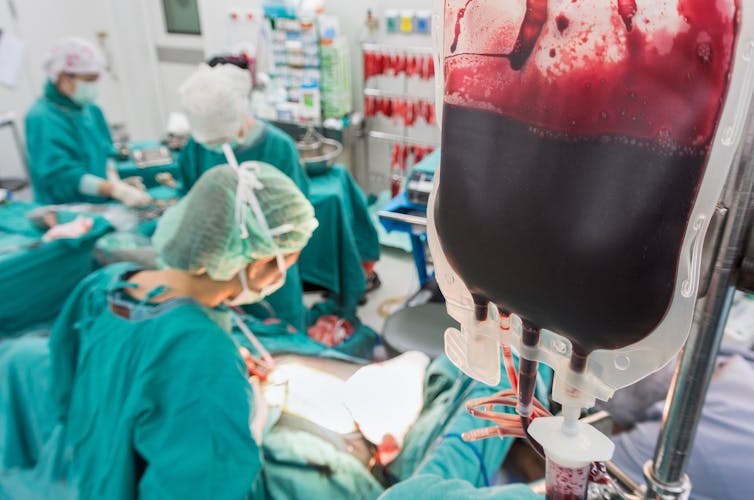 A person having surgery might need a blood transfusion.
Shutterstock
A person having surgery might need a blood transfusion.
Shutterstock
Based on our forecasts for demand from Australian health providers, Australian Red Cross Lifeblood needs an additional 7,000 donors to make appointments to donate blood through to Easter Monday to prevent a shortage.
Who can donate?
Australia currently has around 500,000 blood donors, but millions of others may be eligible to donate.
Normally, if you’re aged between 18 and 76, weigh over 50kg and are healthy and well, you may be eligible. However, in keeping with government advice we encourage those aged 70 and over to postpone their donation during this period. There are other eligibility criteria which remain in place to ensure our patients and donors are safe from the risks we already understand.
Notably, there’s no evidence coronavirus or other respiratory viruses can be transmitted by blood transfusion.
But to be on the safe side, Lifeblood’s strict screening process means people who are unwell can’t donate.
During the pandemic, Lifeblood has introduced new rules to protect the safety of staff, donors and patients, in line with recent recommendations from the World Health Organisation:
anyone who has returned from overseas is unable to donate for 28 days after their return
people who have been in close contact with a confirmed case of COVID-19 will have to wait 28 days before donating
people who have been confirmed as having COVID-19 will not be able to donate until they are cleared by their doctor plus undergo an additional recovery period.
people with mild cold-like symptoms will be unable to donate until they are fully recovered.
Am I allowed to travel to a donor centre, and is it safe?
As many states in Australia have limited non-essential activities, it’s important to understand blood and plasma donation is vital, and travel and venue restrictions don’t prevent people from giving blood.
Donor centres are strictly regulated spaces, monitored regularly by the Therapeutic Goods Administration. There’s a specific code that sets out requirements for staff, premises, collection procedures, quality control and testing, among other things.
Staff adhere to strict sanitation protocols including wearing gloves, wiping down surfaces after every donation and using single use sterile collection kits for every donation.
In addition to the usual hygiene practices and new restrictions to who can donate, Lifeblood is implementing further measures to help protect donors and staff, including:
increased disinfecting of frequently used items
providing additional hand sanitiser for donors to use
additional daily disinfection of all areas in our centres including the donation floor, refreshment areas, reception and more
restricting non-donating visitors to our centres (so only staff and donors are allowed in)
providing public health information consistent with the latest official coronavirus advice in every centre
implementing social distancing in our centres wherever possible, ensuring all donors are at least 1.5 metres away from all other donors.
Read more: Australia’s ethnic face is changing, and so are our blood types
We’re appealing to anyone who has an appointment booked and who feels well to keep it.
If you’re a blood donor and haven’t made your next appointment, you can help by booking one in the next few weeks.
If you’re a blood donor who gave more than month ago, you may be able to donate plasma now.
And if you’ve never donated before, now is a great time to become a donor and help us maintain the nation’s blood supplies.
You can make an appointment online or call 13 14 95.
Authors: David Irving, Adjunct Professor, University of Technology Sydney


 Daily Bulletin


