

Want to improve your mood? It's time to ditch the junk food
- Written by: Megan Lee, Academic Tutor and Lecturer, Southern Cross University
Worldwide, more than 300 million people live with depression. Without effective treatment, the condition can make it difficult to work and maintain relationships with family and friends.
Depression can cause sleep problems, difficulty concentrating, and a lack of interest in activities that are usually pleasurable. At its most extreme, it can lead to suicide.
Read more: What causes depression? What we know, don’t know and suspect
Depression has long been treated with medication and talking therapies – and they’re not going anywhere just yet. But we’re beginning to understand that increasing how much exercise we get and switching to a healthy diet can also play an important role in treating – and even preventing – depression.
So what should you eat more of, and avoid, for the sake of your mood?
Ditch junk food
Research suggests that while healthy diets can reduce the risk or severity of depression, unhealthy diets may increase the risk.
Of course, we all indulge from time to time but unhealthy diets are those that contain lots of foods that are high in energy (kilojoules) and low on nutrition. This means too much of the foods we should limit:
- processed and takeaway foods
- processed meats
- fried food
- butter
- salt
- potatoes
- refined grains, such as those in white bread, pasta, cakes and pastries
- sugary drinks and snacks.
The average Australian consumes 19 serves of junk food a week, and far fewer serves of fibre-rich fresh food and wholegrains than recommended. This leaves us overfed, undernourished and mentally worse off.
Here’s what to eat instead
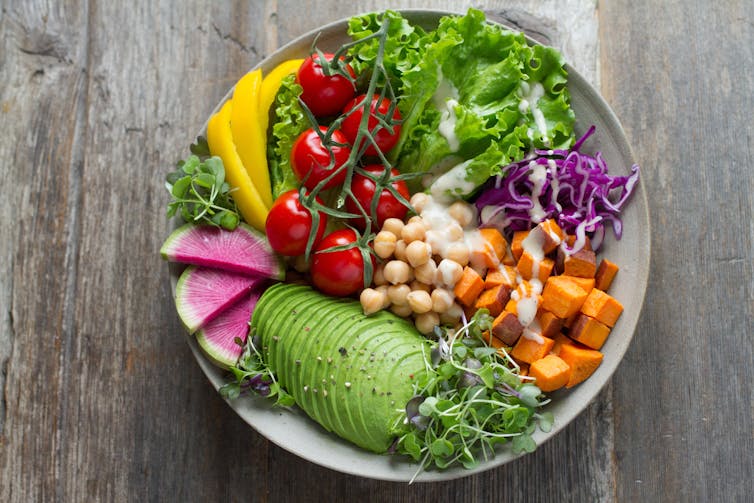 Mix it up.
Anna Pelzer
Mix it up.
Anna Pelzer
Having a healthy diet means consuming a wide variety of nutritious foods every day, including:
- fruit (two serves per day)
- vegetables (five serves)
- wholegrains
- nuts
- legumes
- oily fish
- dairy products
- small quantities of meat
- small quantities of olive oil
- water.
Read more: Back to work? Take lunch from home to save time and money – and boost your mood
This way of eating is common in Mediterranean countries, where people have been identified as having lower rates of cognitive decline, depression and dementia.
In Japan, a diet low in processed foods and high in fresh fruit, vegetables, green tea and soy products is recognised for its protective role in mental health.
How does healthy food help?
A healthy diet is naturally high in five food types that boost our mental health in different ways:
Complex carbohydrates found in fruits, vegetables and wholegrains help fuel our brain cells. Complex carbohydrates release glucose slowly into our system, unlike simple carbohydrates (found in sugary snacks and drinks), which create energy highs and lows throughout the day. These peaks and troughs decrease feelings of happiness and negatively affect our psychological well-being.
Antioxidants in brightly coloured fruit and vegetables scavenge free radicals, eliminate oxidative stress and decrease inflammation in the brain. This in turn increases the feelgood chemicals in the brain that elevate our mood.
Read more: Five types of food to increase your psychological well-being
Omega 3 found in oily fish and B vitamins found in some vegetables increase the production of the brain’s happiness chemicals and have been known to protect against both dementia and depression.
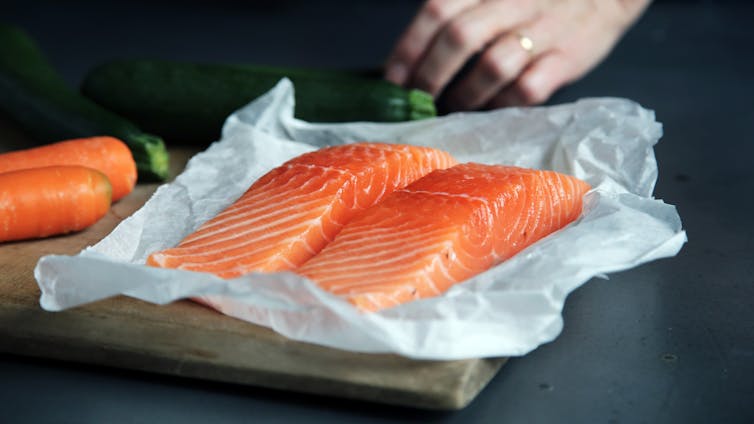 Salmon is an excellent source of omega 3.
Caroline Attwood
Salmon is an excellent source of omega 3.
Caroline Attwood
Pro and prebiotics found in yoghurt, cheese and fermented products boost the millions of bacteria living in our gut. These bacteria produce chemical messengers from the gut to the brain that influence our emotions and reactions to stressful situations.
Research suggests pro- and prebiotics could work on the same neurological pathways that antidepressants do, thereby decreasing depressed and anxious states and elevating happy emotions.
What happens when you switch to a healthy diet?
An Australian research team recently undertook the first randomised control trial studying 56 individuals with depression.
Over a 12-week period, 31 participants were given nutritional consulting sessions and asked to change from their unhealthy diets to a healthy diet. The other 25 attended social support sessions and continued their usual eating patterns.
The participants continued their existing antidepressant and talking therapies during the trial.
At the end of the trial, the depressive symptoms of the group that maintained a healthier diet significantly improved. Some 32% of participants had scores so low they no longer met the criteria for depression, compared with 8% of the control group.
Read more: You've been diagnosed with depression, now what?
The trial was replicated by another research team, which found similar results, and supported by a recent review of all studies on dietary patterns and depression. The review found that across 41 studies, people who stuck to a healthy diet had a 24-35% lower risk of depressive symptoms than those who ate more unhealthy foods.
These findings suggest improving your diet could be a cost-effective complementary treatment for depression and could reduce your risk of developing a mental illness.
Authors: Megan Lee, Academic Tutor and Lecturer, Southern Cross University
Read more http://theconversation.com/want-to-improve-your-mood-its-time-to-ditch-the-junk-food-107358


 Daily Bulletin


