

Friday essay: The dangers of centrism in a time of crisis
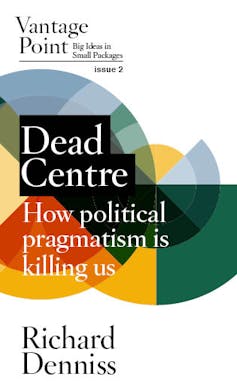
- Written by: Richard Denniss, Adjunct Professor, Crawford School of Public Policy, Australian National University
In the fight against slavery, abolitionists eventually prevailed over slave owners. The long fight was not won in the sensible centre, but by “radical, democratic” absolutists who risked their lives in the fight to save the lives of others. It scares me to think how the ABC, or indeed most of the world’s media, would report on such a debate today.
Can you imagine the economic modelling on the jobs that would be lost in the slave-using industries? Or the endless discussion of the impact on the price of clothes if slaves didn’t pick cotton?
And can you imagine the modern debate about the best way to compensate hard-working slave owners whose business model was based on long-accepted rules allowing whipping and branding?
Slavery persists today, and England (the major global slave trader of the 1800s) paid out the equivalent of over £17 billion in compensation to slave owners in 1837, but it’s important to remember that change was driven by abolitionists, not centrists.
The incrementalism on the path to abolition was a consequence of sustained pressure against change, but the incrementalism was never the goal. Unsurprisingly, few mock the extremism of those who fought to end slavery in the US and UK, and few argue abolitionists would have achieved more if they had asked for less.
Leaders such as António Guterres, the Secretary-General of the UN, have long been arguing for immediate and decisive action on climate both for existential and moral reasons. He is not interested in a middle ground. The climate science says time is crucial. For those determined to avoid dangerous climate change the goal isn’t to decarbonise the economy, but to decarbonise it before scientific thresholds are reached.
It is physics that says we will melt the ice caps, raise sea levels radically and warm waters so much that we don’t just kill the Great Barrier Reef, but we will kill whole food systems in our oceans and on our farmlands. You either accept the physics or you don’t but committing to the goal of decarbonising and not committing to the physics-imposed deadlines is like committing to stopping smoking after you have your second heart attack.
The science says we do need to rush. It is now over 30 years since the Australian government first accepted that climate change was real, was primarily caused by fossil fuels, and was an enormous risk to Australia, but centrists like Albanese are still telling us that it’s not yet time to stop building new gas or coal mines.
Saying those who accept climate science are extreme when they call for more ambitious and urgent action is like criticising a drowning man for being impatient about the delay in launching a rescue boat. Timing is critical for some problems and solving them too late isn’t a solution at all.
Evidence matters
Scientific evidence simply doesn’t recognise political pragmatism or positioning, but while many political centrists express support for evidence-based policy, in reality when the evidence and politics clash centrists usually support the politics, often on the basis that something is better than nothing or that the perfect should not be the enemy of the good.
António Guterres is clearly an extremist by Australian standards when he says,
We are hurtling towards disaster, eyes wide open […] It’s time to wake up and step up […] leave oil, coal and gas in the ground where they belong.
But does anyone think he would change his comments if he knew that Labor had more ambitious household battery policies than the Coalition?

Scientific evidence, cost-benefit analyses, opinion polling and principled leadership all have a role to play in driving reforms.
But while each of these ingredients can play an important role in shaping policy, the ultimate shape of policy, and the public’s reaction to it, will be determined by the judgement and political skill of those in power and their ability to align their priorities with those of the community they wish to serve.
In Australia, centrism means it’s okay to ignore evidence if the other side ignores it too.
Centrism and a captured media
According to some in the legacy Australian media, The Australia Institute is a “left-wing think tank” (we prefer “progressive”) with vested interests and anti-gas views.
According to that same media, the CEOs of foreign-owned companies are simply well-respected captains of industry, business leaders and job creators whose main goal is to grow the Australian economy and pay taxes that support Australian schools and hospitals.
While I personally don’t mind if the media calls me left-wing (I certainly think inequality and climate change are bad, and I certainly think publicly run health and education systems are better than privatised ones) I am confused why some in the media feel obliged to describe me as an “activist” just because I am an economist opposed to public subsidies for foreign-owned companies selling a polluting product.
I’m also confused why they introduce the proponents of those mines and gas wells – paid representatives of companies that receive public funding (sometimes paying zero tax) – as neutral experts. Welcome to the topsy-turvy world of the Australian media.
Of course, the legacy media’s difficulty in navigating Australia’s rapidly changing political landscape goes much deeper than their struggles with who to talk to and how to describe them.
For decades the legacy media has earnestly reported on what the government of the day, and the opposition of the day, thought about the issues that the government or opposition had decided were important. But now that more people vote for crossbenchers than the Coalition, how should the legacy media decide what issues are politically important?
Consider the following: if most Australians think gambling advertising is a big problem, but neither party wants to talk about it, is the lack of response from the government and the opposition proof that gambling is not a story or proof that both major parties are at odds with the vast majority of voters?
Most Australian journalists and their editors follow the agenda set by politicians. This dynamic helps explain why the major political parties’ vote share and the circulation of newspapers are both in steady decline.
While it is the role of the government and opposition to debate their respective parliamentary agendas, it is the role of a well functioning media not only to cover the content of those debates, but also to critique where necessary that debate.
You might think the fact that neither major party wants to unpack AUKUS or how a country that has tripled gas exports in the last ten years could possibly have a shortage of gas should be a big story. Instead, most of the legacy media interpret the refusal of senior politicians to talk about important issues as proof that they are simply not a story.
The ABC is still using an old map which means that while only 318,000 people subscribe to The Australian, The Australian’s editors know that their front pages can set the agenda for the ABC and other outlets.

Read more https://theconversation.com/friday-essay-the-dangers-of-centrism-in-a-time-of-crisis-262961


 Daily Bulletin


