

Read The Times Australia

Daily Bulletin

50 years ago when the Middle East was at war, oil prices skyrocketed. But it probably won't happen this time.

  • Written by: Jamie Cross, Assistant Professor of Econometrics & Statistics, Melbourne Business School
50 years ago when the Middle East was at war, oil prices skyrocketed. But it probably won't happen this time.

Global oil prices jumped after Israel declared war on Hamas in response to its unexpected attack on Israel on Saturday, the eve of the 50th anniversary of the 1973 Arab-Israeli War.

Back then, between late 1973 and early 1974, the world oil price almost quadrupled after the United States offered financial support to Israel in the Arab–Israeli War. The Organisation of Arab Petroleum Exporting Countries cut off oil exports to nations including the US, the United Kingdom, Canada and Japan.

Could it happen again? Although it has been said that history doesn’t repeat, but it rhymes, the answer is almost certainly no.

While there are uncanny similarities between the events of 1973 and today, there are more important differences.

This time it’s different

The 1973 war pitted Israel against two oil-producing nations: Egypt and Syria.

When the US offered support to Israel, the Organisation of Arab Petroleum Exporting Countries instituted an oil embargo, followed by a series of production cuts that pushed up world price of oil.

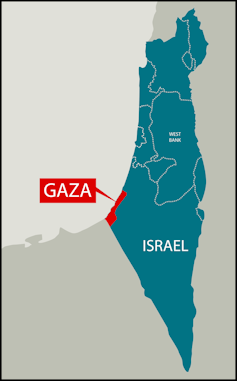
This 2023 war pits Israel against Hamas, the Islamist group that controls the tiny Gaza Strip, hemmed in by Israel, Egypt and the Mediterranean Sea.

Shutterstock Neither Gaza nor Israel produces much oil. The price increase has been short-lived It is possible that the oil-rich nation of Iran could become involved in the conflict. It is rumoured to have helped plan the Hamas attack, although its Supreme Leader, Ayatollah Ali Khamenei has denied Iran’s involvement. It is also possible that petroleum-exporting nations might cut supplies in a show of support for Hamas. But there is no current reason to believe this will happen, and there has been relatively little movement in the petroleum price. When Russia invaded Ukraine in 2022, the price of Brent crude jumped 15% from around US$95 per barrel to US$110. Russia had been the world’s third-biggest oil producer, pumping out about 10% of the world’s supply. In contrast, the Brent crude price closed on Friday (before the Hamas attack) at around US$84. It climbed to US$88 on Monday, then fell back to US$86 – well below even last month’s peak of US$94. Why was there an increase at all? Not every spike in oil prices is due to a shortage of supply. My research shows how jumps in demand can also play a role. These can be further categorised as “precautionary demand” and “speculative demand”. Precautionary demand is the demand for extra oil to hold in reserve, in case supply tightens. Speculative demand comes from investors expecting to profit from further price rises. Both push up the oil price. The good news is that both effects should be relatively short-lived, unless the unexpected happens. In this case, the effects so far have been small. Read more: No hike yet, but what happens on Melbourne Cup Day depends on petrol What would happen if prices did take off? As a relatively small and open economy, Australia would suffer from higher import prices if the price of oil surged. But research suggests the type of price hikes we’ve seen so far would have only a small impact, even if the price rises were sustained. The Hamas-Israel war pushed up oil prices by less than 5%, for about a day. If the 5% increase had been sustained, the research suggests Australia’s inflation rate would have been (at most) 0.3 percentage points higher, Australia’s GDP would have been about 1% lower and Australia’s real exchange rate would have been 2% lower. This means Australia’s Reserve Bank will be watching the oil price closely, but if the price remains stable (or at least no more unstable than it has been) the war is unlikely to prompt the bank to move interest rates. Authors: Jamie Cross, Assistant Professor of Econometrics & Statistics, Melbourne Business School

Read more https://theconversation.com/50-years-ago-when-the-middle-east-was-at-war-oil-prices-skyrocketed-but-it-probably-wont-happen-this-time-215523

Business News

Designing Eco-Friendly Custom Water Bottles for Your Next Event

The Evolution of Sustainable Event Merchandise Event planning has undergone a massive transformation over the last decade. Gone are the days when organizers could hand out cheap, single use plastic...

Daily Bulletin - avatar Daily Bulletin

Why Choosing a Professional Florist Melbourne Makes Flower Delivery Impactful

Flowers have a great power to speak when humans cannot express their feelings with right words. Flowers are the best gifts when you are celebrating a birthday or welcoming a newborn child into your fa...

Daily Bulletin - avatar Daily Bulletin

The Business Case for Choosing Australian Fabricators Over Imported Alternatives

For a long time, you might have defaulted to overseas suppliers when sourcing fabricated metal components for a project. The unit price was lower on paper, and the maths seemed straightforward. That...

Daily Bulletin - avatar Daily Bulletin

Australian organisations are relying on business continuity plans built for a far more predictable world

Tariff escalations, supply chain fragility, geopolitical events, and the ongoing threat of cyber disruption have reshaped the risk environment facing Australian organisations. The problem is that ma...

Daily Bulletin - avatar Daily Bulletin

How to Rent a Car for Uber in Melbourne: What Every New Driver Needs to Know

Starting out as an Uber driver in Melbourne is not as complicated as it sounds but getting the vehicle right is where most new drivers get stuck. Uber has strict requirements around vehicle age, condi...

Daily Bulletin - avatar Daily Bulletin

When Should You Speak to a Lawyer About a Legal Issue?

Legal issues can begin with a simple question, then become harder to manage once formal steps are involved. Many people wait until a matter feels urgent before seeking guidance, even though earlier ...

Daily Bulletin - avatar Daily Bulletin

The strategic rise of Bali as Australia’s next essential healthcare support hub

As Australian healthcare providers grapple with unprecedented operational bottlenecks, a new nearshore model is quietly transforming patient care delivery. Forward-thinking organisations,  including...

Daily Bulletin - avatar Daily Bulletin

Cost Savings and Benefits of Using Used Pallets in Logistics

In today’s competitive logistics and supply chain industry, businesses are constantly looking for ways to reduce operational costs without compromising efficiency and reliability. One of the most prac...

Daily Bulletin - avatar Daily Bulletin

How Fulfilment Services in Australia Help Businesses Scale Efficiently

The growth of e-commerce and modern retail has transformed customer expectations. Consumers now expect fast shipping, accurate order processing, and seamless delivery experiences regardless of where...

Daily Bulletin - avatar Daily Bulletin

The Daily Magazine

Why Businesses Are Choosing Virtual Reception Services

In today’s fast-paced digital world, businesses are constantly evolving to meet the needs of their...

Why Concrete Pools Offer Endless Design Possibilities

Imagine stepping into your backyard and being greeted by a stunning pool that reflects your person...

How Legal Advice Can Help with Driving Offences

Driving is a part of everyday life for many people. It allows us the freedom to travel, commute, a...

How Experienced Lawyers Support Criminal Defence

Facing criminal charges can be one of the most daunting experiences in a person's life. The stakes...

How media and Digital Marketing agencies Help Brands Stand Out

In today’s hyper-connected world, standing out is more challenging than ever. Brands are competing...

How to Choose the Perfect Honeymoon Destination

Your wedding day is just the beginning of an incredible journey together. After saying "I do," it’...

Walking Shoes vs Running Shoes: Which Are Better for Daily Walking?

Running shoes have become the default athletic footwear for a lot of people who rarely run. That ...

What Happens to Your Rubbish After It Leaves the Kerb

Most of us don’t think much about rubbish once the bin lid closes. The truck arrives, the bins are e...

Thermoplastic vs. Paint: The True Long-Term Cost Comparison

Line marking looks like a simple line item on a school maintenance budget, until the true cost of ...