

China's only now revealed crucial COVID-19 origins data. Earlier disclosure may have saved us 3 years of political argy-bargy
- Written by: Dominic Dwyer, Director of Public Health Pathology, NSW Health Pathology, Westmead Hospital and University of Sydney, University of Sydney
Once more, we’re talking about the origins of SARS-CoV-2, the virus that causes COVID-19.
First the US Department of Energy’s review gave more emphasis to the laboratory leak hypothesis than previously, although the confidence for this conclusion was low.
Second, and more importantly, is the release and analysis this week of viral and animal genetic material collected from the Huanan wet market in Wuhan, the place forever associated with the beginning of the pandemic.
It’s a subject close to me. I was the Australian representative on the international World Health Organization (WHO) investigation into the origins of SARS-CoV-2. I went to Wuhan on a fact-finding mission in early 2021. I visited the now-closed market.
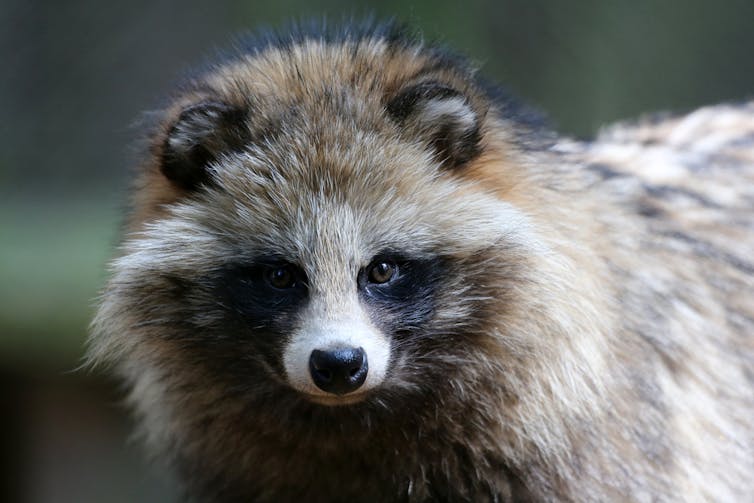
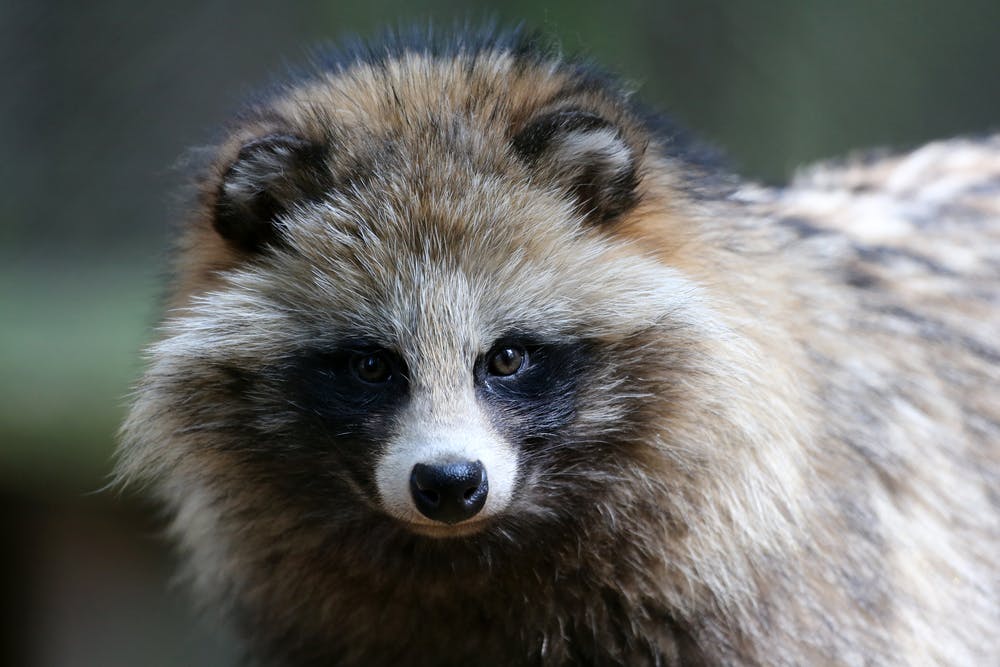
Now we have stronger evidence that places raccoon dogs at the market as a possible animal reservoir of SARS-CoV-2, potentially infecting humans.
If we’d had this evidence three years ago, we need to ask ourselves how different recent history would have been. We would have reduced the enormous energy, media frenzy and political argy-bargy about less likely hypotheses of the pandemic’s origins. We might have better focused our research attention.
Read more: COVID origins debate: what to make of new findings linking the virus to raccoon dogs
The twists, turns and puzzles
Samples were taken from various places in the market, in January 2020, within weeks of the early COVID-19 cases in Wuhan. SARS-CoV-2 RNA and human DNA were identified in these environmental samples, although no animal swabs were positive for the virus.
This was presented to the WHO team investigating the origins of the pandemic in January 2021, of which I was part.
The work was published as a preprint (posted online, before being independently verified) in February 2022.
The underlying “metagenomic” data to support the conclusions in the preprint – that SARS-CoV-2 and human (but not animal) sequences were present – needed to be provided to allow further analyses. This is something that is generally required by journals and regarded as appropriate in the spirit of scientific openness and collaboration.
However, it wasn’t until early March 2023 that the international community had access to the data.
That’s when there was a “drop” of these environmental metagenomic sequences into the GISAID database, the international open access repository of viral sequences.
This allowed an independent team of international experts to analyse them. In a startling revelation, they identified large amounts of raccoon dog and other animal DNA in conjunction with SARS-CoV-2. Raccoon dogs can be readily infected with SARS-CoV-2 and can transmit it. The international team published their observations as a preprint earlier this week.
Of note was the physical co-location of these virus and animal sequences in the corner of what is a very large market, the corner associated with early human cases. It is now known (but initially rejected by Chinese authorities) that wild and farmed animals were sold in this area of the market.
After the sequences were analysed by the international team, the Chinese scientists who had performed the market testing were contacted for comment and discussion – especially around the important observation that mixed in among the SARS-CoV-2 sequences were a large proportion of raccoon dog and other animal DNA.
The sequences were then withdrawn from the GISAID database within a few hours of the study authors being approached. This is perhaps unusual for an open database such as GISAID, and clarity could be sought why this occurred.
Read more: The COVID lab leak theory is dead. Here's how we know the virus came from a Wuhan market
Why is this work important?
This latest work does not prove raccoon dogs were definitely the source of SARS-CoV-2. Presumably, they are likely to have been an intermediate host between bats and humans. Bats harbour many coronaviruses, including ones related to SARS-CoV-2.
However, the data fits the narrative of the animal/human connections of SARS-CoV-2.
This, along with other examination of animal links to SARS-CoV-2, should be taken in the context of the lack of robust data to support the other SARS-CoV-2 origins hypotheses, such as a laboratory leak, contaminated frozen food, and acquisition outside China. Bit by bit, the evidence supports animal origins of the outbreak, centred on the Huanan market in Wuhan.
The length of time taken for this early work to surface and the difficulty in accessing the raw data are unfortunate, points made recently by the WHO.
Sympathetically, one might say, the wrong analysis of the original data collected in early 2020 was undertaken and the researchers missed the animal links.
Cynically, (and without evidence) one might say that the significance of the data was recognised, but not made readily available. This is a question for the Chinese researchers at the Chinese Center for Disease Control to answer.
What are the implications of this delay?
If this had been identified in early 2020 then further studies to understand the viral origins in animals could have been undertaken.
Three years on, it is very difficult to do such studies, tracking backwards from the now closed market to the animal sources and the people who handled these animals.
Clearer answers would have taken some of the heat out of the debate around the possible viral origins. Of course, all hypotheses should remain on the table, but some of these could have been much better explored with earlier data.
Would it have changed the course of the pandemic? Probably not. The virus had already spread worldwide and adapted very well to human-to-human transmission by the time this work was available. However, it would have driven research in better directions and improved future pandemic planning.
What now?
Lessons for the future are obvious. Open disclosure of sequence data is the best way to undertake scientific investigation, especially for something of such international significance.
Making data unavailable, or not reaching out for assistance in complicated analyses, only slows the process.
The resulting political to and fro by all countries, particularly the US and China, has meant that suspicion has deepened, and progress slowed even further.
Although WHO has been criticised for errors in how it managed the pandemic, and in collating data to understand the origins and progress future research, it remains the best international agency to foster open sharing of data.
Scientists, for the most part, want to do the right thing and find the answers to important questions. Facilitating this is crucial.
Authors: Dominic Dwyer, Director of Public Health Pathology, NSW Health Pathology, Westmead Hospital and University of Sydney, University of Sydney


 Daily Bulletin


