

Nationals have long valued stable leadership and being strong Coalition partners – this shouldn't change now
- Written by: Geoff Cockfield, Professor of Government and Economics, and Deputy Dean, University of Southern Queensland
The National Party turned 100 on January 22, but celebrations were overshadowed by leadership turbulence, with Barnaby Joyce challenging Michael McCormack for the leadership.
The failed move to restore Joyce as leader of the party was driven, according to Joyce and some supporters, by the “need” to have a determined and independent voice within the Coalition. As Joyce put it,
we have to speak with our own voice, we have to drive agendas.
The Nationals are a distinct party, but working within the Coalition has provided them with considerable policy influence throughout history. And Coalitions have worked best in the past with adroit leadership and by resolving conflicts out of the public eye.
McCormack may grow into an adroit leader but he is at risk of being set aside because of ambition and impatience, as well as a hazy view of the history and place of the party.
Early electoral successes for the party
The Australian Country Party, the precursor to the modern National Party, was integral to establishment of non-Labor politics in Australia. It started in 1920 with representation from all states and immediate electoral impact.
The party’s share of lower house seats peaked at the 1937 federal election, and from then until the 1980s, it was routinely able to win about 10% of the vote and 15% of lower house seats.
The golden age for the Country Party was from 1949-83 – a time marked by solid parliamentary representation, the routine holding of key portfolios and strong influence on agricultural and rural policies.
The success of this period was not just about electoral performance. During the Coalition’s many years in government, the partner parties were also ideologically close on issues that mattered to the Country Party, which helped minimise open conflict.
Read more: With a new prime minister nominated, the Nationals have a rare chance to assert themselves
These shared ideologies are no longer as strong as they once were, in part due to the increasing influence of market liberalism within the Liberal Party in the 1980s and ‘90s.
Furthermore, the Nationals are now an even smaller parliamentary party in 2020 than in 1980, holding only 10.6% of lower house seats.
Given tensions over policy, a need to maintain a rural identity and the rise of populist parties such as One Nation and The Shooters, Farmers and Fishers Party, the Nationals are now facing a challenge: how to express their independence, while remaining good partners in the Coalition.
Why good leadership and stable Coalitions have mattered
Throughout the history of the Country and National parties, it’s been critical for their leaders to maintain a fine balancing act.
It didn’t start out this way. The Country Party’s first leader, William McWilliams, wanted pure independence for the party, as was expected by the various farm organisations that supported “country” candidates in the 1920s.
However, his successor, Earle Page, set the model for future federal Coalition arrangements.
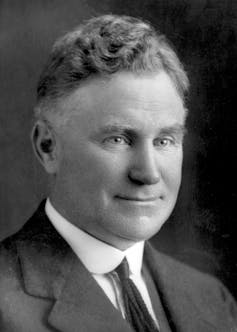 Earle Page.
National Library of Australia
Earle Page.
National Library of Australia
After the 1922 federal election, Country Party members fired some warning shots in their tactical voting on legislation and procedures. This led to the offer of a Coalition with the Nationalists, who even sacrificed a leader to allow this to happen. The Country Party secured key portfolios and Page formed a strong working relationship with the new Nationalists leader, Prime Minister Stanley Bruce.
This also ushered in a long period of relative stability in the leadership ranks of the Country Party. For 63 years, the party had only five leaders. And four of those served for more than 12 years each: Page (1921-39), Artie Fadden (1941-58), John McEwen (1958-71) and Doug Anthony (1971-84).
Each of these leaders had a strong working relationship with their Liberal counterparts in the Coalition. Fadden and McEwen both worked well with Robert Menzies, while Anthony had a close partnership with Malcolm Fraser.
Read more: Australian politics explainer: Robert Menzies and the birth of the Liberal-National coalition
Coalition stability was challenged briefly in 1939 when Page made an intemperate personal attack on Menzies, then leader of the United Australia Party. Page declared in the House that Menzies was unfit to lead government because he had not served in the first world war.
Page refused to work with Menzies, jeopardising the Coalition and leading to Page’s resignation as party leader. The internal turmoil contributed to Labor’s 1941 election win.
National leaders standing firm with Coalition partners
Since 1983, no Nationals leader has made it to 10 years at the top, though until the attempted Joyce resurrection, there had been only one direct leadership challenge.
Anthony’s successor, Ian Sinclair (1984-89) was one of the Country/National Party strongmen of the Fraser-Anthony era and an ardent coalitionist.
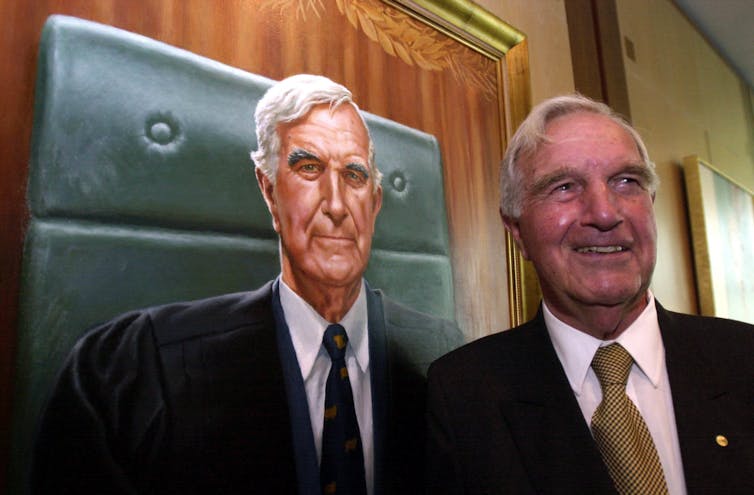 Ian Sinclair with his portrait when it was unveiled in parliament in 2001.
Alan Porritt/AAP
Ian Sinclair with his portrait when it was unveiled in parliament in 2001.
Alan Porritt/AAP
However, he was politically wounded by the “Joh for Canberra” push, an attempt by Queensland National Party premier Sir Joh Bjelke-Petersen to become prime minister. This resulted in a Coalition split and the loss of the 1988 federal election, leading Charles Blunt to challenge for and win the National leadership.
Read more: Issues that swung elections: the dramatic and inglorious fall of Joh Bjelke-Petersen
Most of the other National leaders in recent times, from Tim Fischer to Warren Truss, were strong coalitionists and worked to keep policy and personal conflict behind closed doors.
Even when the Nats felt pressure from their supporters for adhering to Coalition policies, their leaders held firm to maintain stability in government. Fischer, for example, stood shoulder to shoulder with John Howard on gun laws, despite the blow-back he received in many rural areas.
Prior to the 2019 election, McCormack also supported Coalition preferencing of minor parties like One Nation over Labor on ballot papers and attacked the Greens and animal activists in true agrarian populist style.
The result was good for the Nats: he led the party to unexpectedly retain 16 lower house seats.
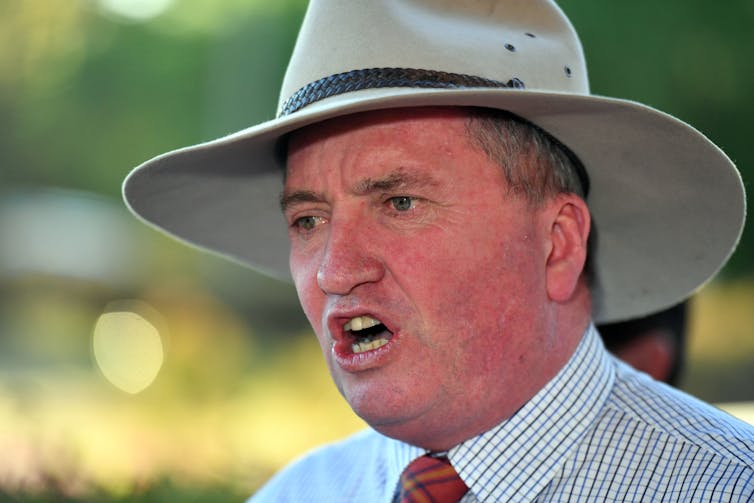 Joyce has warned the National Party could cease to exist if more MPs decide to leave.
Mick Tsikas/AAP
Joyce has warned the National Party could cease to exist if more MPs decide to leave.
Mick Tsikas/AAP
Why Joyce’s return would be a mistake
Yet, for Joyce’s supporters, this is still insufficient. Joyce’s time in leadership (2016-18) was a step back from diplomatic coalitionism with a more publicly combative style and demands for shifts in Coalition policy in key areas such as water.
But based on recent history, it is hard to argue the government isn’t paying enough attention to rural policy, given Prime Minister Scott Morrison has frequently been on the Wombat Trail to provide assistance to victims of floods, fires and droughts.
Read more: Politics with Michelle Grattan: Michael McCormack moves on from his near-death experience
Even so, there will be no return to the golden age of rural policy-making in Australia, and the Nationals could be content, though they won’t be, with a long history of punching above their weight.
Coalitions have worked well for the Nationals, in terms of electoral success and policy outcomes, relative to their representation in parliaments. The party should bear this in mind when selecting its leaders, since the fracturing of Coalitions hasn’t served it well in the past.
Authors: Geoff Cockfield, Professor of Government and Economics, and Deputy Dean, University of Southern Queensland


 Daily Bulletin


