

Gum disease, decay, missing teeth: why people with mental illness have poorer oral health
- Written by: Bonnie Clough, Senior Lecturer, School of Applied Psychology, Griffith University
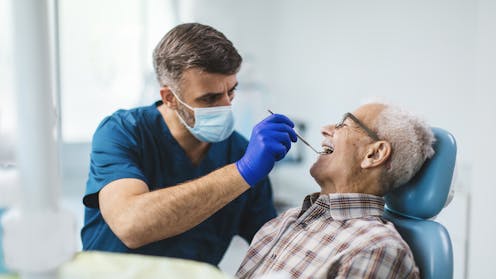
People with poor mental health face many challenges. One that’s perhaps lesser known is that they’re more likely than the overall population to have poor oral health.
Research has shown people with serious mental illness are four times more likely than the general population to have gum disease. They’re nearly three times more likely to have lost all their teeth due to problems such as gum disease and tooth decay.
Serious mental illnesses include major depressive disorder, bipolar disorder and psychotic disorders such as schizophrenia. These conditions affect about 800,000 Australians.
People living with schizophrenia have, on average, eight more teeth that are decayed, missing or filled than the general population.
So why does this link exist? And what can we do to address the problem?
Why is this a problem?
Oral health problems are expensive to fix and can make it hard for people to eat, socialise, work or even just smile.
What’s more, dental issues can land people in hospital. Our research shows dental conditions are the third most common reason for preventable hospital admissions among people with serious mental illness.
Meanwhile, poor oral health is linked with long-term health conditions such as diabetes, heart disease, some cancers, and even cognitive problems. This is because the bacteria associated with gum diseases can cause inflammation throughout the body, which affects other systems in the body.
Why are mental health and oral health linked?
Poor mental and oral health share common risk factors. Social factors such as isolation, unemployment and housing insecurity can worsen both oral and mental health.
For example, unemployment increases the risk of oral disease. This can be due to financial difficulties, reduced access to oral health care, or potential changes to diet and hygiene practices.
At the same time, oral disease can increase barriers to finding employment, due to stigma, discrimination, dental pain and associated long-term health conditions.
It’s clear the relationship between oral health and mental health goes both ways. Dental disease can reduce self-esteem and increase psychological distress. Meanwhile, symptoms of mental health conditions, such as low motivation, can make engaging in good oral health practices, including brushing, flossing, and visiting the dentist, more difficult.
And like many people, those with serious mental illness can experience significant anxiety about going to the dentist. They may also have experienced trauma in the past, which can make visiting a dental clinic a frightening experience.
Separately, poor oral health can be made worse by some medications for mental health conditions. Certain medications can interfere with saliva production, reducing the protective barrier that covers the teeth. Some may also increase sugar cravings, which heightens the risk of tooth decay.
Our research
In a recent study, we interviewed young people with mental illness. Our findings show the significant personal costs of dental disease among people with mental illness, and highlight the relationship between oral and mental health.
Smiling is one of our best ways to communicate, but we found people with serious mental illness were sometimes embarrassed and ashamed to smile due to poor oral health.
One participant told us:
[poor oral health is] not only [about] the physical aspects of restricting how you eat, but it’s also about your mental health in terms of your self-esteem, your self-confidence, and basic wellbeing, which sort of drives me to become more isolated.
Another said:
for me, it was that serious fear of – God my teeth are looking really crap, and in the past they’ve [dental practitioners] asked, “Hey, you’ve missed this spot; what’s happening?”. How do I explain to them, hey, I’ve had some really shitty stuff happening and I have a very serious episode of depression?
What can we do?
Another of our recent studies focused on improving oral health awareness and behaviours among young adults experiencing mental health difficulties. We found a brief online oral health education program improved participants’ oral health knowledge and attitudes.
Improving oral health can result in improved mental wellbeing, self-esteem and quality of life. But achieving this isn’t always easy.
Limited Medicare coverage for dental care means oral diseases are frequently treated late, particularly among people with mental illness. By this time, more invasive treatments, such as removal of teeth, are often required.
It’s crucial the health system takes a holistic approach to caring for people experiencing serious mental illness. That means we have mental health staff who ask questions about oral health, and dental practitioners who are trained to manage the unique oral health needs of people with serious mental illness.
It also means increasing government funding for oral health services – promotion, prevention and improved interdisciplinary care. This includes better collaboration between oral health, mental health, and peer and informal support sectors.
Authors: Bonnie Clough, Senior Lecturer, School of Applied Psychology, Griffith University


 Daily Bulletin


