

From 'snapback' to 'comeback': policy gridlock as Morrison government puts slogans over substance
- Written by: Frank Bongiorno, Professor of History, ANU College of Arts and Social Sciences, Australian National University
You don’t hear much about snapback these days. Back in the early months of the COVID-19 pandemic, snapback was what passed for the Morrison government’s vision of where it wanted the country to land after a massive government stimulus had done its work. JobKeeper, JobSeeker and all of the other measures would be quietly retired once normality returned.
As marketing – and this is a government that takes marketing rather seriously – snapback had its problems. There’s something rather violent about the image. If something doesn’t snap back, it might just snap off. People who lose their temper just snap.
Snapback is an image of reaction and reversion: it implies a return to some former state. Modern governments like to imagine they are “moving forward”, as Julia Gillard said 24 times in five minutes while announcing the 2010 election.
As snapback wandered off into the sunset, we began to hear about comeback. This one apparently came from professional marketers, so voters can be pleased as punch their tax dollars have been hard at work.
Comeback relies on sporting analogy. Comeback is what Carlton used to do in the good old days, when it came from 44 points behind to win the 1970 AFL grand final against Collingwood. Comeback is what Scott Morrison did in the 2019 election. Comeback is about getting behind but coming out in front.
Snapback was defensive politics. There was a subtext: we might be spending billions of dollars, paying people to stay home, doubling the unemployment benefit and leaving a massive debt for future generations to pay back. And we are practising the kind of profligacy we normally attribute to the Labor Party and the Greens. But never mind. Once it’s over, Superman will become Clark Kent again, and the Incredible Hulk will revert to Bruce Banner.
The spirit of the Morrison government, in so far as it can be discerned beyond its incessant marketing and its quagmire of scandal, is better captured by snapback than comeback. This is a government that has resisted every opportunity offered by the greatest crisis faced by an Australian government since the second world war to break the policy gridlock of a generation.
The forgiving would point to its success in helping to steer Australia through the pandemic. To expect policy innovation in such an environment of crisis is to ask too much. The government has had difficulties of quite sufficient scale and complexity to keep it fully busy. There will be time for policy adventures later, when we are safely vaccinated and feeling more secure.
There is a long list of stalled policy challenges that would fit this narrative.
The running on China policy is being left to sinophobic and shouty backbenchers rather than being subjected to the disciplines of a government process concerned with the national interest.
Religious freedom – deemed so urgent and significant just a year or so ago that one might have imagined that Australia’s pagans were already marinating the nation’s Christians for a hungry lion’s dinner – is barely heard of these days.
Morrison abandoned his supposedly essential union-busting integrity bill back in the days when he saw some political capital to be gained by getting all chummy with the ACTU.
Climate change policy is as big a mess now as it was when Morrison was holidaying in Hawaii during last summer’s bushfires.
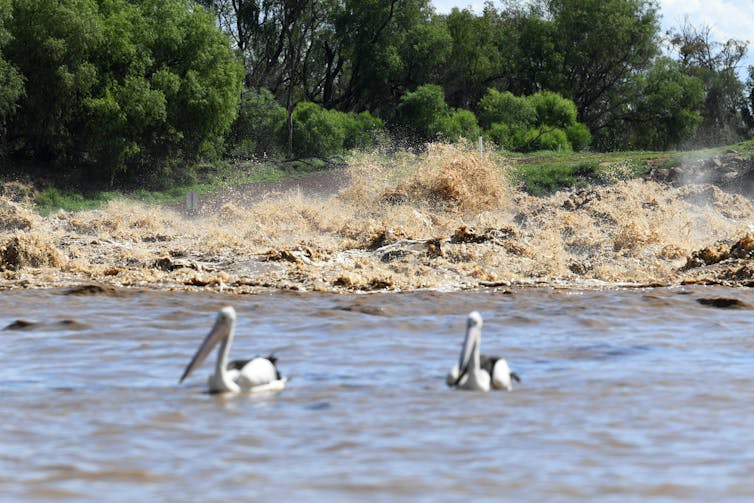 Climate change is one of the many areas of policy inertia.
Dan Peled/AAP
Climate change is one of the many areas of policy inertia.
Dan Peled/AAP
A proper anti-corruption watchdog – never regarded as urgent or desirable by Canberra’s politicians and mandarins – seems as distant as ever.
The piquancy of the recent exposures of the abusive nature of Parliament House for women is increased by the fact the government did almost nothing to respond to the recommendations of a report on sexual harassment in the workplace delivered by the Sex Discrimination Commissioner early in the pandemic.
Crises sometimes do strangle policy. The outbreak of the first world war led to the suspension of the British Liberal government’s implementation of home rule for Ireland. The outbreak of the second world war in Australia killed off the efforts of the government of the day to set up a system of contributory social insurance. In each case, a crisis came that allowed a government to drop a policy that was difficult and divisive.
The technique is familiar enough in the Morrison government. Its religious freedom draft bill pleased neither opponents nor supporters of such legislation and seemed likely to unleash a world of troubles for the government. The pandemic meant it could be put on hold.
The draft bill for an anti-corruption watchdog is widely regarded by experts as likely to create a body better designed to cover up than to expose corruption. It, too, is on hold.
The need to shift rapidly to renewable energy is on hold while gas industry representatives are brought into the heart of government.
It’s a cliché to call a crisis an opportunity, but that doesn’t meant it’s untrue. Government ministers are fond of elevating their own sense of importance and self-worth by comparing their predicament to that of governments that faced crises in the past. They are particularly attached to war rhetoric and analogy because so many of them fancy themselves as their country’s Winston Churchill – a kind of occupational hazard of the modern male politician who will fight them on the beaches and landing grounds as soon as he’s finished building the girls a cubby-house.
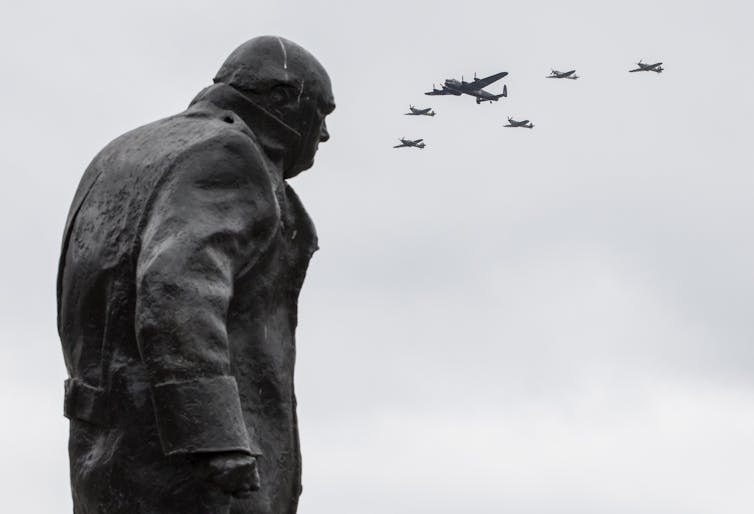 Many male politicians are fond of viewing themselves as their country’s Winston Churchill in leading through a crisis. But few have the policy chops to match.
Rick Findler/EPA/AAP
Many male politicians are fond of viewing themselves as their country’s Winston Churchill in leading through a crisis. But few have the policy chops to match.
Rick Findler/EPA/AAP
But there’s another problem with the wartime analogy. Australian governments in the two world wars, whatever their political complexion, understood that they needed to articulate a national vision. They saw in crisis and emergency an opportunity for policy creativity and breakthrough, even for something of a paradigm shift.
By way of contrast, it’s hard to recall a government less able than Morrison’s to articulate a national vision, one less cultured and less interested in changing anything unless it’s another of those workplace relations bills that this time – we promise – will unleash the animal spirits of Australian capitalism.
It’s hard to escape the suspicion that Morrison and his government have become captives of the manner in which they achieved their last election victory. Their approach might even help them to win another.
But there are already signs that there is a price to be paid – not just by citizens, but by those who claim the privilege of governing them – for leaving to the future everything too confronting to grapple with in the present.
Authors: Frank Bongiorno, Professor of History, ANU College of Arts and Social Sciences, Australian National University


 Daily Bulletin


