

Frontline border workers to be vaccinated first as New Zealand approves Pfizer vaccine
- Written by: David Murdoch, Dean and Head of Campus, Christchurch, University of Otago
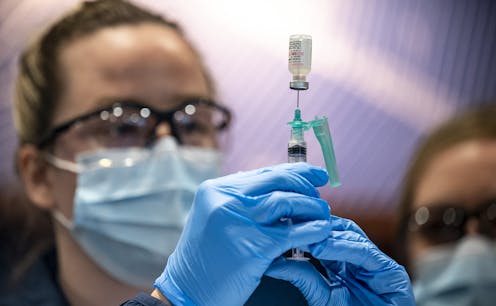
Today’s provisional approval of the Pfizer/BioNTech vaccine means New Zealand could start rolling out its COVID-19 immunisation programme as early as next month.
In announcing the approval, Prime Minister Jacinda Ardern said border workers and the people they live with, cleaners and nurses working at quarantine facilities, security and airline staff and hotel workers would be among the first to get the vaccine.
I have said 2021 is the year of the vaccine. It’s a full-year programme we have only just begun. We’re not in a race to be first, but to ensure safe and timely access to vaccines for all New Zealanders.
Unlike in other countries, the approval is not an emergency authorisation. Medsafe, the regulatory body for all therapeutic products in New Zealand, does not have the ability to grant emergency use authorisation.
Since the emergence of more easily transmittable variants of the coronavirus, the government has been under pressure to bring the vaccination programme forward.
But with no uncontained community transmission, the country is in a fortunate position to be able to establish a complex national programme carefully.
New Zealand’s vaccine portfolio
The Pfizer/BioNTech vaccine is one of four COVID-19 vaccines for which New Zealand has negotiated purchase agreements. The other vaccines, from AstraZeneca, Janssen and Novavax, have yet to complete the Medsafe evaluation process.
Collectively the four vaccines provide a mix of different technologies, manufacturing locations and supply chains.
The goal of this “diverse portfolio” approach is to provide some confidence that effective vaccines will be available to deliver a national vaccination programme in New Zealand and to purchase enough doses for neighbouring Pacific countries. The latter include New Zealand realm countries, Tokelau, Niue and the Cook Islands, as well as Tonga, Samoa and Tuvalu.
Managing the portfolio will be complex. Decisions will need to be made about how to deliver multiple vaccines that become available at different stages of the programme. Each vaccine has its own characteristics, including dosing schedule, storage conditions and efficacy data from clinical trials.
Needless to say, effective communication about details of the programme to health professionals and the New Zealand public will be vital to achieve sufficiently high population coverage.
Read more: How to talk to vaccine skeptics so they might actually hear you
Who goes first
The current plan is to sequence delivery to prioritise protection for those at highest risk of acquiring COVID-19 or those at greatest risk of poor outcomes from the disease. This plan is based on three scenarios, depending on the presence or level of COVID-19 community transmission.
New Zealand’s current situation, with two active cases in the community but no further community transmission, means frontline staff would be vaccinated first. This includes people working at the border and managed isolation and quarantine facilities, health care workers at highest risk of exposure to COVID-19, and the household contacts of these workers.
The next tier would include high-risk health, public sector and emergency service workers, and then the most vulnerable groups in the community, including older people and those with underlying medical conditions.
The current expectation is to start vaccination of higher-risk groups in March, with mass public vaccination starting later in the year. The aim is to complete the programme by the end of 2021.
The approvals process
The Pfizer/BioNTech vaccine uses new mRNA technology, which hasn’t previously been used in human vaccines. Clinical trials have shown the vaccine to be safe and 95% efficacious in preventing COVID-19.
Mild and short-lived reactions, such as pain at the injection site or headaches, have occurred in less than 20% of people who have received the vaccine. Allergic reactions were rare and usually occurred in people with a past history of allergies.
Medsafe’s approval process ensures that all COVID-19 vaccines comply with both international standards and local requirements for quality, safety and efficacy, as well as being of the highest manufacturing quality.
Although Medsafe provides an independent evaluation process, it has close links with medicines regulatory bodies in other countries, such as the US Food and Drug Administration and European Medicines Agency.
New Zealand benefits from the sharing of information among regulatory authorities, and we can learn from the experiences of countries that are ahead in rolling out their vaccination programmes.
Seeing the roll out of COVID-19 vaccines in many other countries from late last year, often under emergency authorisation, has raised our expectations for New Zealand. Although there is strong motivation to start the roll out as soon as possible, we also need to have a system in place to complete the vaccination programme successfully.
The big question is when international borders may reopen. This remains difficult to predict and depends on many factors beyond the successful completion of a vaccination programme in New Zealand. Controlling COVID-19 is a global challenge, and for our borders to open we need to be sure that both New Zealanders and visitors are protected.
Authors: David Murdoch, Dean and Head of Campus, Christchurch, University of Otago


 Daily Bulletin


