

Coronavirus lockdown made many of us anxious. But for some people, returning to 'normal' might be scarier
- Written by: Amy Dawel, Lecturer, Australian National University
Many Australians have welcomed the gradual easing of coronavirus restrictions. We can now catch up with friends and family in small numbers, and get out and about a little more than we’ve been able to for a couple of months.
All being well, restrictions will continue to be lifted in the weeks and months to come, allowing us slowly to return to some kind of “normal”.
This is good news for the economy and employment, and will hopefully help ease the high levels of distress and mental health problems our community has been experiencing during the pandemic.
For some people, however, the idea of reconnecting with the outside world may provoke other anxieties.
Read more: 7 ways to manage your #coronaphobia
Social distancing and mental health
We surveyed a representative sample of Australian adults at the end of March, about a week after restaurants and cafes first closed, and with gatherings restricted to two people.
Even at this early stage, it was clear levels of depression and anxiety were much higher than usual in the community.
Surprisingly, exposure to the coronavirus itself had minimal impact on people’s mental health. We found the social and financial disruption caused by the restrictions had a much more marked effect.
Read more: Not all doom and gloom: even in a pandemic, mixed emotions are more common than negative ones
Many people in our survey reported the restrictions also benefited them in some way. Around two-thirds of people listed at least one positive impact coronavirus has had on them, such as spending more time with family.
 For many people, lockdown has been an opportunity to enjoy more time with family.
Shutterstock
For many people, lockdown has been an opportunity to enjoy more time with family.
Shutterstock
Another positive thing we’ve seen is communities coming together in new ways. For instance, teddy bears have appeared in windows for neighbourhood children to find, with We’re Going On a Bear Hunt Australia connecting more than 20,000 followers on Facebook.
More than half of our survey respondents were hopeful “society will have improved in one or more ways” after the pandemic.
Adjusting to the ‘new normal’
Our findings show adverse events can affect mental health and well-being in unanticipated and mixed ways.
Because we haven’t experienced anything like the coronavirus pandemic in recent history, we simply don’t know how our community will readjust as restrictions ease.
Some people may feel particularly anxious about reconnecting. For example, people with social anxiety might experience heightened anxiety about the prospect of socialising again.
One of the main evidence-based treatments for social anxiety is exposure therapy. When social exposure is reduced, as has been the case over the last couple of months, social anxiety may flare up, making returning to social gatherings particularly daunting.
Read more: Coronavirus is stressful. Here are some ways to cope with the anxiety
Meanwhile, people who fear germs, such as some people with obsessive compulsive disorder (OCD), might worry about re-entering public spaces.
Even people who don’t normally have these tendencies might share similar worries. Our survey found around half of Australians were at least moderately concerned about becoming infected with COVID-19.
People who experienced psychological conditions before the pandemic may be able to draw on skills they’ve learned through therapy to help them re-engage. But people without any prior experience of anxiety or depression could struggle more because they have never had to manage these conditions before.
Tips for people who are feeling anxious
Whether you have previously experienced anxiety or not, there are several strategies you can use to manage your worries around re-engaging.
One effective psychological approach to managing anxiety is cognitive behavioural therapy (CBT).
CBT involves learning about how your thoughts affect your mood, and developing strategies to manage problematic thinking patterns. Importantly, CBT can be effectively delivered online.
CBT might also include developing a social or germ “exposure hierarchy”. For instance, working up from seeing a few people briefly to longer interactions, with more people. There are some critical ingredients that make exposure therapy work though, so it’s important to get advice from a psychologist or follow an evidence-based online program.
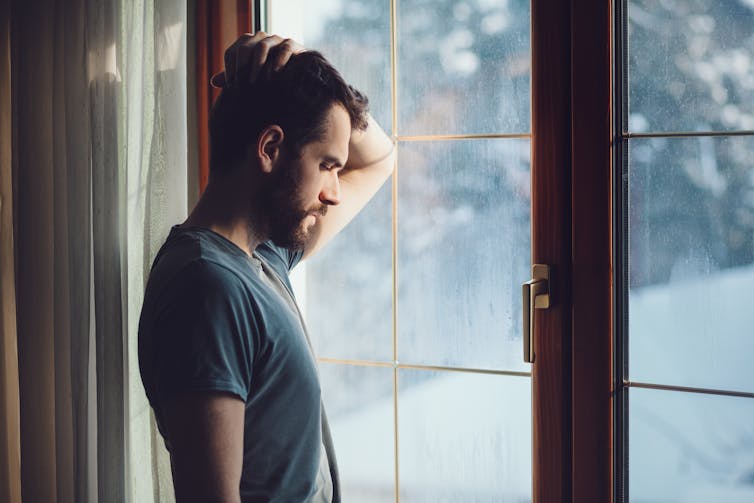 If you’re feeling anxious about coming out of your isolation bubble, you’re probably not the only one.
Shutterstock
If you’re feeling anxious about coming out of your isolation bubble, you’re probably not the only one.
Shutterstock
Mindfulness, regular exercise and getting enough sleep can also help manage anxiety.
If you or someone you know is feeling distressed, it may also be helpful to contact relevant support services in your area – many of which now have telehealth options.
These may include your GP or a psychologist, or community services like Lifeline, SANE Australia, or Beyond Blue.
Things are likely to change over time
The public health measures implemented to mitigate coronavirus risk have worked to stop the spread of the virus, but they’ve also disrupted the way we live.
There’s much speculation on what the future will look like, resulting in the “new normal” terminology. A key concern as we continue to navigate this new normal is our collective mental health.
Japan experienced a 20% decrease in suicides in April 2020 relative to April 2019. Yet predictive modelling raises concerns about suicide rates potentially rising after the pandemic recedes.
Read more: Is isolation a feeling?
But it’s important to remember no model can perfectly predict the complex impacts of this unprecedented pandemic.
We’ll need ongoing data collection to assess how community mental health is faring over the coming months. And we’ll need to use this data to implement evidence-based mental health strategies and policies as and when they’re needed.
Authors: Amy Dawel, Lecturer, Australian National University


 Daily Bulletin


