

Thermoplastic vs. Paint: The True Long-Term Cost Comparison
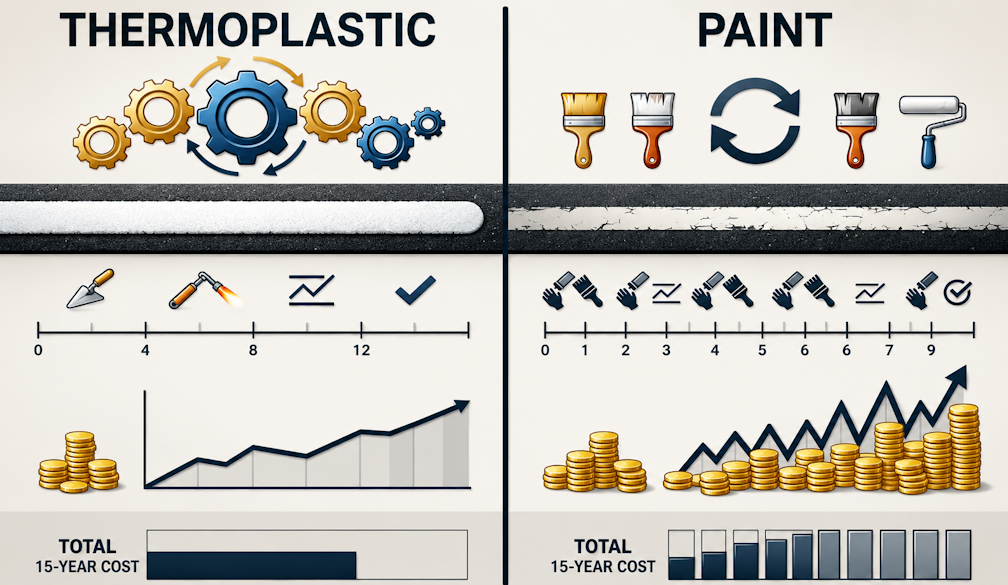
Line marking looks like a simple line item on a school maintenance budget, until the true cost of getting it wrong shows up months later in fading, re-marking bills, and safety concerns. For schools, councils, and early learning centres across Australia, the choice between thermoplastic and paint for playground line marking is rarely just about the price per square metre. The real cost comparison plays out over years, and it starts with understanding how each material actually holds up on a playground surface.
The Sticker Price Isn't the Story
On paper, paint wins the upfront comparison every time. It is cheaper to buy, faster to apply, and requires less specialised equipment. For low-traffic areas or short-term line marking projects, that upfront saving can be the right call.
Thermoplastic costs more from the outset. It requires heating to around 200°C before application and specialised equipment to apply it evenly across a playground surface. That higher entry cost is exactly why some schools default to paint without running the numbers further down the timeline.
Where the Real Cost Difference Emerges
Painted line markings typically need re-application every two to six years, depending on foot traffic and weather exposure. Thermoplastic line markings, properly applied, commonly last four to seven years and hold their brightness and durability for longer under heavy playground use.
Multiply that gap across a multi-year maintenance plan for a busy primary school playground, and the maintenance cycle becomes the deciding factor, not the initial invoice. Every re-marking job carries costs well beyond the material itself: site access, scheduling around school terms, and the disruption of having a playground partially out of use while markings are redone. A playground that re-marks every two years is paying for that disruption two to three times more often than one using thermoplastic.
The Durability Factor Schools Often Underestimate
This is where the comparison gets overlooked. Playground line marking takes a different kind of wear to a car park or a road. Constant foot traffic, running, scooters, and weather exposure all put pressure on the surface, and thermoplastic is built to withstand that kind of repeated impact without cracking or fading quickly.
Paint has a lower upfront cost, which is part of its appeal for quick turnaround jobs or smaller line marking projects. But that same trade-off means painted playground markings fade faster under high foot traffic, and a faded hopscotch grid or sports court line does not just look tired, it becomes harder for children to see and follow, which matters for games, sports lessons, and general playground safety.
Building the True Cost Picture
A fair thermoplastic-versus-paint comparison for playground line marking should weigh:
- Material and application cost per square metre
- Expected lifespan under the playground's actual foot traffic
- Number of re-marking cycles over a five to seven year period
- Disruption to school activities during re-marking
- Visibility and safety of the markings as they age
When laid out this way, thermoplastic frequently wins on total cost of ownership for high-traffic playgrounds and sports courts, despite losing the sticker price comparison. Paint remains a reasonable choice for smaller, low-traffic areas or budget-constrained projects where speed matters more than longevity.
Getting Playground Line Marking Right
Whether a school chooses thermoplastic or paint, the quality of the line marking itself makes the biggest difference to how long it lasts. Well-applied line marking, using the right material for the space and the right preparation beforehand, is what actually delivers the long-term value either option promises on paper.
For schools and councils weighing thermoplastic against paint, it pays to think beyond the initial quote and consider how the playground will be used day to day. The right school line marking choice today can mean a brighter, safer, and lower-maintenance playground for years to come.


 Daily Bulletin


