

What Happens to Your Rubbish After It Leaves the Kerb
Most of us don’t think much about rubbish once the bin lid closes. The truck arrives, the bins are emptied, and whatever was inside seems to disappear from daily life.
Of course, it doesn’t really disappear at all.
Behind every kerbside collection is a much larger system involving collection schedules, transport, sorting, recycling, transfer stations, landfill management and, increasingly, efforts to recover as much useful material as possible. Companies such as FOOTT operate within that less visible side of everyday life, where waste has to be moved efficiently and handled in a way that works for homes, businesses and communities.
So what actually happens after the truck pulls away?
The Collection Truck Is Only the Beginning
The first stage is the one everyone sees. Waste collection vehicles follow planned routes, emptying household or commercial bins and carrying their contents to the next point in the system.
That destination depends on what kind of waste has been collected.
General waste may head toward a transfer station or landfill. Recycling can be sent for sorting and processing. Green waste may be treated separately so it can be composted or otherwise recovered.
In regional areas, transport can be a particularly important part of the process because facilities may be spread over much greater distances than they are in major cities. That means route planning and logistics matter enormously.
A poorly organised system doesn’t just waste fuel. It can increase costs, create delays and make reliable collection much harder to maintain.
Transfer Stations Help Keep Things Moving
You may have driven past a waste transfer station without really knowing what happens there.
Essentially, these facilities act as an intermediate point between local collection and final processing or disposal. Smaller collection vehicles can unload waste there, after which it may be consolidated into larger loads for more efficient transport.
This makes particular sense when landfill or recycling facilities are a long way from the collection area.
Imagine sending every local rubbish truck on a lengthy round trip to a distant disposal site. It would consume enormous amounts of time and fuel. Consolidating loads can make the overall system far more efficient.
Transfer stations may also offer facilities for specific waste streams, allowing materials such as scrap metal, cardboard, garden waste or certain bulky items to be separated before they continue through the system.
Recycling Has to Be Sorted
Putting something in the recycling bin is only the start of its recycling journey.
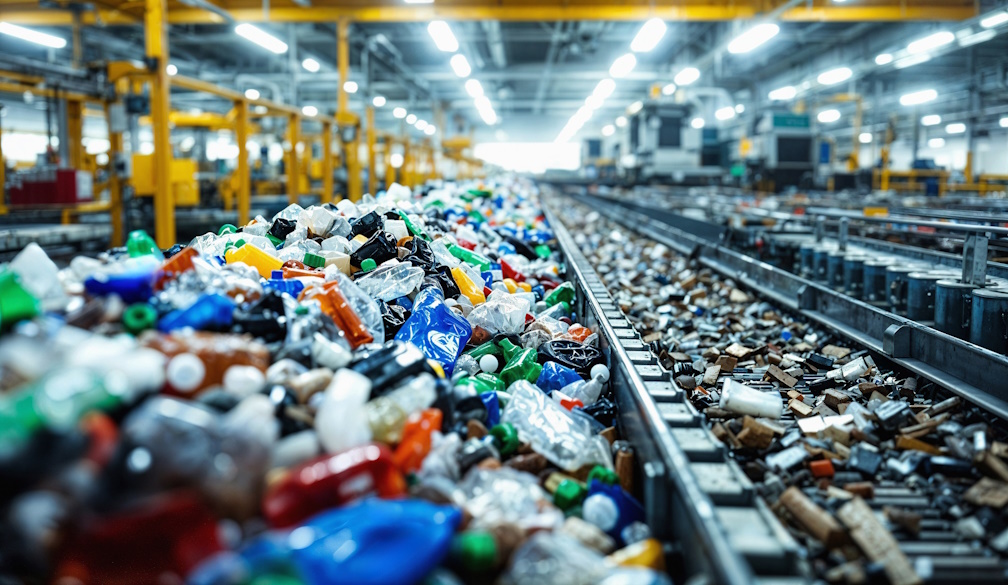
Once collected, mixed recyclables generally need to be separated into different materials. Depending on the facility, this can involve a combination of machinery and manual sorting.
Cardboard and paper need to be separated from glass, metals and plastics. Different kinds of plastic may also need to be identified because they don’t all go through the same recycling processes.
Contamination makes this job much harder.
Food, plastic bags and non-recyclable items placed in recycling bins can interfere with sorting equipment and reduce the quality of recoverable material. In some cases, heavily contaminated loads may not be suitable for recycling at all.
That’s one reason those instructions printed on council recycling guides actually matter. A small decision at the household level can affect what happens much further down the chain.
Not Everything Can Be Recovered
Ideally, as much waste as possible would be reused, recycled or processed into something useful. In reality, there are still materials that end up in landfill.
Modern landfill management involves much more than digging a hole and tipping rubbish into it.
Sites are designed and managed to control issues such as runoff, odour, pests and the gases created as waste decomposes. Waste is generally compacted to reduce the amount of space it occupies, and sections of landfill are progressively covered and managed over time.
The aim is to make disposal as controlled as possible while reducing unnecessary landfill use in the first place.
This is why separating recoverable waste streams is so valuable. Every tonne of material that can be genuinely recycled or reused is material that doesn’t need to occupy limited landfill space.
Commercial Waste Can Be Quite Different
Household bins are only one part of the picture.
Businesses can produce large and very different waste streams depending on what they do. A hospitality venue may generate significant amounts of food waste, glass and cardboard. A construction site may produce timber, concrete, packaging and metals. An office may have relatively little general waste but large quantities of paper and cardboard.
Managing these materials effectively often means using different bin sizes, collection frequencies and waste streams.
There’s little value in having an enormous general waste bin collected twice a week if most of what the business throws away is clean cardboard that could be managed separately.
A sensible waste setup should reflect what an organisation actually produces rather than relying on a one-size-fits-all arrangement.
Regional Waste Has Its Own Challenges
Waste collection is easy to take for granted in densely populated areas where homes and businesses sit close together.
Regional communities can be very different.
Collection routes may cover long distances, populations can be spread across multiple towns and specialised processing facilities may not exist nearby. Seasonal industries can also change waste volumes dramatically at different times of year.
All of this makes local knowledge important.
A system designed for metropolitan conditions won’t necessarily translate neatly to a regional town. Vehicles, schedules, facilities and collection methods have to make sense for the geography and the communities they serve.
Your Bin Choices Still Matter
It’s easy to think individual households have little influence over something as large as the waste industry, but the system begins with what gets placed in each bin.
Separating recyclables properly, keeping contamination low and using green-waste services where available can all improve the chances of material being recovered.
It also helps to think before something becomes rubbish in the first place. Could it be repaired? Donated? Sold? Reused for something else?
Waste management isn’t only about dealing with rubbish once it exists. Reducing how much we create in the first place is often the simplest part of the equation.
Rubbish Never Really Goes “Away”
The great convenience of kerbside collection is that it makes waste feel almost invisible.
One morning there’s a full bin. By lunchtime it’s empty.
But what happens after that involves people, vehicles, machinery, infrastructure and an enormous amount of planning. Every load has to go somewhere, and every material has to either be recovered, processed or safely disposed of.
Understanding that process makes the humble wheelie bin look a little different. It isn’t the end of the rubbish journey at all.
It’s just the front door.


 Daily Bulletin


