

Options Available When a Company Faces Financial Distress
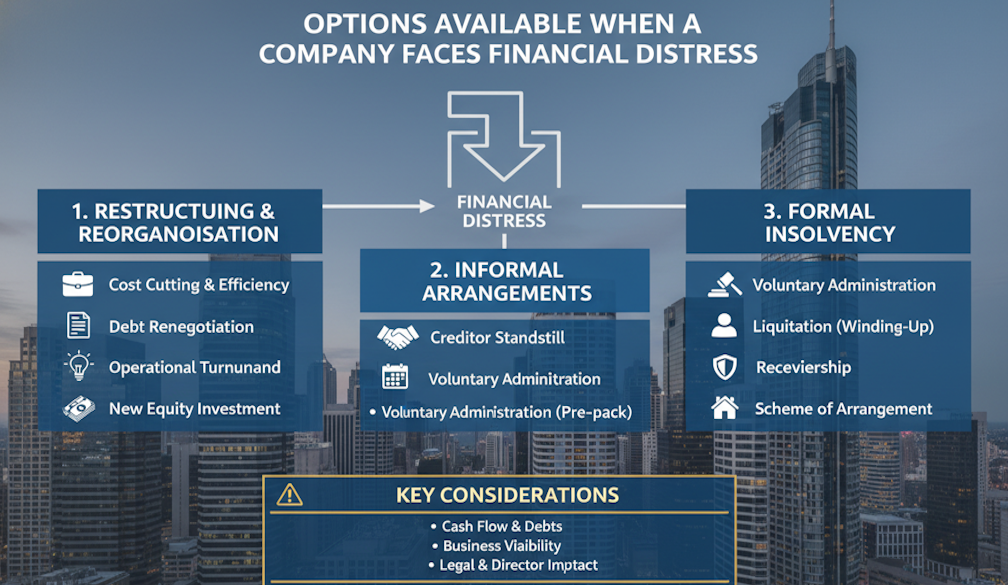
Financial distress can develop gradually or arrive suddenly, and when it does, the decisions made in the early stages often determine what options remain available later. Directors who act promptly when a company begins to struggle are generally in a far better position than those who delay, both in terms of the outcomes they can achieve and their own legal exposure. Insolvency lawyers in Melbourne work with companies at every stage of financial difficulty, from early warning signs through to formal insolvency proceedings. This article will outline the key options available when a company finds itself in financial trouble.
Voluntary Administration
Voluntary administration is a formal process designed to give a financially distressed company breathing space while its future is assessed. Once a voluntary administrator is appointed, a moratorium comes into effect that generally prevents creditors from taking action against the company while the process runs its course. The administrator assesses the company's financial position and presents creditors with options, which typically include executing a deed of company arrangement, returning control of the company to its directors or proceeding to liquidation. For companies that are viable but temporarily overwhelmed by debt, voluntary administration can provide the structure needed to reach a workable resolution. Insolvency lawyers in Melbourne can advise on whether this process is appropriate and what it means for directors and stakeholders throughout.
Restructuring and Informal Arrangements
Not every company in financial difficulty needs to enter a formal insolvency process. In some cases, a negotiated restructuring of existing debt or a payment arrangement reached directly with creditors can resolve the situation without the costs and reputational implications of formal proceedings. This kind of informal approach works best when the company's underlying business remains viable and creditors are willing to engage constructively. Having legal expertise involved in these negotiations is important, as the terms of any arrangement need to be properly documented and the company's obligations clearly understood. Insolvency lawyers in Melbourne can assist in structuring negotiations and ensuring that any agreement reached actually addresses the company's financial position in a sustainable way.
Liquidation
Where a company is no longer viable, liquidation brings the business to an orderly end by realising its assets and distributing the proceeds to creditors according to a legally prescribed priority. Liquidation can be initiated voluntarily by shareholders or creditors, or it can be ordered by a court. While liquidation marks the end of the company's operations, the process itself is designed to be orderly and transparent, providing certainty for all parties involved. Directors considering liquidation should seek legal advice early, particularly around their duties in the lead-up to insolvency, as trading while insolvent can carry personal liability. Insolvency lawyers in Melbourne can help directors understand their obligations and navigate the process in a way that manages their own exposure appropriately.
Final Thoughts
When a company faces financial distress, the range of available options narrows the longer action is delayed, which makes early legal advice one of the most valuable steps a director can take. Voluntary administration, informal restructuring and liquidation each serve different purposes depending on the severity of the situation and whether the underlying business has a viable future. Insolvency lawyers in Melbourne bring the legal knowledge needed to assess the circumstances honestly and identify the path most suitable for the company and its stakeholders.


 Daily Bulletin


