

What Healthcare Teams Look for When Choosing Specialist Surgical Supplies
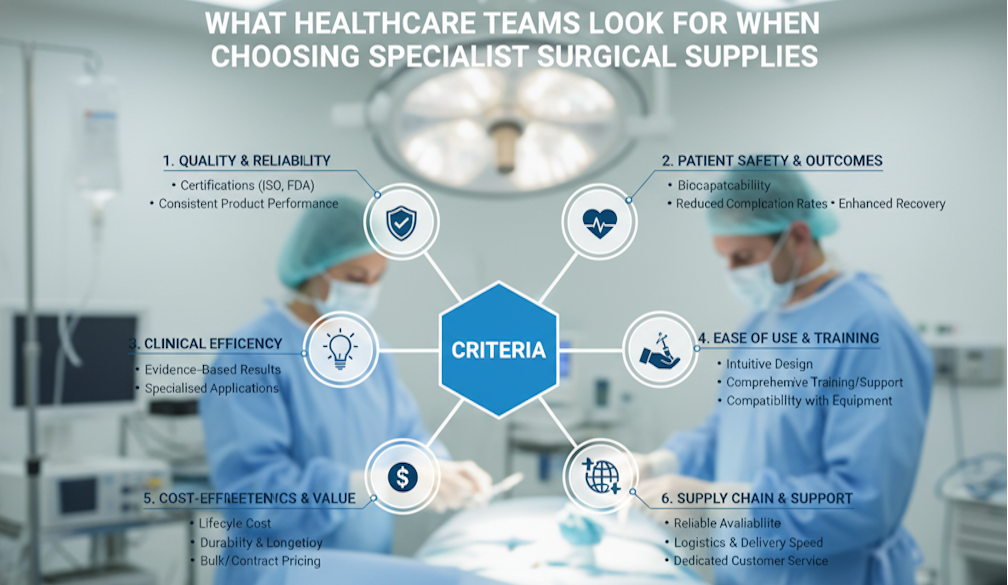
In clinical environments, small details rarely stay small. A delayed instrument, a poorly matched device or inconsistent supply quality can affect theatre flow, staff confidence and patient outcomes. That’s why healthcare teams tend to be highly selective when choosing specialist surgical supplies. They’re not just buying products; they’re choosing tools, systems and supplier relationships that need to perform reliably under pressure.
For procurement teams, theatre managers and clinicians, the right supplier brings more than a catalogue. They offer consistency, technical understanding and confidence that each item will support safe, efficient care. Providers such as INKA Surgical play an important role in this space by supplying specialist surgical products designed for demanding clinical settings.
Product Quality and Clinical Reliability
Quality is usually the first consideration. Surgical supplies must meet strict expectations for performance, sterility, durability and precision. Healthcare teams need products that behave consistently from one procedure to the next, without unexpected variation.
This is especially important in specialist areas where instruments, implants, devices or accessories must suit specific procedural requirements. A product that feels intuitive, functions cleanly and holds up under clinical use can reduce friction for surgeons and theatre staff. Reliability also helps minimise disruptions, which is critical when teams are working within tight operating schedules.
Compliance, Safety and Traceability
Healthcare procurement is closely tied to compliance. Teams need confidence that surgical supplies meet relevant regulatory requirements and are supported by clear documentation. This may include product specifications, batch information, sterilisation details, instructions for use and traceability records.
Traceability matters because clinical teams need to know where products came from, when they were supplied and how they can be tracked if an issue arises. Good suppliers make this information accessible and well organised. Poor documentation, on the other hand, creates administrative burden and can introduce risk into already complex workflows.
Fit for Clinical Workflow
The best surgical supplies don’t just meet a technical specification; they fit smoothly into real clinical environments. Theatre teams often assess how a product supports preparation, procedure flow, handling, storage and post-procedure processes.
A product may be clinically sound, but if it’s awkward to open, difficult to identify, incompatible with existing equipment or inconsistently packaged, it can slow teams down.
In busy hospitals and day surgery settings, workflow efficiency matters. Products that are easy to manage help staff stay focused on patient care rather than compensating for avoidable supply issues.
Specialist Knowledge and Supplier Support
Healthcare teams often prefer suppliers with genuine specialist knowledge. In surgical settings, generic advice is rarely enough. Teams may need guidance on product selection, procedural suitability, stock planning or alternatives when availability changes.
Responsive support is particularly valuable when clinicians are working with niche procedures or highly specific product requirements. A supplier that understands the clinical context can help teams choose suitable options faster and with greater confidence. This reduces the risk of ordering errors and helps procurement staff support clinicians more effectively.
Consistent Availability and Stock Management
Supply continuity is a major concern for healthcare providers. Even high-quality products become a problem if they’re unavailable when needed. Surgical teams rely on predictable access to essential supplies, especially for scheduled lists, emergency cases and specialist procedures.
When choosing a supplier, healthcare teams often look at inventory reliability, lead times and communication around stock availability. They want suppliers that provide clear updates, realistic timelines and practical alternatives when required. This kind of transparency helps hospitals plan more effectively and avoid last-minute pressure.
Value Beyond Price
Cost matters, but healthcare teams rarely choose specialist surgical supplies on price alone. The cheapest option can become expensive if it leads to wastage, delays, staff frustration or inconsistent outcomes. True value comes from the balance between product quality, reliability, service, availability and clinical suitability.
Procurement teams may also consider how a supplier helps reduce hidden costs. Clear labelling, dependable packaging, appropriate product education and efficient ordering processes can all save time. In a clinical setting, time saved is often more valuable than a small reduction in unit price.
Ease of Ordering and Administrative Efficiency
Surgical supply management involves more than clinical decision-making. Administration, invoicing, product codes, reorder processes and communication all affect the overall experience. Healthcare teams look for suppliers that make these tasks straightforward.
A smooth ordering process reduces errors and saves time for procurement staff. Accurate product information, clear quotes and responsive communication help teams manage budgets and stock levels with fewer complications. In larger healthcare organisations, this can make a meaningful difference across multiple departments.
Trust Built Through Consistency
Trust is built over time. Healthcare teams want suppliers that deliver what they promise, communicate clearly and understand the consequences of supply issues. In surgical environments, reliability isn’t a bonus; it’s part of the operating standard.
The right specialist surgical supplier becomes a practical extension of the healthcare team. They support clinical confidence, reduce administrative strain and help maintain smoother workflows. For hospitals, clinics and surgical centres, that combination is what turns a supplier relationship into a long-term operational asset.


 Daily Bulletin


