

the pandemic has put pressure on many relationships, but here's how to tell if yours will survive
- Written by: Gery Karantzas, Associate professor in Social Psychology / Relationship Science, Deakin University
Life in lockdown has been tough on many relationships. But negotiating the transition back to “normal” as restrictions continue to lift could also be a challenge for couples.
So what are some of the key factors that affect how relationships fare during such times?
To answer this, I’m going to draw on an important model in relationship science called the vulnerability stress adaptation model.
3 important factors
As its name suggests, the model proposes three broad factors that affect relationship outcomes: vulnerabilities, stressors and adaptions.
Vulnerabilities are any kind of factor that makes it harder for a person to maintain enduring and satisfying relationships. Vulnerabilities can include mental health issues, personality traits (such as neuroticism), past bad relationships, addiction, and the like.
Stressors are challenging life events and experiences external to the relationship, but which put a strain on maintaining a lasting and satisfying bond. These can include financial hardship, work stress, and difficult relationships with extended family or friends.
Adaptations reflect the skills and capabilities couples possess to effectively deal with and adapt to challenging circumstances. Adaptations can include a couple’s sense of fun or humour, constructive ways of handling conflict and solving problems, and supporting one another.
 A number of factors make some relationships more resilient than others.
Shutterstock
A number of factors make some relationships more resilient than others.
Shutterstock
Stressors and vulnerabilities increase negative relationship behaviours (such as criticism and insensitivity), and in turn increase negative relationship outcomes (dissatisfaction and relationship breakdown).
On the other hand, adaptations buffer the effects of stress and reduce the risk of relationship dissatisfaction and breakdown.
Framing this model around COVID-19
The social distancing rules enforced during the pandemic have seen couples spending long periods of time together, often in close quarters.
Accounts from across the world show us not all couples have adjusted well. China reported an increase in the number of married couples filing for divorce. Worryingly, incidents of domestic abuse may also have increased.
Lengthy periods of close contact may have acted as a stressor which intensified negative relationship behaviours and dissatisfaction, particularly for people with existing personal vulnerabilities.
The changes associated with social distancing rules, such as working from home and supervising home schooling, are additional stressors. These too are likely to have exacerbated personal vulnerabilities and destructive relationship behaviours for some couples.
Read more: Coronavirus and 'domestic terrorism': how to stop family violence under lockdown
Some vulnerable couples may be able to keep their relationship stable, provided that the stress of social isolation and other COVID-19-related stressors remain low, or that supports are in place to minimise stress.
However, these same couples may encounter problems if stressors increase (for example, one partner suddenly loses their job) or supports are removed (such as from friends or family).
Similarly, high-functioning couples may cope well with the challenges of social restriction and other COVID-19 hardships. But, if the stressors become too great, they’re likely to experience declines in relationship satisfaction.
What’s the ideal?
People in loving and supportive relationships are likely to cope more effectively with the enforcement and relaxation of social distancing guidelines (and other challenges, whether related to the pandemic or not).
These are typically couples who constructively deal with conflict by working together towards solving issues, take on each others’ perspectives, and respond sensitively when the other is feeling stressed.
That’s not to say these couples never argue and don’t sometimes get frustrated with one another. But their adaptive ways of communicating and supporting each other mean these couples are likely to fare better.
Read more: Coronavirus is stressful. Here are some ways to cope with the anxiety
There’s help if you need it
Some couples may benefit from relationship education programs that teach communication skills and how to manage conflict constructively.
For couples that require more intensive support, couple therapy can be effective.
These options are available online.
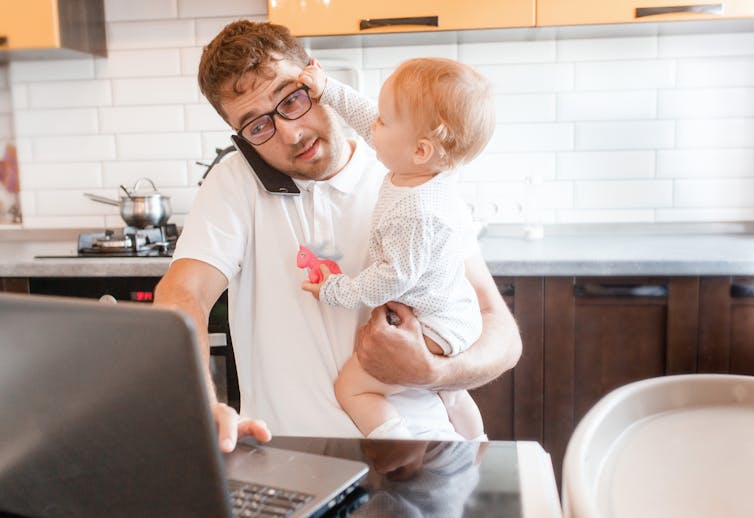 The pandemic has created a lot of stress, which can easily affect relationships.
Shutterstock
The pandemic has created a lot of stress, which can easily affect relationships.
Shutterstock
As well as working on the relationship itself, the alleviation of stressors can help a relationship.
Studies have found that for couples and families experiencing stressors such as economic hardship or housing instability, providing them with financial aid, jobseeker programs and affordable housing can improve relationship satisfaction and reduce family breakdown to a similar extent as relationship education or counselling.
Hopefully, some of the measures the government has put in place, such as JobKeeper, have reduced stress for couples.
The easing of social distancing restrictions may also significantly reduce stress in some couples, shrinking “relationship cracks” that emerged during lockdown.
You may need to address these cracks if they resurface, but reductions in coronavirus-related stressors may well see transient relationship problems disappear.
Read more: The safest sex you'll never have: how coronavirus is changing online dating
A return to normal won’t be the answer for all relationships
Unfortunately, for some couples, the easing of restrictions may intensify relationship conflicts and dissatisfaction.
For example, if one person has health anxieties and the other is highly impulsive, they may hold very different attitudes on how to navigate situations such as social gatherings.
These differences are likely to create conflict that may increase dissatisfaction and relationship difficulties, particularly if both members of the couple typically respond to conflict in destructive ways.
So the easing of social restrictions may not have the same outcome for all. It depends in part on a couple’s existing vulnerabilities and their way of handling conflict and supporting one another.
Authors: Gery Karantzas, Associate professor in Social Psychology / Relationship Science, Deakin University


 Daily Bulletin


