

New research reveals how young Australians will decide who gets their vote
- Written by: Zareh Ghazarian, Lecturer, School of Social Sciences, Monash University
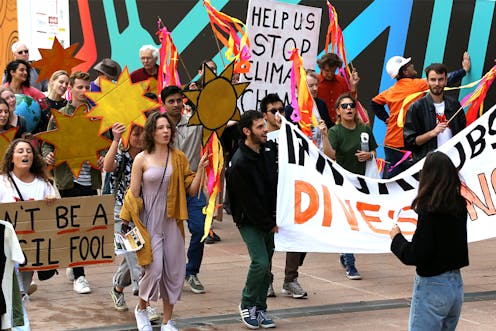
The political engagement of young Australians has attracted significant interest in recent weeks.
Thousands marched across the country to express concern about climate change, while the Australian Youth Representative to the United Nations has just presented his findings to the nation. Issues concerning young voters, such as housing affordability, have also dominated the election campaign.
With opinion polls showing a tighter gap between the parties, young Australians, especially those who will be voting for the first time, will play a critical role in deciding who wins the federal election.
Read more: No matter who wins the election, many Australians think real leadership will be lacking
Indeed, the number of young voters grew following the campaign to enrol young people during the same-sex marriage postal vote in 2017. This cohort will now be voting at their first federal election.
Young and first-time voters are often treated as a homogeneous group assumed to be supportive of left-leaning parties such as the Australian Greens.
However, to better understand the more nuanced decision-making of young people who are old enough to vote, we interviewed first-time voters about their interest in politics and the voting strategies they might use to make a choice at their first Australian federal election.
The findings were drawn from a longitudinal study of more than 2000 young people from Queensland, which is following a single-aged cohort of young Australians as they progress from adolescence into adulthood.
Our research found that first-time voters in Australia tend to adopt five broad strategies. These strategies are based on the levels of interest, knowledge and cognitive effort that young voters apply when deciding how to vote.
The impulsive voter
The impulsive voter type is the most disconnected. Young people who were identified in this category made it clear that they wanted little to do with the electoral process, and said they would probably make an arbitrary selection on the ballot paper.
Such a strategy is often characteristic of those who are ill-informed about or uninterested in politics yet are compelled to vote.
The collective voter
These voters feel they do not know enough about the electoral system and the political debate in order to cast an informed vote. As a result, first-time voters in this group tend to seek the guidance of their parents, who they believe are more knowledgeable about the political system. Typically, these first-time voters mimic the party loyalty and voting patterns of their parents.
The instinctive voter
The central characteristic of the instinctive first-time voter is that they draw on some political knowledge to reach a voting decision. But they make the final decision based on a gut feeling or other general beliefs about the parties and candidates. Sometimes, these beliefs came from emotion-based appraisals of the party leader’s character or physical appearance.
The principled voter
These first-time voters possess more information about policies and candidates and are confident in their knowledge of the Australian electoral system.
Among our interviewees, principled voters intended to use their vote to support candidates who advanced policies of most concern to them. These first-time voters also undertook research and used a variety of sources to help them make a final choice about whom to support.
The pragmatic voter
The pragmatic voter weighs up multiple factors and engages in critical reasoning before committing to supporting one candidate over another. In our study, this process included assessing the party leadership, the position of parties across different policies, and whether one issue was more salient than another.
Pragmatic voters engage with a wide range of resources and actively undertake research to evaluate campaign promises. Often, they decide whom to vote for based on prioritising policies and assessing whether one party is better suited to addressing their concerns over another.
What does all of this mean for the 2019 election?
As in the adult voting population, political interest and knowledge among young voters can vary substantially. Some of the young voters in our study were uninterested and hesitant participants in the voting process; others made significant efforts to form strong and well-reasoned views about the choices before them.
These findings highlight the ways in which policy promises and track records can sway many young people to form views about whom they will support at an election.
Read more: And now for a newsflash: politicians actually do keep their promises
Importantly, the voting behaviours and processes that young voters demonstrate indicate a significant need and opportunity to prepare young Australians, especially those approaching voting age, to be confident participants in the democratic process.
Equipping young people with political knowledge through programs such as civics and citizenship education at school will be critical in fostering the knowledge and skills they need to support candidates who best advance their interests.
Authors: Zareh Ghazarian, Lecturer, School of Social Sciences, Monash University


 Daily Bulletin


