

Rising seas allow coastal wetlands to store more carbon
- Written by: Kerrylee Rogers, Associate Professor, University of Wollongong
Coastal wetlands don’t cover much global area but they punch well above their carbon weight by sequestering the most atmospheric carbon dioxide of all natural ecosystems.
Termed “blue carbon ecosystems” by virtue of their connection to the sea, the salty, oxygen-depleted soils in which wetlands grow are ideal for burying and storing organic carbon.
In our research, published today in Nature, we found that carbon storage by coastal wetlands is linked to sea-level rise. Our findings suggest as sea levels rise, these wetlands can help mitigate climate change.
Sea-level rise benefits coastal wetlands
We looked at how changing sea levels over the past few millennia has affected coastal wetlands (mostly mangroves and saltmarshes). We found they adapt to rising sea levels by increasing the height of their soil layers, capturing mineral sediment and accumulating dense root material. Much of this is carbon-rich material, which means rising sea levels prompt the wetlands to store even more carbon.
We investigated how saltmarshes have responded to variations in “relative sea level” over the past few millennia. (Relative sea level is the position of the water’s edge in relation to the land rather than the total volume of water within the ocean, which is called the eustatic sea level.)
Read more: Mangrove forests can rebound thanks to climate change – it's an opportunity we must take
What does past sea-level rise tell us?
Global variation in the rate of sea-level rise over the past 6,000 years is largely related to the proximity of coastlines to ice sheets that extended over high northern latitudes during the last glacial period, some 26,000 years ago.
As ice sheets melted, northern continents slowly adjusted elevation in relation to the ocean due to flexure of the Earth’s mantle.
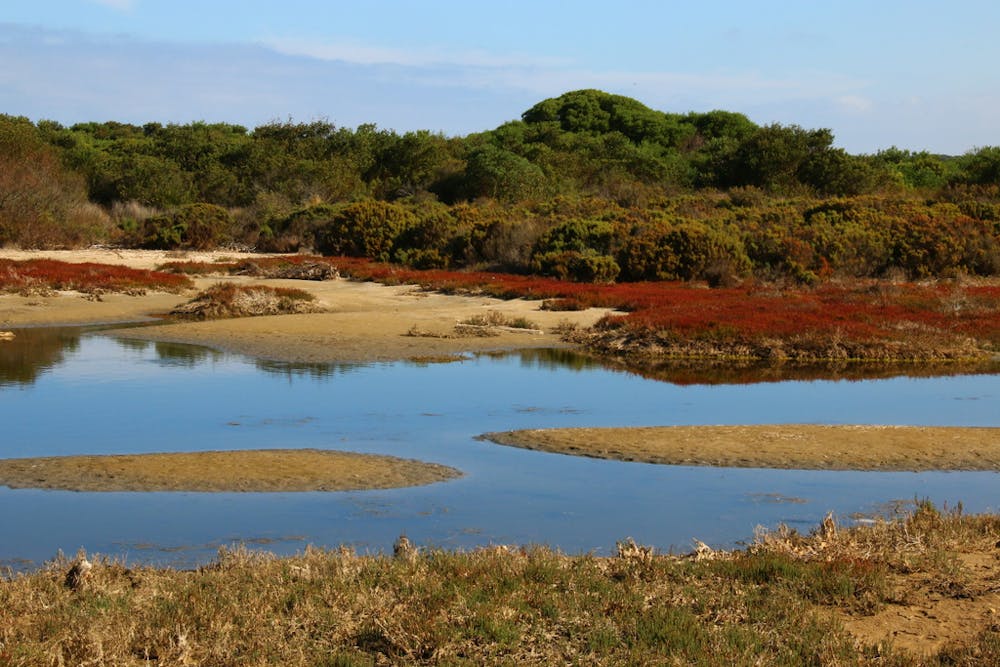 Karaaf Wetlands in Victoria, Australia.
Boobook48/flickr, CC BY-NC-SA
Karaaf Wetlands in Victoria, Australia.
Boobook48/flickr, CC BY-NC-SA
For much of North America and Europe, this has resulted in a gradual rise in relative sea level over the past few thousand years. By contrast, the southern continents of Australia, South America and Africa were less affected by glacial ice sheets, and sea-level history on these coastlines more closely reflects ocean surface “eustatic” trends, which stabilised over this period.
Our analysis of carbon stored in more than 300 saltmarshes across six continents showed that coastlines subject to consistent relative sea-level rise over the past 6,000 years had, on average, two to four times more carbon in the upper 20cm of sediment, and five to nine times more carbon in the lower 50-100cm of sediment, compared with saltmarshes on coastlines where sea level was more stable over the same period.
In other words, on coastlines where sea level is rising, organic carbon is more efficiently buried as the wetland grows and carbon is stored safely below the surface.
Give wetlands more space
We propose that the difference in saltmarsh carbon storage in wetlands of the southern hemisphere and the North Atlantic is related to “accommodation space”: the space available for a wetland to store mineral and organic sediments.
Coastal wetlands live within the upper portion of the intertidal zone, roughly between mean sea level and the upper limit of high tide.
These tidal boundaries define where coastal wetlands can store mineral and organic material. As mineral and organic material accumulates within this zone it creates layers, raising the ground of the wetlands.
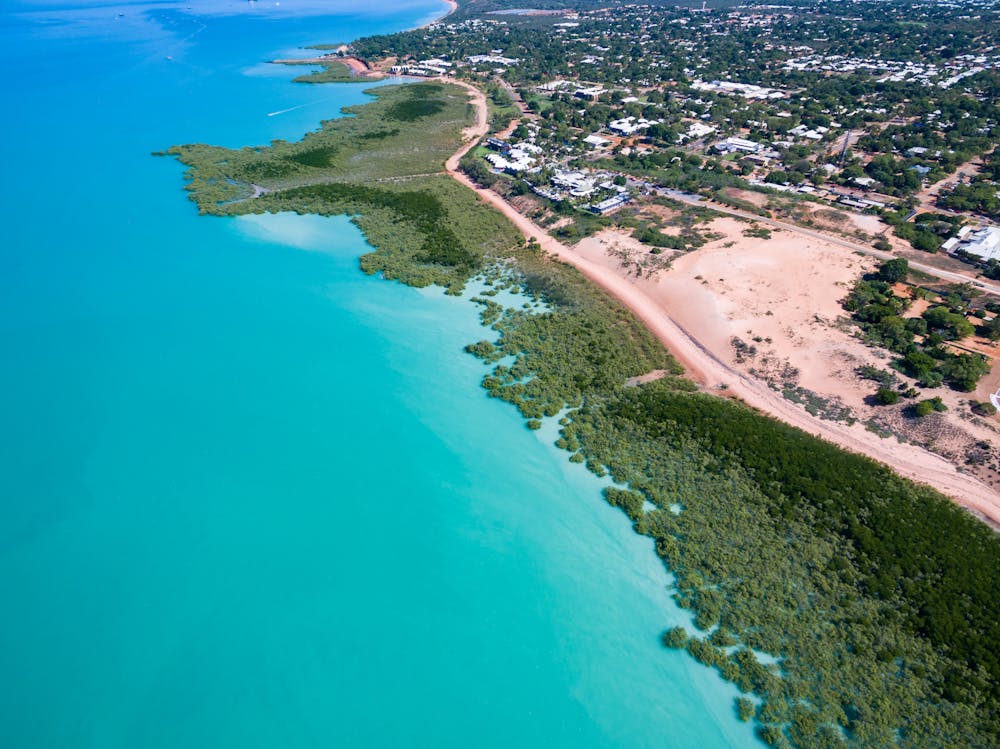 The coastal wetlands of Broome, Western Australia.
Shutterstock
The coastal wetlands of Broome, Western Australia.
Shutterstock
New accommodation space for storage of carbon is therefore created when the sea is rising, as has happened on many shorelines of the North Atlantic Ocean over the past 6,000 years.
To confirm this theory we analysed changes in carbon storage within a unique wetland that has experienced rapid relative sea-level rise over the past 30 years.
Read more: Without wetlands, what will protect the Great Barrier Reef?
When underground mine supports were removed from a coal mine under Lake Macquarie in southeastern Australia in the 1980s, the shoreline subsided a metre in a matter of months, causing a relative rise in sea level.
Following this the rate of mineral accumulation doubled, and the rate of organic accumulation increased fourfold, with much of the organic material being carbon. The result suggests that sea-level rise over the coming decades might transform our relatively low-carbon southern hemisphere marshes into carbon sequestration hot-spots.
How to help coastal wetlands
The coastlines of Africa, Australia, China and South America, where stable sea levels over the past few millennia have constrained accommodation space, contain about half of the world’s saltmarshes.
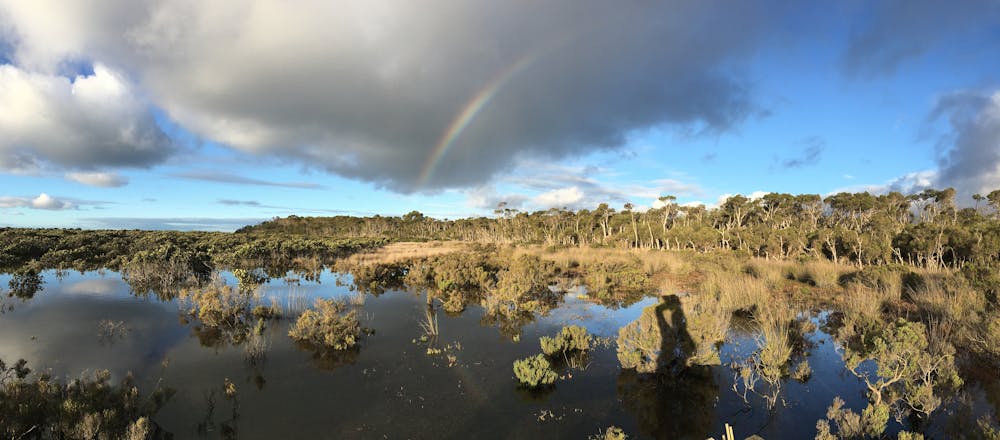 Saltmarsh on the shores of Westernport Bay in Victoria.
Author provided
Saltmarsh on the shores of Westernport Bay in Victoria.
Author provided
A doubling of carbon sequestration in these wetlands, we’ve estimated, could remove an extra 5 million tonnes of CO₂ from the atmosphere per year. However, this potential benefit is compromised by the ongoing clearance and reclamation of these wetlands.
Preserving coastal wetlands is critical. Some coastal areas around the world have been cut off from tides to lessen floods, but restoring this connection will promote coastal wetlands – which also reduce the effects of floods – and carbon capture, as well as increase biodiversity and fisheries production.
In some cases, planning for future wetland expansion will mean restricting coastal developments, however these decisions will provide returns in terms of avoided nuisance flooding as the sea rises.
Finally, the increased carbon storage will help mitigate climate change. Wetlands store flood water, buffer the coast from storms, cycle nutrients through the ecosystem and provided vital sea and land habitat. They are precious, and worth protecting.
The authors would like to acknowledge the contribution of their colleagues, Janine Adams, Lisa Schile-Beers and Colin Woodroffe.
Authors: Kerrylee Rogers, Associate Professor, University of Wollongong
Read more http://theconversation.com/rising-seas-allow-coastal-wetlands-to-store-more-carbon-113020


 Daily Bulletin


