

Southern right whales are having babies less often, but why?
- Written by: Claire Charlton, Leader of Australian Right Whale Research Program, College of Science and Engineering, Flinders University
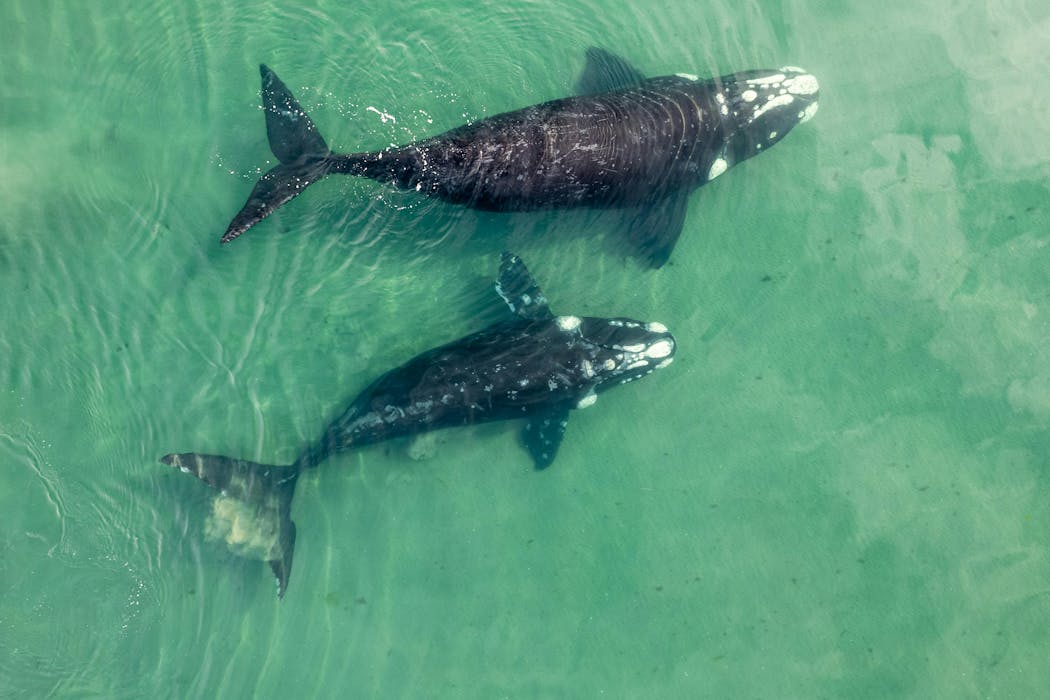
For decades, southern right whales have been celebrated as one of conservation’s success stories.
Once driven to the brink of extinction by commercial whaling, southern right whales slowly returned to Australian coastlines through the late 20th century. Their recovery reflected the power of international protection, marine sanctuaries and long-term science working together.
But our new research shows this success story is changing. We drew on more than 30 years of continuous shore-based monitoring of southern right whales in the Great Australian Bight, from within the Yalata Indigenous Protected Area in South Australia. We found clear evidence whales are having calves less often, with the average calving interval increasing for 3 to 4 years. This means the number of calves being born has slowed over the past decade.
This decline appears closely linked to climate-driven changes in the Southern Ocean — similar patterns are now being observed across the southern hemisphere.
More than 3 decades of photos
Our study analysed photo-identification data collected by researchers between 1991 and 2024 from a major calving area in the Great Australian Bight. Each whale is identified using its unique pattern of callosities — the hard patches of skin on its head that remain throughout its life.
This allows individual whales to be tracked across decades, providing rare insight into long-term population dynamics and how these change over time. Photo-identification is a globally accepted method used for whale population assessments. By tracking known individuals over time, researchers can directly measure their reproductive histories.
Long-term datasets like this are rare — and that is precisely what makes them so powerful. The Australian Right Whale Research Program at Flinders University is one of the longest continuous photo-identification studies of any whale species in the world. It has used the same methods over decades. In the context of climate change, where impacts often emerge slowly and unevenly, this long-term evidence is essential.
What we found
Since around 2015, female southern right whales have not given birth as often. These extended calving intervals mean fewer calves are being born overall, and this reduces population growth over time.
For a long-lived species that reproduces slowly, this matters. Small changes in reproductive rates impacts population growth. The slowdown in reproduction signals a shift away from the recovery seen in previous decades.
A signal from the south
The cause of this change is not immediately visible from Australia’s coastline. Southern right whales spend much of their lives feeding thousands of kilometres away in the Southern Ocean, where they rely on the cold, nutrient-rich waters created by Antarctic sea ice. These waters support krill and prey that are crucial for whales to build up the energy reserves they need for pregnancy and lactation.
Over the past decade, the ocean has warmed, the ice is melting and there have been dramatic shifts in food availability weather patterns. Our analysis shows longer calving intervals coincide with these environmental changes, suggesting the impacts of climate change on conditions in the Southern Ocean are linked to whales having fewer calves.
A global pattern emerges
Importantly, this is not just an Australian story.
Similar trends are being reported in southern right whale populations off South America and South Africa, where researchers have documented reduced calving rates, whales in poor condition and environmental changes.
Southern right whales are a sentinel species: animals whose health reflects broader changes in their environment. Our findings signal deeper disruption in ocean systems that also support fisheries, affect how the climate is regulated and influence marine plants, animals and other species.
Southern right whales are long-lived, reproduce slowly, and rely on energy-rich feeding grounds. This makes them particularly vulnerable to climate-driven changes in prey.
What needs to change?
Protecting the Southern Ocean and its increasingly vulnerable natural ecosystems demands urgent collective climate action. This must bridge disciplines, industries, governments and interconnected regions.
This action should include the expansion of sanctuaries across the migratory ranges of threatened species. It should also limit threats, such as whales being struck by ships, getting entangled in ropes and being exposed to noise pollution.
The future of southern right whales is likely to be closely tied to the management of krill harvesting and addressing climate change.
We need to listen — and act — while there is still time.
The author would like to acknowledge the contribution of research collaborators and all of the people involved in the long-term research program that make this work possible.
Authors: Claire Charlton, Leader of Australian Right Whale Research Program, College of Science and Engineering, Flinders University
Read more https://theconversation.com/southern-right-whales-are-having-babies-less-often-but-why-275442


 Daily Bulletin


