

The yellow-legged hornet eradication is on track – but the next few months are crucial
- Written by: Phil Lester, Professor of Ecology and Entomology, Te Herenga Waka — Victoria University of Wellington
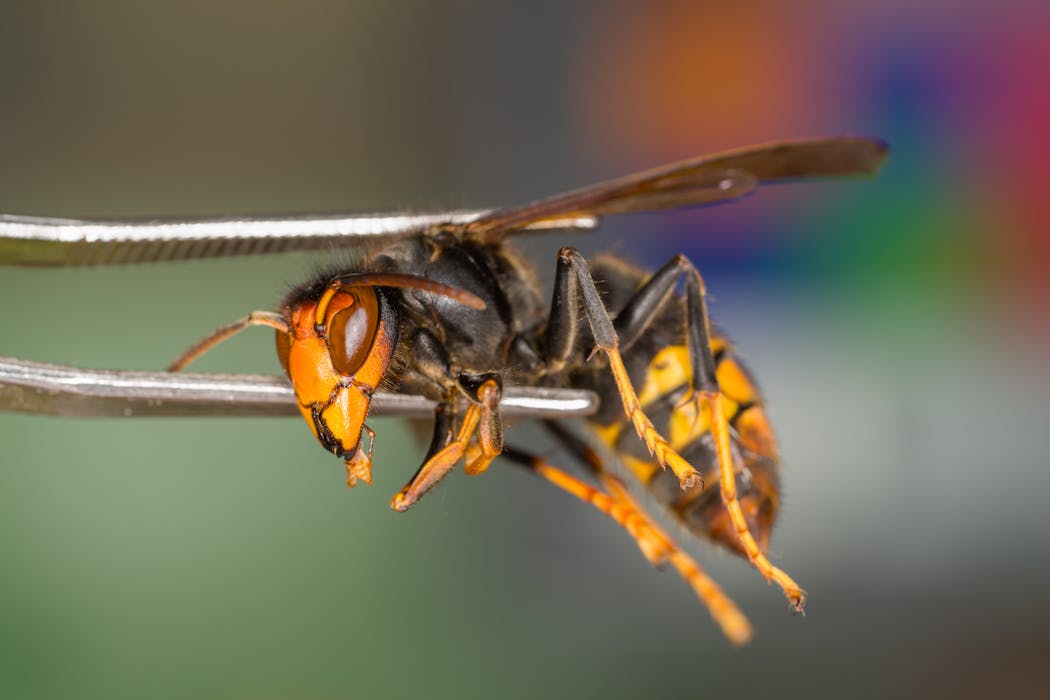
New Zealand now has a genuine chance to stamp out one of the most damaging invasive insects to reach our shores: the Asian yellow-legged hornet.
But what happens over the next few months might just decide whether the species is eliminated or becomes established.
It has now been three months since the yellow-legged hornet was first detected in Auckland and the eradication response is showing real signs of progress.
So far, 43 queen hornets have been found and killed in Auckland. Each one represents a nest that would otherwise have produced thousands of voracious workers, capable of consuming huge numbers of insects, including key pollinators such as honey bees.
Worse still, by autumn those same nests would have produced thousands of new queens. That next generation would have dispersed widely, helping the hornet spread across much of New Zealand.
We only need to look to overseas experience to see what is at stake. In parts of Europe where the yellow-legged hornet has become established, losses of honey bee hives of 30% to 80% have been recorded. There have also been serious risks to people, with stings causing intense pain and swelling, and, in rare cases, severe allergic reactions that have proved fatal.
Encouragingly, the response led by the Ministry for Primary Industries appears to have been effective, with many nests located and destroyed.
And the contribution from the public has been extraordinary. Of the 43 nests discovered, 18 were from public notifications. More than 9,520 reports of suspected hornets have been submitted from across the country.
These reports have directly helped locate nests, which so far have all been found around Glenfield and Birkdale on Auckland’s North Shore.
This first phase of the eradication programme has achieved what we hoped. Early on, new nests were being discovered almost daily. The more that crews searched, the more they found.
Importantly, the response now appears to have reached a point where intensive searching no longer turns up new nests on a daily or weekly basis. That is encouraging, but it does not mean the job is done. For eradication to succeed, every last nest must be found and destroyed.
The next phase – and why it’s crucial
The next phase of the response, running through January and much of February, will mostly rely on trapping and tracking worker hornets.
Any surviving nests are likely to change behaviour. Queens and workers from early “primary nests” typically relocate higher into nearby trees, forming larger “secondary nests” that are hard to find.
These nests can contain many thousands of workers and hungry larvae that need constant feeding.
From now on, hornet workers from any remaining nests will become more abundant and more visible. This is when public vigilance matters most.
Hornets may be attracted to beer, gardens, fruit trees and beehives. Setting traps, photographing suspicious insects, and submitting reports to MPI’s hotline will help us to find those nests and might make the difference between eradication success and failure.
Once hornet workers are discovered, their nest can be tracked. The search crews now have the equipment to capture and tie small radio-trackers to foraging workers.
When the hornet flies back to its nest, it unknowingly leads search crews straight to it, enabling entire colonies to be destroyed.
Later in February, before new queens and males are produced in autumn, the programme will enter its final phase: baiting with Vespex.
Vespex is a protein bait developed in New Zealand for controlling invasive Vespula wasps. It won a World Wildlife Fund Conservation Innovation Award in 2015 for its effectiveness in killing invasive wasps and protecting native ecosystems.
Wasps and hornet workers are attracted to Vespex and carry the bait back to their nests, where it eliminates the colony. Importantly, previous work has shown Vespex to be safe for pollinators such as honey bees.
I see Vespex as a vital safety net. It can be deployed cheaply over the area of infestation, helping to eliminate any small or cryptic nests that might otherwise be missed.
For eradication to work, we must get every last nest.
Keeping the momentum going
Biosecurity Minister Andrew Hoggard has committed $12 million to support the hornet eradication response through to June 2026. This level of funding is fantastic and should provide much needed resources.
For eradication to succeed, continued community involvement will be essential. Public reporting of sightings, the use and monitoring of traps, and vigilance by beekeepers – particularly around hive entrances where hornets may be hawking bees – all remain vital to locating any remaining nests.
Public support to date has been outstanding and has played a substantial role in the discovery of nests. Peoples’ contribution remains essential and arguably more important now than at any earlier stage of the response.
Clear guidance on identifying yellow-legged hornets, making traps and submitting sightings is available through the Ministry for Primary Industries.
We have a major opportunity to eradicate this species from New Zealand in 2026. The next few months will determine whether that opportunity is realised.
Authors: Phil Lester, Professor of Ecology and Entomology, Te Herenga Waka — Victoria University of Wellington


 Daily Bulletin


