

How Long Does Interstate Freight Take in Australia?
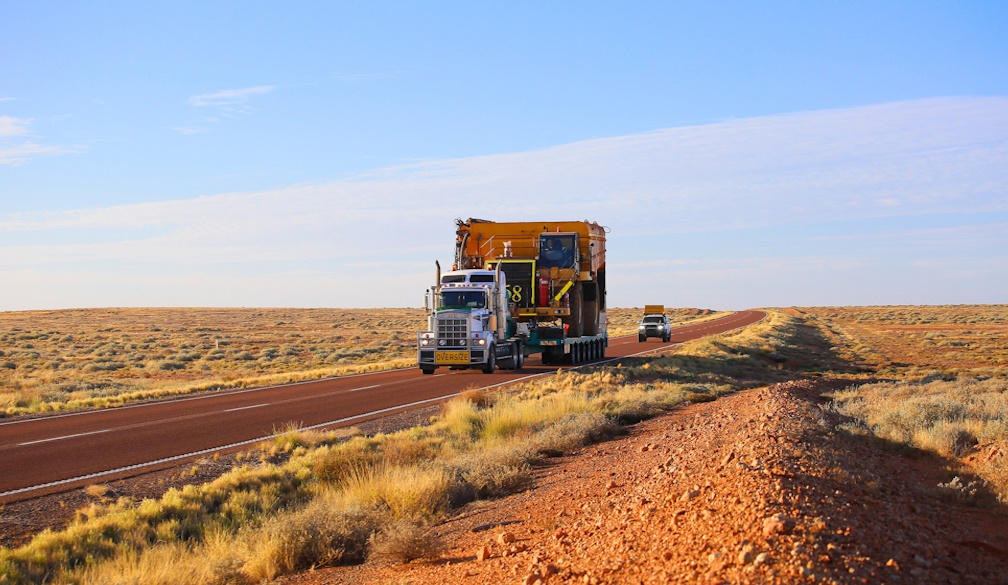
If you have ever arranged for stock, equipment or materials to travel from one Australian state to another, you will know that the first question is usually the same, when will it arrive?
Well, there is no universal answer. A shipment travelling between two capital cities in Australia can follow a well-established freight route, while the same type of goods heading to a regional area may involve a different schedule and additional handling. The physical dimensions of the freight can influence the vehicle used and how the goods are secured for the journey.
The scale of Australia's freight network helps explain why there is so much variation. The latest figures from the Bureau of Infrastructure and Transport Research Economics show that Australia's domestic freight task reached an estimated 786 billion tonne-kilometres in 2024-25, with roads accounting for around 253 billion tonne-kilometres.
Today, we look at the factors that influence interstate freight times, the situations that can hold up a delivery, and the information you should have ready before booking a shipment.
How Long Does Interstate Freight Take?
The distance between the two addresses is an obvious starting point, but there's more to the story.
Transport providers also need to account for the pickup and delivery locations, the service being used and the freight itself. For major road freight routes, indicative timeframes may look something like this:
|
Route |
Approximate transit time* |
|
Sydney to Melbourne |
1-2 days |
|
Sydney to Brisbane |
1-2 days |
|
Melbourne to Adelaide |
1-2 days |
|
Sydney to Perth |
4-6 days |
|
Brisbane to Perth |
4-6 days |
These are general estimates rather than guaranteed delivery times. Actual transit can vary according to the carrier, service, route, freight and conditions at the time of transport.
A delivery that begins or ends outside a major metropolitan area may take longer. The final leg of a journey can require a different schedule, particularly where services to a particular region run less frequently. For that reason, it is better to think of a quoted transit time as a delivery estimate rather than a promise that applies in every circumstance.
What Can Delay Interstate Freight Deliveries?
Distance and Location
A truck covering a longer route has more road to travel and more opportunity to encounter traffic, roadworks, closures or other interruptions. Where the freight is going also matters. Delivering to a regional or remote property may require more planning than reaching a commercial address in a capital city.
Australia's road network is extensive. BITRE estimates that the country had 476,000 kilometres of paved roads in 2024, while vehicles travelled an estimated 264 billion kilometres on Australian roads during 2024-25.
A freight journey can involve several different road conditions and access arrangements before the goods reach their final destination.
Weather And Road Closures
Australia's weather can change transport conditions considerably. Flooding, bushfires and severe storms can affect whether a particular road is accessible at all.
This can be especially important for heavy freight. A closed road may mean a truck cannot simply take any available side road. The alternative route needs to be suitable for the vehicle and the conditions. The National Heavy Vehicle Regulator notes that infrastructure damage can result in road closures and detours, while alternative access may need to account specifically for heavy vehicle requirements.
The National Heavy Vehicle Regulator provides information about heavy vehicle route disruptions, including situations where road closures or infrastructure damage require heavy vehicles to use an alternative route. These changes can add distance to a journey or prevent a delivery from proceeding until access is restored.
Busy Periods and Limited Capacity
Freight demand does not stay the same throughout the year. Retailers may be moving larger volumes before Christmas, while manufacturers, trades and other businesses can have their own deadlines around the end of the financial year. When a large number of shipments need to move at the same time, available vehicle space and collection slots can become harder to secure.
This is one reason leaving an interstate shipment until the last minute can be risky when the delivery date matters. Booking ahead gives you more opportunity to find a service that fits your schedule, particularly for freight that needs a specific type of vehicle.
Incorrect Delivery Information
Before collection, check the details supplied to the freight provider. This includes:
- Pickup and delivery addresses
- Contact names and phone numbers
- Number of items
- Weight and dimensions
- Delivery restrictions or instructions
- Unloading requirements
Getting these details right at the beginning gives everyone involved a better chance of keeping the shipment moving.
Does The Type Of Freight Affect Delivery Time?
Absolutely. A carton of small goods and a three-metre-long gate may both count as a single item, but they are very different loads to transport.
Heavy, long or awkward freight may require a suitable vehicle, particular loading equipment or additional planning. The available route can matter as well, especially where the vehicle carrying the load has specific access requirements.
Consider fencing materials as an example. A business supplying fencing products may need to move long panels, gates, aluminium sections and other items that cannot be handled in the same way as ordinary cartons.
The same issue applies to machinery, building materials and commercial equipment. Telling a carrier that you have "one item" does not provide enough information if that item is particularly large or heavy.
How Can You Make Interstate Freight Easier To Plan?
You cannot prevent a flood from closing a road or control how busy the freight network becomes. You can, however, give the carrier the information it needs before the truck arrives.
Start With The Deadline
If a shipment is needed for a construction job, installation, or customer order, avoid planning around the earliest possible arrival. Giving yourself some room can be valuable when circumstances change.
Measure The Freight Properly
Weight and dimensions are important when arranging transport. Measure the actual load, including its length, width and height, and mention anything unusual about its shape or packaging.
Think About The Delivery Site
A freight vehicle needs somewhere to enter, position itself and unload. If access is restricted, tell the transport provider in advance rather than leaving the driver to discover the problem on arrival.
Choosing The Right Freight Service
The fastest option is not automatically the right one. If a shipment is routine and there is some flexibility around its arrival, a standard freight service may be perfectly adequate. A delivery tied to an installation, project deadline, or customer commitment calls for a different conversation.
It is worth telling the freight provider how urgent the shipment actually is, rather than choosing a service based on the name alone. Once the provider knows the destination, deadline, dimensions and weight of the goods, they can advise which transport arrangement makes sense.
For an accurate interstate freight quote, have those details ready before you enquire. It gives the provider a much better picture of what needs to be moved and when you need it there.
Why Does Freight Matter To Business Fulfilment?
For a growing business, delivery is connected to almost everything that happens before it. Stock needs to be available, orders need to be processed,d and goods need to reach the customer or project site when expected.
That makes transport an important part of the wider fulfilment process. Businesses looking at the subject more broadly can also read about fulfilment services in Australia, including the role that warehousing, inventory and shipping play as operations grow.
A freight delay does not always stop a business from operating, but it can create knock-on problems when other parts of the schedule depend on the delivery.
How Can You Plan For a More Reliable Interstate Delivery?
Interstate freight will always involve factors outside your control. Australia is a large country, and the roads used to move goods can be affected by weather, infrastructure problems, traffic and changing access conditions.
The best approach is to plan early, provide accurate freight information and choose a transport service that suits the shipment rather than relying on a generic delivery timeframe. For businesses moving important stock, equipment or oversized goods, that preparation can make the difference between a straightforward delivery and an avoidable headache.


 Daily Bulletin


