

NDIS Support Coordination Explained: What Does a Support Coordinator Actually Do?
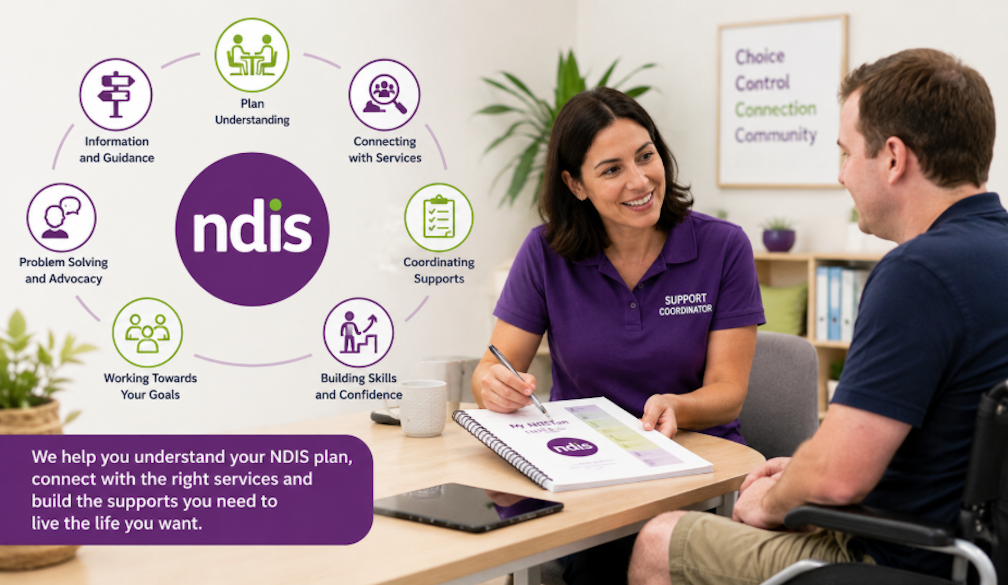
NDIS support coordination explained means understanding how a professional can help participants navigate their NDIS plan and turn funded supports into practical outcomes. A support coordinator works alongside participants to understand their goals, connect them with suitable services and build their confidence to manage supports independently.
Understanding Your NDIS Plan
NDIS plans can contain different budgets, supports and requirements, which may be difficult to navigate alone. A support coordinator can explain what funding is available, how supports can be used and when service agreements may be needed. They can also help participants understand their responsibilities and make informed decisions about their services.
Connecting Participants With Providers
One of the central responsibilities is helping participants find suitable providers. This may include NDIS-funded services as well as mainstream, community and government supports.
The coordinator considers the participant’s preferences, circumstances and goals when identifying appropriate options. They can also help establish services, coordinate multiple providers and review whether existing arrangements remain effective.
Building Independence and Confidence
Support coordination is not simply about organising services on someone’s behalf. An important objective is to develop the participant’s ability to make decisions and manage their own supports.
A coordinator may teach participants how to navigate relevant NDIS systems, monitor their budgets, communicate with providers and assess whether their supports are helping them progress towards their goals.
Different Levels of Support
The NDIS recognises three levels of support coordination. Support connection focuses on helping participants understand their plans and connect with services. Standard support coordination provides broader assistance with implementing supports and developing independence.
Specialist support coordination is intended for participants with more complex situations who require a higher level of assistance to address barriers and maintain consistent supports.
Support Coordination vs Plan Management
Support coordination and plan management are different. A support coordinator focuses primarily on connecting and coordinating supports, while a plan manager deals with financial administration, including claims, payments and budget monitoring. Participants may receive both types of assistance where appropriate.
A Participant-Centred Approach
Effective coordination should reflect the participant’s choices rather than simply directing them towards predetermined services. The participant remains central to decisions about providers, support arrangements and personal goals.
The coordinator can also help prepare for service disruptions, changing circumstances and future plan reviews, helping create greater continuity and confidence.
Understanding Plancare AU
Plancare AU approaches support coordination within this broader participant-centred framework. Like any support coordination service, the emphasis should be on understanding individual goals, connecting participants with appropriate supports and helping them develop greater confidence in managing their NDIS arrangements. The quality of coordination ultimately depends on how well services reflect the participant’s preferences and circumstances.
The Value of the Right Support
Ultimately, NDIS support coordination explained is about more than navigating paperwork. It is about creating a practical connection between an NDIS plan, suitable services and the participant’s personal goals. With appropriate guidance, participants can better understand their choices, coordinate their supports and gradually build the skills needed to exercise greater control over their lives.


 Daily Bulletin


