

Victoria has rediscovered a dragon – how do we secure its future?
- Written by: Brendan Wintle, Professor in Conservation Science, School of Ecosystem and Forest Science, The University of Melbourne
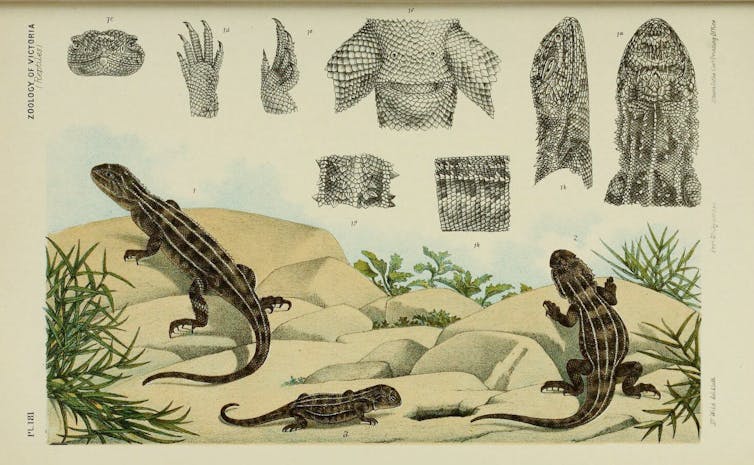
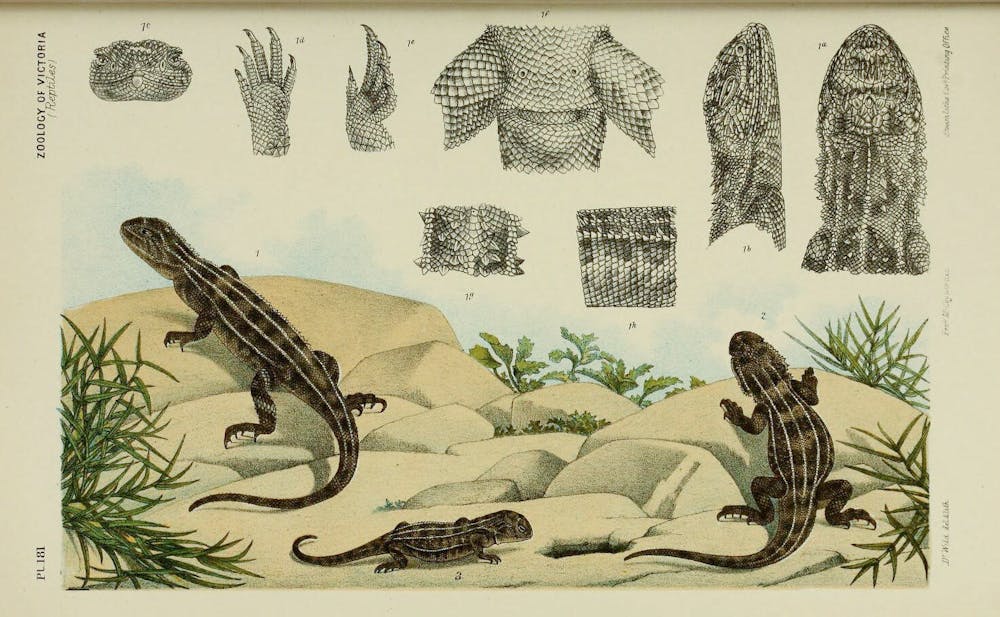
The Victorian grassland earless dragon (Tympanocryptis pinguicolla), not seen since 1969, has been found in grasslands west of Melbourne. No need to fear this dragon, though; these lizards are just 15cm long fully grown.
The dragon is Australia’s most imperilled scaled reptile. This is an extraordinary second chance. The rediscovery of a species thought to be extinct inspires hope of finding other lost treasures like the Tassie tiger.
But rediscovery only happens because a species has become so scarce it has eluded even the experts who know best where to look. To save it from extinction, three things must happen quickly:
-
intensive care – create a conservation breeding population, manage its remaining genetic diversity, and breed enough individuals to return to the wild
within the species’ range, protect habitats of the size, quality and quantity needed to support self-sustaining populations
restore and manage these habitats, reduce threats, reintroduce the dragons and monitor outcomes to ensure the species’ long-term viability.
Read more: Why we're not giving up the search for mainland Australia's 'first extinct lizard'
Intensive care
This first step is to set up a climate-controlled, disease-free conservation breeding facility, run by the ICU doctors and nurses of conservation. It’s a tragedy that the only option is to take the last few individuals of a species from the wild to secure its future. With that decision made, it is essential they receive the best possible care.
Fortunately, Melbourne has experts who know how to build and run such facilities, reintroduce species to the wild and monitor their recovery. In this way, Zoos Victoria and collaborators have over the past decade averted the extinction of the mountain pygmy possum, lowland Leadbeater’s possum, helmeted honeyeaters, Baw Baw frog, southern corroboree frog and spotted tree frog.
This work involves setting up, maintaining and staffing such a facility, as well as surveys to locate and move individuals into captive breeding. Based on experience with endangered frogs, plus the extra costs of outdoor enclosures, the cost will be around A$2 million over the next five years.
Read more: Hundreds of Australian lizard species are barely known to science. Many may face extinction
Securing habitat
Merely keeping a species alive in zoos is not conservation. Self-sustaining wild populations must be established to recover a species. This is where complexity, uncertainty and economics really bite.
The dragon has only ever been found in the critically endangered ecosystem known as the basalt plains grasslands. Agriculture and housing development have reduced these grasslands to less than 3% of their pre-European extent. Most of what remains is on private land.
The dragon’s long-term fate depends on managing the site where it was found and any areas nearby where dragons are living. We also need substantial new areas of suitable plains grasslands as conservation reserves where captive-bred animals can be released.
Research tells us we need at least six independent, self-sustaining populations for the dragon to stand a chance of persisting for at least the next 50 years. Even if well-managed, some populations will occasionally be lost to disease, predation, hot fires, or other chance events.
Individuals will have to be released back into those areas once the areas recover and can support the species again. In pre-European times, animals could naturally migrate back into such places. Today, habitats are too fragmented for that to happen.
Unfortunately, basalt plains grasslands continue to be lost to legal and illegal clearing, the use of fertilisers that favour exotic grasses, weed invasion, rock removal, intensive grazing and the loss of regular low-intensity “cool” fires historically used by Traditional Owners.
To make matters worse, the Victorian government has over the past decade broken its promise to set aside large areas of western plains grasslands as conservation reserves.
Securing new conservation areas will be expensive given the competing demands for this land. However, the government has received offset payments from developers when they (legally) destroy grasslands to build houses. It’s time to use those funds to create the reserves the dragon and other endangered grassland species need to survive.
We estimate securing six high-quality grasslands of at least 100 hectares each will cost at least $30 million.
Managing threats and restoring habitats
These reserves will need careful and active management. In the absence of frequent cool fires, and in the presence of invasive weeds and animal pests, these areas will lose the plant species that make them special and beautiful. Weeds, cats, foxes, dogs and rabbits all create unsuitable habitat for dragons.
Many of these grasslands are so degraded they need a lot of restoration work, almost starting from bare soil.
Weed control and fire management to maintain six 100-hectare reserves as suitable habitat for dragons will cost around $2.4 million a year. These reserves would of course be home to many more grassland animals and plants, including other endangered species such as the fat-tailed dunnart.
Read more: EcoCheck: Victoria's flower-strewn western plains could be swamped by development
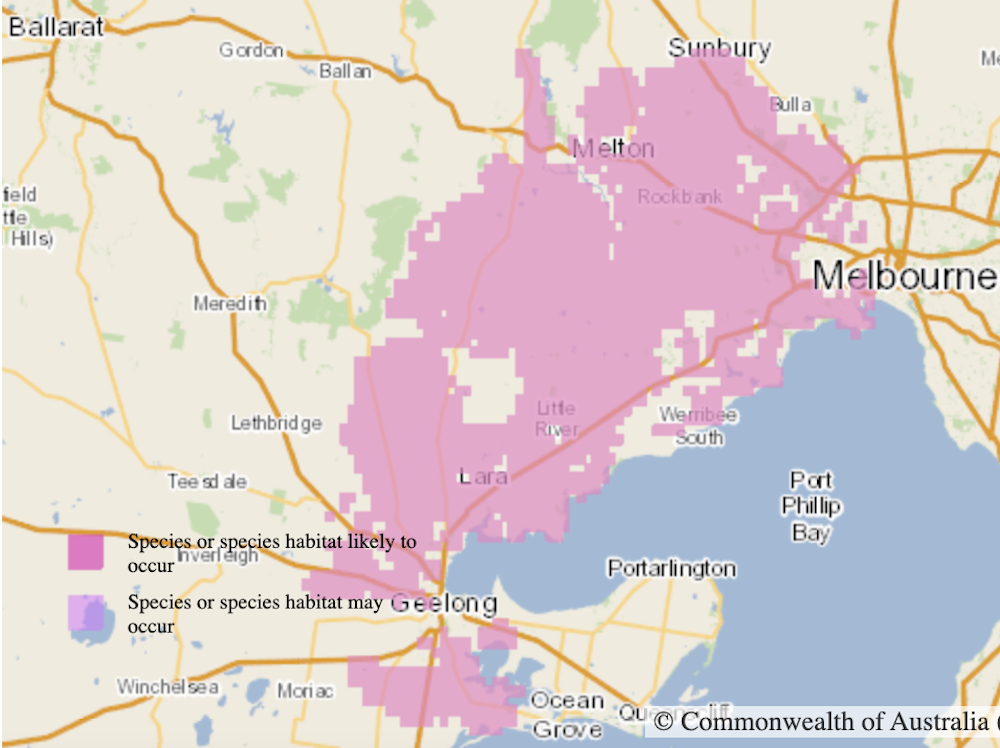 Development has destroyed most of the grassland habitat across the dragon’s former range.
Commonwealth DCCEEW, CC BY
Development has destroyed most of the grassland habitat across the dragon’s former range.
Commonwealth DCCEEW, CC BY
We can’t be sure of the exact costs of buying, restoring and managing grasslands. Our estimates assume, for example, the sites contain most grassland plant species. If areas were being restored from bare soil, ten-year restoration and management costs would more than double.
Other uncertainties include land prices, the costs of weed and pest control and fire management, and the possible need to help insect populations establish as a sustainable source of dragon food.
We can afford to save the dragon
The whole program is likely to cost around $56 million over ten years. More than half the cost involves buying highly sought-after properties.
If this sounds like a lot of money, consider that Australians spend over $30 billion a year on pet care. Just the GST on that spending ($3 billion) would cover the annual cost of conserving most of our 1,900 or so endangered species (most don’t have the dragon’s expensive taste in real estate). As a nation, we can afford to save the dragon and most of its endangered friends, as the law requires.
Authors: Brendan Wintle, Professor in Conservation Science, School of Ecosystem and Forest Science, The University of Melbourne
Read more https://theconversation.com/victoria-has-rediscovered-a-dragon-how-do-we-secure-its-future-208097


 Daily Bulletin


