

The new climate denial? Using wealth to insulate yourself from discomfort and change
- Written by: Hannah Della Bosca, PhD Candidate and Research Assistant at Sydney Environment Institute, University of Sydney
While the days of overt climate denial are mostly over, there’s a distinct form of denial emerging in its stead. You may have experienced it and not even realised. It’s called implicatory denial, and it happens when you consciously recognise climate change as a serious threat without making significant changes to your everyday behaviour in response.
Much research has focused on how we intellectually distance ourselves from the unpleasant realities happening around us. What requires greater attention is how we may engage in climate denial by seeking out spaces of sensory comfort and using them to shield ourselves as the world unravels outside our window.
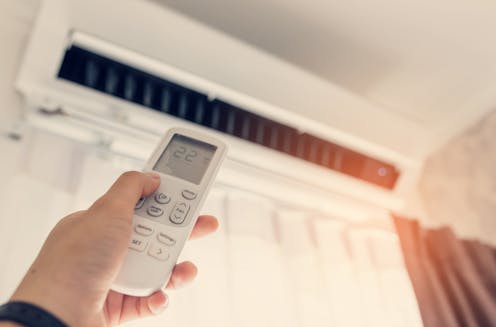
Denial, thought of in this way, is entirely sensible. My colleagues and I asked residents around the Western Sydney suburb of Penrith – famously the hottest place on Earth during the Black Summer of 2019-20 – about their experiences during heatwave conditions. Unsurprisingly, sensory denial is central to how they cope with extremes – primarily by using air conditioning.
Those without access to aircon resorted to wetting towels, or using fans and spray bottles. While these low-cost strategies are actually more sustainable than aircon, people don’t like them as much. Given the opportunity, we’re likely to engage in sensory climate denial as a way to insulate ourselves from experiences of climate change.

Why do our senses matter when it comes to climate denial?
We tend to think of climate denial as a delaying tactic used by fossil fuel advocates. This is not wrong, given climate denial was strategically created and fostered by politicians and coal, oil and gas companies with vested interests in stalling action and deflecting responsibility.
Researchers have historically linked climate denial to inadequate knowledge, sociopolitical biases or emotional defence. Other researchers have focused on beliefs, psychological barriers, and moral disengagement.
But focusing on how and why we think overlooks the main way we actually respond to our environments: our bodies. The role of our senses and their influence on our everyday behaviour tends to be overlooked in social and political thought. Reckoning with climate change inaction demands we return to our senses. Here, we find climate denial is more than just a political tool.
Within our communities, it’s the way in which different segments of society are able to maintain a physical sense of normalcy and comfort, while others bear the brunt of climate disasters.
A heatwave in Western Sydney in 2016-17 reflects this clear divide, as colleagues and I found in earlier research.
People who lived in households without aircon were hit hard by the heat. It affected their bodies and emotions, making them fatigued, sometimes nauseous, anxious and stressed. It was hard for them to do anything other than swelter or seek out spaces of relief where possible. In contrast, people with aircon were far less affected, or even unbothered by the heat. They knew there was a heatwave, but it didn’t directly affect them.
One resident told us of trying to sleep without aircon:
If you only get maybe three or four hours sleep – and it’s not good sleep – … it’s like, “I can cope today.” (By) the third sleep, it’s like, “Please keep away from me” … And every day after that just gets worse and worse.
Another resident told us of the relief she felt at being able to leave her overheated house, taking her kids and staying at a friend’s house with both air conditioning and a pool. “It was like a holiday,” she said.
Both groups were being entirely rational in seeking relief from the overwhelming heat in whatever ways they could. Those without aircon longed for the relief it would bring.
For those with aircon, their main concern was the cost of running it. While this is a burden, the fact this was their main worry indicates aircon worked. Their relative wealth shielded them.
Why does this matter?
If we use technologies like aircon to avoid dealing with the root causes of climate change, we are in denial.
As the world heats up, demand for air conditioning has skyrocketed. The International Energy Agency has estimated that by 2050, up to two-thirds of the world’s households will have installed aircon, particularly in China, India and Indonesia.
As a privatised answer to a public problem, aircon reliance has been normalised to the point of invisibility. When we use our air conditioners to fend off a heatwave, we can overwhelm the power grid and trigger local blackouts. Worse, with today’s energy sources, our need for sensory comfort causes yet more emissions to be pumped into the atmosphere. On a street level, air conditioners make your house colder and the outside air warmer still.
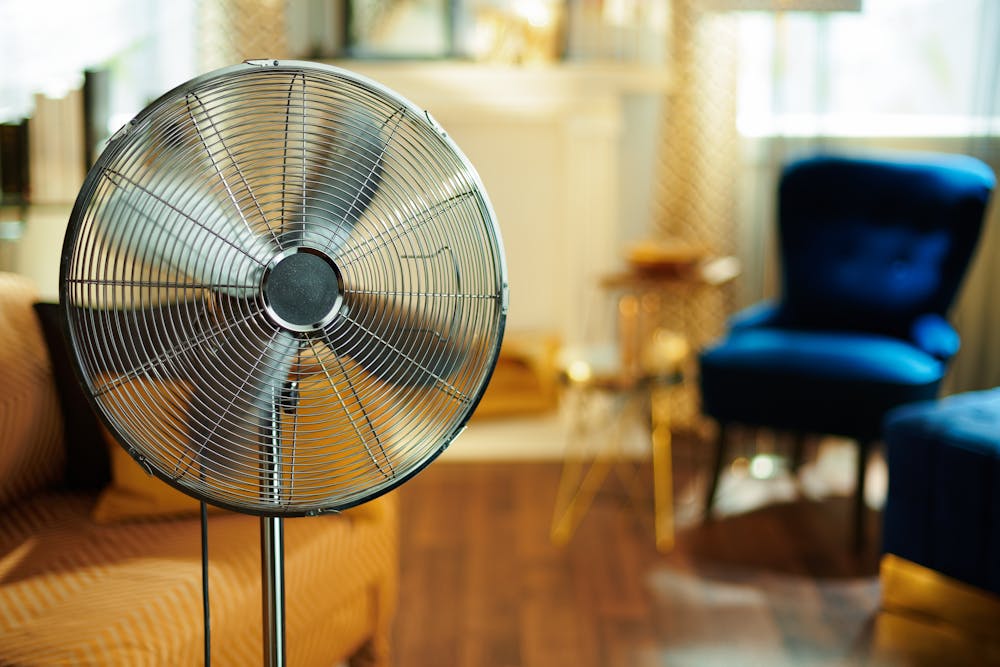 During heatwaves, people try fans, wet towels and spray bottles - but prefer aircon.
Shutterstock
During heatwaves, people try fans, wet towels and spray bottles - but prefer aircon.
Shutterstock
This pattern of sensory comfort for wealthier people is systemically reinforced in for-profit housing developments, while lower-income rentals and public housing are legally and financially excluded. These residents are forced to rely instead on evacuation shelters or spending hours in airconditioned shopping centres.
This kind of denial, then, is tied to forms of privilege. To be able to literally shut out climate disruption and pretend everything is normal speaks to our universal desire to live in comfort and without pain. But as the climate warps, this is possible only for some.
If you had the opportunity, of course you would shut yourself and your loved ones away from the disruption, discomfort and danger of heatwaves, floods and bushfires.
The risk is we anaesthetise ourselves to what’s really going on. Inequality is rampant in Australia and worldwide, and people without the means to insulate themselves will suffer the most.
To tackle sensory climate denial means understanding that immunity to climate disruption is a temporary fantasy. As our ecosystems and climatic stability crumble, this kind of denial will inevitably vanish.
Read more: High energy costs make vulnerable households reluctant to use air conditioning: study
Authors: Hannah Della Bosca, PhD Candidate and Research Assistant at Sydney Environment Institute, University of Sydney


 Daily Bulletin


