

NZ police need better training in privacy and human rights law – here is what should happen
- Written by: Claire Breen, Professor of Law, University of Waikato
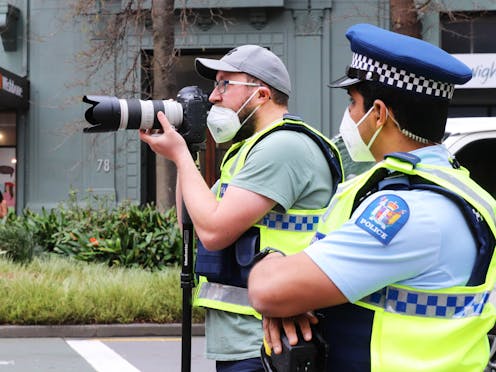
The New Zealand Police were recently found to have been routinely and illegally photographing young people and adults in public. Many might have expected this to see an end to the practice – but apparently not.
Despite the findings of the joint inquiry by the Independent Police Conduct Authority (IPCA) and Office of the Privacy Commission (OPC), police have not been directed to stop photographing adults. And Police Commissioner Andrew Coster has said the police “don’t necessarily accept entirely the implications of the report we received.”
At the heart of this issue, and more recent questions about the use of traffic surveillance cameras and facial recognition technology, is how the right to privacy is administered. Privacy is a fundamental but not an absolute right. The state – of which the police are a powerful arm – is allowed to collect information on people within its borders.
However there are rules governing the collection of information, with protecting privacy a key requirement. The IPCA-OPC report revealed that the police did not follow relevant privacy rules.
Police resistance
Firstly, police photographed rangatahi (young people) without a lawful purpose. Police did not explain why the photography was necessary or seek proper consent from the rangatahi or their whānau (family). These were not isolated incidents.
Secondly, this demonstrated that the police don’t fully understand New Zealand’s privacy principles.
The joint inquiry recommended significant revising and enhancing of police policy, procedures and training to conform with the provisions of the Privacy Act. But this was rejected by the Police Association on the grounds that it went too far and would hamper effective policing.
That view was in turn rejected by the Deputy Privacy Commissioner. But despite the Privacy Commissioner issuing a compliance notice nine months ago, the police continue to photograph adults in public.
Trust-based policing
Police failure to follow established rules – in privacy law or otherwise – has wider implications. Effective policing relies on a wide measure of public support and confidence. Trust is a key element of this.
In the past, trust in the police has been damaged by mistakes and poor management, including the politicisation of their role. As the 2007 Commission of Inquiry into Police Conduct recorded, there have also been instances of disgraceful conduct by police officers and associates involving the exploitation of vulnerable people.
Various attempts to rebuild trust have been made through provisions within the Policing Act, an Independent Police Complaints Authority, public commitments to Māori and formal apologies for wrongful actions that caused hurt and loss to innocent people.
Read more: Avoiding a surveillance society: how better rules can rein in facial recognition tech
However, levels of trust vary by community, despite police claims (citing independent surveys) that public trust is high. And the findings of the recent joint inquiry are another example of Māori being targeted by and disproportionately represented in police actions.
The report’s findings can be seen as further evidence of institutionalised racism within New Zealand’s justice system, for which the police are gatekeepers. For young people, the consequences of such breaches, and the resulting distrust of police, can last their entire lives and have intergenerational effects.
Updating the law
It is clear police education, training and legislation must change.
Currently, the principles of the Policing Act require police to do their work in a manner that respects human rights, including the right to be free from discrimination.
These principles should be amended to ensure that policing also accords with Te Tiriti o Waitangi, the New Zealand Bill of Rights Act, the Privacy Act and the United Nations Declaration on the Rights of Indigenous Peoples.
Read more: New Zealand needs a new gang strategy – political consensus would be a good start
Given the joint inquiry stems originally from complaints about the photographing of rangatahi, the policing principles should also accord with the United Nations Convention on the Rights of the Child, prioritising the child’s best interests, their right to be free from discrimination, and their right to be heard.
Determining their best interests must then involve kaumātua (elders) and their communities in culturally appropriate ways. We must remember that what is in the best interests of tamariki and rangatahi Māori is multifaceted: they are tangata whenua (people of the land), they are te rito o te harakeke.
Respecting the law
The Oranga Tamariki Act 1989 incorporates internationally recognised rights and principles concerning young people and children in domestic law. It also incorporates and supplements the longstanding tikanga notion of “mana tamaiti”, defined in the law as:
the intrinsic value and inherent dignity derived from a child’s or young person’s whakapapa (genealogy) and their belonging to a whānau, hapū, iwi, or family group, in accordance with tikanga Māori.
Read more: Laws governing police use of DNA are changing: are the proposals fair for all New Zealanders?
Police taking unlawful photographs of rangatahi seems out of step with such a definition, as well as the act’s general principles and its principles concerning youth justice.
The protection of all communities and the prevention of crime are central goals of policing. But the police themselves must follow the rules and be accountable if they are to build the trust, support and confidence of the communities they serve.
Updating the Policing Act to better protect privacy will support necessary changes to police education and training, and meaningfully reflect the needs and aspirations of those at the flax roots of the community.
Authors: Claire Breen, Professor of Law, University of Waikato


 Daily Bulletin


