

Should I get a COVID vaccine while I'm pregnant or breastfeeding? Is it safe for me and my baby?
- Written by: Nina Jane Chad, Infant Feeding Consultant, World Health Organization; Research Fellow, University of Sydney School of Public Health, University of Sydney
From Monday, Australia’s front-line health workers, quarantine staff, border control officers, and workers and residents in aged-care homes will be offered the Pfizer COVID-19 vaccine.
Some of these workers will be women who are pregnant, planning a pregnancy, and/or breastfeeding.
So they may be concerned about whether the vaccine is safe for themselves and their babies.
What issues do these women need to consider?
Remind me again, which vaccine?
Australia’s drug regulator, the Therapeutic Goods Administration (TGA), has approved two vaccines. Pfizer’s vaccine has been approved for people aged 16 years and older; the AstraZeneca vaccine for people aged 18 and older.
Although neither approval excludes women who are pregnant or breastfeeding, the TGA recommends their use in pregnancy be based on an assessment of whether the benefits of vaccination outweigh the potential risks.
The federal health department has issued a decision guide to help women who are pregnant, breastfeeding, or planning pregnancy assess whether the benefits of having the Pfizer vaccine outweigh the risks.
Should I get vaccinated if I’m breastfeeding?
Major health authorities worldwide agree it’s safe to breastfeed after getting a COVID-19 vaccine. The Australian health department says it has no concerns about the safety of the Pfizer vaccine for breastfeeding women or their babies.
Although no studies have specifically investigated whether COVID-19 vaccines get into breastmilk, the baby’s stomach acid would destroy them if they did.
Antibodies against the virus have been detected in the milk of mothers who have been infected with COVID-19. So, if the antibodies the vaccine triggers also pass into breastmilk, getting vaccinated while you’re breastfeeding may even help to protect your baby against COVID-19. Antibodies in breastmilk are widely known to help protect infants against a wide range of infections.
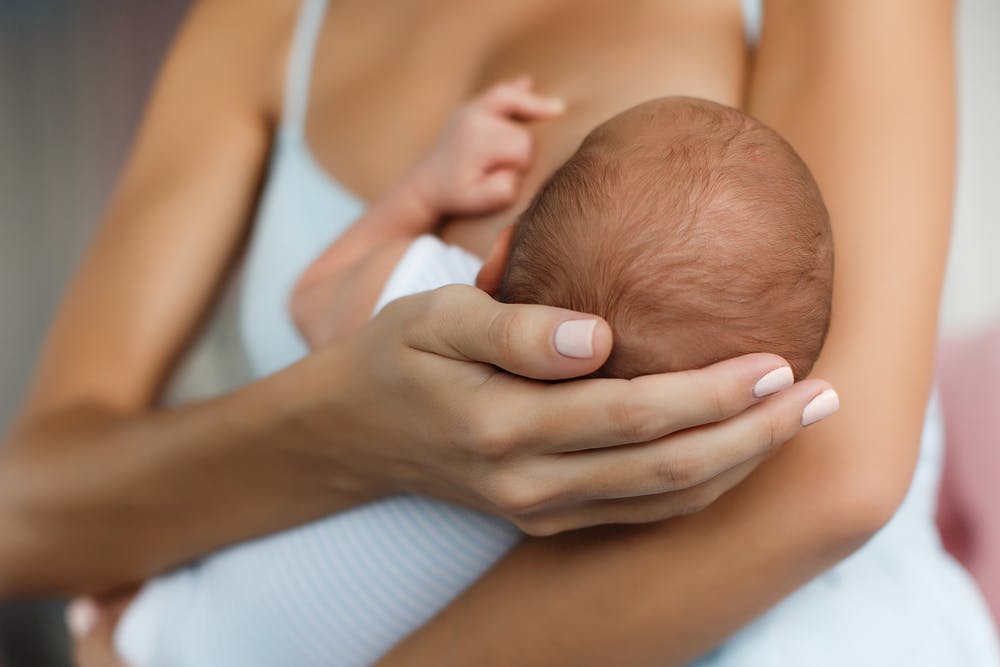 Even if the vaccine passed into your breastmilk, it would be destroyed by the acid in your baby’s stomach.
www.shutterstock.com
Even if the vaccine passed into your breastmilk, it would be destroyed by the acid in your baby’s stomach.
www.shutterstock.com
How about if I’m pregnant?
The Australian health department is encouraging women who are pregnant and at high risk of catching COVID-19, or who have medical conditions that make them more vulnerable to severe COVID-19 disease, to consider getting vaccinated.
The World Health Organization is even clearer in recommending women who are pregnant to be vaccinated if they are at high risk of catching COVID-19 or of developing severe COVID-19 disease.
Read more: Pregnant in a pandemic? If you're stressed, there's help
While it might seem safer to wait until you’re no longer pregnant to be vaccinated, that may be riskier. Pregnant women are more likely to get severe COVID-19 than other infected women, and are slightly more likely to give birth prematurely if they have COVID-19.
So vaccination is important, especially if you are a front-line health, aged-care, or quarantine worker.
Read more: It's crucial we address COVID vaccine hesitancy among health workers. Here's where to start
Are the vaccines safe for pregnant women and their babies?
Almost all vaccines are safe during pregnancy and some are recommended to protect women and their babies from infectious disease. Even those that are not generally recommended can be given to pregnant women in certain circumstances, for instance when it would be safer to have the vaccine than to be exposed to infectious disease without the protection vaccination provides.
COVID-19 vaccines cannot cause coronavirus infection because they do not contain the virus that causes it.
The active ingredient in the Pfizer vaccine is mRNA, a tiny fragment of genetic material (messenger ribonucleic acid) that triggers our own cells to produce a spike protein similar to the one on the surface of the coronavirus. This triggers an immune response that destroys the spike protein and teaches our bodies to recognise the virus that causes COVID-19. mRNA is very fragile, so it is destroyed in our bodies very quickly.
While we are still gathering more information about the use of COVID vaccines in women who are pregnant, there are some encouraging signs. About 20,000 pregnant women in the United States alone have been vaccinated and there have been “no red flags” around safety.
Read more: COVID vaccines have been developed in record time. But how will we know they're safe?
What about women in other jobs?
Women who are not working in front-line health, aged care, border protection or hotel quarantine will not be offered COVID-19 vaccination for some time yet.
Fortunately, in Australia it is very unlikely for someone who is not a front-line worker to be exposed to COVID-19 because there are so few cases in the community.
By the time vaccination is offered to healthy women who are not in high-risk occupations, many hundreds of thousands of pregnant women will have been vaccinated worldwide, giving us more information on which to base our recommendations.
So, why the controversy?
Researchers did not include women who were pregnant or breastfeeding in COVID-19 vaccine research. So when the first vaccines were offered to health workers in the United Kingdom, for instance, health authorities did not recommend vaccinating women who were pregnant or breastfeeding.
While this may have been motivated by a desire to protect them, it had the opposite effect. UK women in jobs that placed them at high risk of contracting COVID-19, were left without the protection offered by vaccination. Some women stopped breastfeeding. Others felt it meant choosing between working while unvaccinated and not working at all. Recommendations in the UK have since changed, and pregnant or breastfeeding women in high-risk occupations are now offered vaccination, just as they will be here.
In Australia, the Royal Australian and New Zealand College of Obstetricians and Gynaecologists (RANZCOG) says that, although there is no evidence COVID-19 vaccines could cause harm when given to women in pregnancy, there is insufficient evidence to recommend Australian pregnant woman routinely get vaccinated. This recommendation may change if the number of COVID-19 cases increases in Australia.
However, RANZCOG does recommend that women with particular underlying medical conditions discuss the pros and cons with their health-care provider. It also suggests pregnant women working in high-risk environments be offered alternative duties that reduce their chance of exposure to the virus.
Read more: Can my boss make me get a COVID vaccination? Yes, but it depends on the job
So what do we make of all this?
From what we know so far, breastfeeding women can be vaccinated without risk to their babies. And the World Health Organization says vaccination is safer for pregnant women who work in places where they are at high risk of exposure to COVID-19 than not getting vaccinated.
Women who are not working in high-risk occupations, whose risk of exposure is low because community transmission is low, will not be offered vaccination for some time. By the time it’s their turn, health authorities should be able to make clearer recommendations.
Authors: Nina Jane Chad, Infant Feeding Consultant, World Health Organization; Research Fellow, University of Sydney School of Public Health, University of Sydney


 Daily Bulletin


