

NZ tourism can use the disruption of COVID-19 to drive sustainable change — and be more competitive
- Written by: James Higham, Professor of Tourism, University of Otago
The Parliamentary Commissioner for the Environment’s second tourism report urges the government to take advantage of the disruption caused by COVID-19 to transform the tourism industry.
Titled “Not 100% – but four steps closer to sustainable tourism”, it builds on commissoner Simon Upton’s 2019 “Pristine, popular … imperilled?” report and presents four detailed policy proposals intended to shift the tourism sector from a volume/demand model to a sustainability model:
introducing a departure tax to address the high and unavoidable emissions associated with international air travel
making central government funding for tourism infrastructure conditional on environmental criteria.
strengthening legislation allowing the Department of Conservation to fully protect Aotearoa’s most spectacular natural areas
strengthening existing standards for self-contained freedom camping.
These represent a paradigm shift away from industry subsidy to increasing tourist and tourism business accountability.
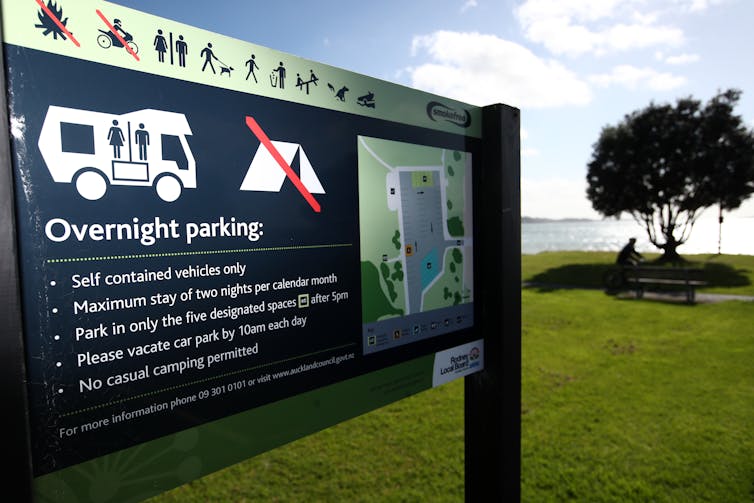 Protecting pristine environments is a priority: the report recommends tighter rules for freedom campers and rental companies.
GettyImages
Protecting pristine environments is a priority: the report recommends tighter rules for freedom campers and rental companies.
GettyImages
Not business as usual
There is also much to like about the three key principles underpinning the commissioner’s recommendations:
tourism should be treated like any other sector of the economy, without special priority and public subsidy
communities and mana whenua should be central to tourism decision-making
tourists and tourism businesses should meet the costs of the resources they consume (including finite environmental resources).
The report acknowledges the threat to the survival of many local tourism businesses from the crippling of international travel. But the commissioner argues there is great interest in, and wide support for, using this disruption to shape the industry’s recovery.
However, that transition will require active intervention to avoid a return to the status quo.
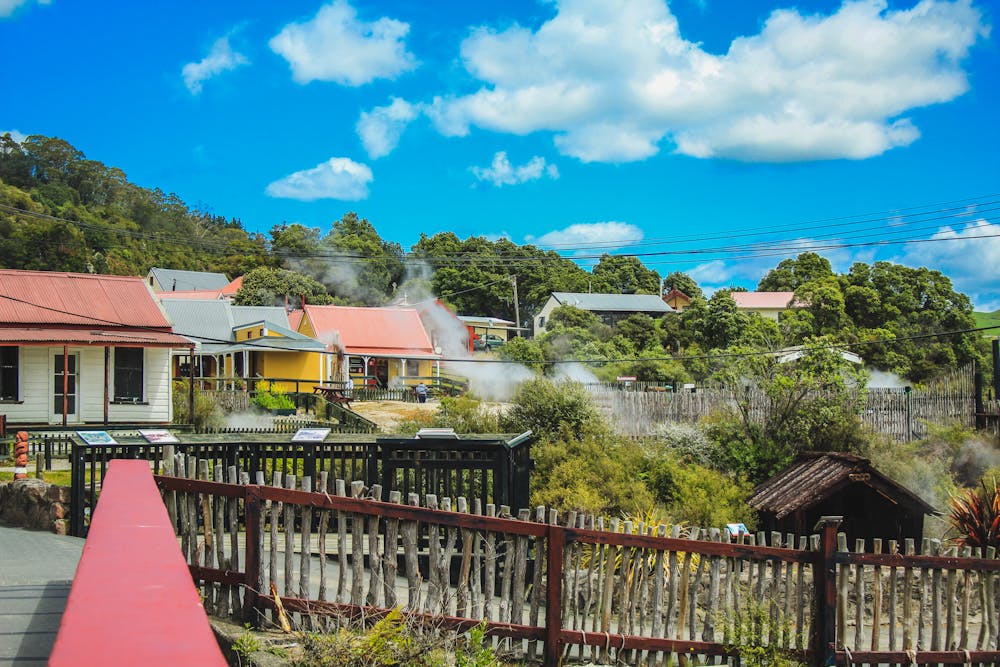 The famous Whakarewarewa thermal village in Rotorua: Māori need more say in tourism development and management.
www.shutterstock.com
The famous Whakarewarewa thermal village in Rotorua: Māori need more say in tourism development and management.
www.shutterstock.com
Over-tourism and climate change
There are two standout features of the report. First, it identifies the key concerns of many New Zealanders and tackles them head on. These include freedom camping, crowding and loss of natural quiet in our most stunning conservation areas.
The recommendations extend to strengthening rules around commercial activity on conservation land and water, improving the certification process for campervans, and requiring rental agencies to play a greater role in collecting freedom camping infringement fees and fines.
Read more: The coronavirus survival challenge for NZ tourism: affordability and sustainability
Central to the report is the need to empower mana whenua and local communities to be heard in tourism development and management planning, and to further the scope for Māori to exercise tino rangatiratanga, kaitiakitanga and manaakitanga.
Secondly, and perhaps most importantly in terms of shaping the re-emergence of a 21st-century tourism system, the report tackles the inescapable global issues arising from the high emissions of international air travel.
Return of the departure tax?
New Zealand is a geographically remote destination, dependent on long-haul markets. It is also a place of spectacular natural beauty in a world of accelerating environmental degradation.
 Parliamentary Commissioner for the Environment Simon Upton.
Supplied
Parliamentary Commissioner for the Environment Simon Upton.
Supplied
As such it is a destination threatened less by sensitivity to increasing travel costs — the impact of a passenger tax on tourist demand is likely to be modest — and more by climate concerns and growing “flygskam” (flight shame).
The commissioner recommends the introduction of a distance-based departure tax that would generate between $NZ100 million and $400 million annually, ring-fenced to support efforts to reduce emissions.
Tax revenue aside, this is critically important in terms of global leadership. The failure of the Carbon Offsetting and Reduction Scheme for International Aviation (CORSIA), introduced by the International Civil Aviation Organisation (ICAO), means individual countries showing leadership is the only way to transition away from the high-carbon global aviation regime.
Prioritising low-carbon tourism
The proposed departure tax raises important questions about how ring-fenced funds are best deployed. The commissioner recommends such revenues go to supporting the development of low-emissions aviation technologies and providing climate finance for Pacific Island nations.
But low-emissions aviation research and development is a long-term, multi-billion-dollar challenge. It requires a global commitment and response via the ICAO and aviation manufacturers such as Boeing and Airbus. The commissioner concedes this is only likely to yield benefits over time.
If we are to ring-fence taxes on New Zealand tourists, then, why not give priority to the immediate enhancement of a low-carbon New Zealand tourism sector?
The Climate Change Commission recognises that investing in low-carbon local and domestic transportation involves some relatively low-hanging fruit: electrification of New Zealand’s vehicle fleet, development of recharging networks, light rail, safe active transport including cycle trails and cycle networks, and other low-carbon transport investments.
So, investment in gondola access to ski fields, for example, could offer immediate opportunities to shift away from the queues of private vehicles we saw streaming up ski field access roads last winter.
These low-carbon transitions will future-proof our tourism industry and allow us to enjoy immediate advantages over our international competitors when international travel is restored.
Tourism NZ’s ‘travelling under the social influence’ campaign already aims to divert tourists from popular but overcrowded locations.NZ’s early advantage
Countries that adopt air transport carbon charges will seize the advantages available to early adopters. As others recognise the growing urgency of joining the successful club, rather than staying in a collective race to the bottom, change accelerates.
Replacing marginal price advantages under the old regime with highly marketable low-carbon advantages under the new one will only build New Zealand’s standing as a global leader in sustainable tourism.
Implementing a departure tax also opens up the possibility of multilateral agreements with other vanguard countries that want to lead ambitious action on climate change.
The commissioner concedes his four policy proposals are not comprehensive. Other issues remain, such as reining in the high environmental costs of the cruise industry.
However, his report does outline ways to transition the industry and begin to build a sustainable, resilient and climate-safe tourism system fit for the 21st century. For that reason, it is important these policy proposals are acted on.
Read more: The end of global travel as we know it: an opportunity for sustainable tourism
Authors: James Higham, Professor of Tourism, University of Otago


 Daily Bulletin


