

Assisted dying referendum: why NZ's law lacks necessary detail to make a fully informed decision
- Written by: Rhona Winnington, Lecturer, Auckland University of Technology
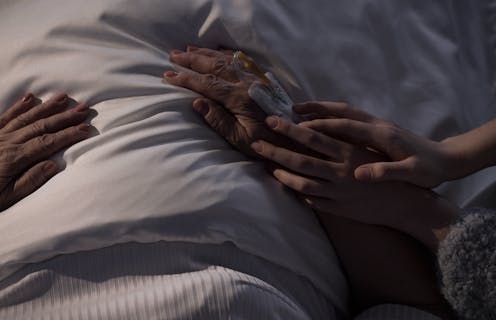
When New Zealanders go to the polls in September, they will also be asked to vote in a referendum on assisted dying.
Parliament already passed the End of Life Choice Act in 2019, but the referendum will decide whether it comes into force.
We will be asked if we accept or decline the right of people to seek an assisted death, without the need for consultation with family and with no stand-down period other than a requirement of 48 hours to prepare the medication. The act would allow people to choose when they die and by what means, whether the medication is self-administered or given by suitably qualified clinicians.
This appears an ideal scenario, affirming the right to choose, but it is a deeply profound decision for the public to make. Many may be unaware of issues beyond the goal of ending suffering for people with life-limiting conditions.
My research shows an assisted death can have repercussions for many people — those left behind or others struggling with a chronic disease. Experiences from countries where assisted dying has been legal for some time have highlighted these challenges.
Read more: One year of voluntary assisted dying in Victoria: 400 have registered, despite obstacles
Social consequences of assisted dying
In the Netherlands, assisted dying has been legal for 18 years. Over time, there have been notable slips in the criteria that have to be met. This includes the level of physical suffering, which is a subjective experience, and the requirement that people must be competent to agree to an assisted death at the point of administration. This may not be possible for people with dementia who have previously given written consent but can no longer consent at the point of death.
While the law hasn’t changed, its interpretation has, and people with mental illness can now also request an assisted death. Data from the Netherlands show one in 30 people now die by euthanasia, compared to one in 90 when the law was introduced in 2002.
In the US, some medical insurance companies pay for an assisted death but not for palliative care. This removes any notion of choice and autonomy from the person.
In Canada, where assisted dying has been legal for four years, the number of people seeking medical help to die has risen significantly, with figures more than doubling year on year. This has exposed unexpected consequences, such as fear of judgement for leaving family members unsupported after an assisted death and stigmatisation of clinicians, whether or not they support people choosing the time of their death.
Read more: In places where it's legal, how many people are ending their lives using euthanasia?
Impact on those left behind
To consider assisted dying legislation as an issue of individual autonomy denies that we are part of a much larger group with complex connections. This is particularly important when we consider Māori and Pasifika populations, whose voices are notably absent from the current act in New Zealand.
The act proposes people may seek assisted dying without any consultation with whānau (family), but the impact of an assisted death reaches far beyond relieving suffering for the individual. The ripple effects can fracture families and communities. As the act currently stands, it has the potential to cause greater harm than good.
We can already see this oversees, for example in Canada and Switzerland, where those who use assisted dying and their immediate family guard this information closely. This is likely happening because of stigma attached to dying in this way, even when it is legal.
The New Zealand legislation carries this risk. It includes restrictions on disclosure of the use of the law and on individuals being recorded as having died an assisted death, often for insurance purposes.
The contagion effect
There is another significant issue to consider. One person’s assisted death could influence the decisions of others — and this contagion effect could play out in two ways.
Those who are not aware of the legislation but discover a friend or family member is accessing it may consider using it themselves. More concerning is people with chronic conditions may feel obliged to seek assisted dying, should they feel burdensome to their family.
There is a notable difference in the New Zealand population in how support for elders or unwell family members is provided. Māori and Pasifika people tend to care for their sick and elders while pākehā (New Zealanders of European descent) often rely on external support. Our research shows when one family member has an assisted death, others with a chronic illness can feel an expectation for them to consider it.
Such broader consequences of introducing assisted dying legislation are often hidden, but they must be addressed as New Zealand moves towards the referendum. The current binary positioning of the debate focuses on autonomy of the individual versus protecting the public, whereas the reality is that assisted dying is more than merely either of these opposing values. It has already been demonstrated that the effects of assisted dying legislation reach beyond the individual and, as such, must be considered as we enter this referendum. The act lacks the necessary detail to make a fully informed decision.
The idea that choice is being given to a popular vote is, in itself, problematic. It is suggestive of a government unwilling to take responsibility for the fallout, should the referendum produce a supportive vote.
We need to safeguard our families and communities from these social consequences of assisted dying legislation. Vulnerable populations have to remain safe from persuasion to die and there has to be a supportive framework for those left behind after an assisted death, so they can grieve without feeling stigmatised.
Authors: Rhona Winnington, Lecturer, Auckland University of Technology


 Daily Bulletin


