

Here's what the coronavirus pandemic can teach us about tackling climate change
- Written by: Natasha Chassagne, University Associate, University of Tasmania, University of Tasmania
Every aspect of our lives has been affected by the coronavirus. The global economy has slowed, people have retreated to their homes and thousands have died or become seriously ill.
At this frightening stage of the crisis, it’s difficult to focus on anything else. But as the International Agency has said, the effects of coronavirus are likely to be temporary but the other global emergency – climate change – is not.
Stopping the spread of coronavirus is paramount, but climate action must also continue. And we can draw many lessons and opportunities from the current health crisis when tackling planetary warming.
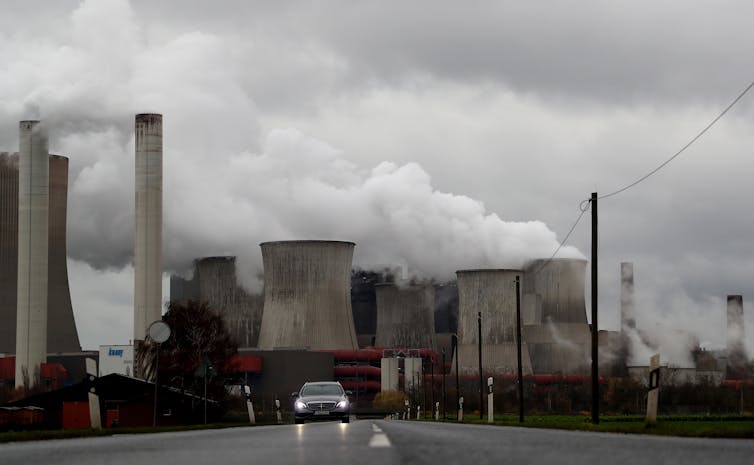 Action to reduce greenhouse gas emissions must not be compromised by the coronavirus pandemic.
EPA/MAST IRHAM
Action to reduce greenhouse gas emissions must not be compromised by the coronavirus pandemic.
EPA/MAST IRHAM
A ‘degrowing’ economy
S&P Global Ratings this week said measures to contain COVID-19 have pushed the global economy into recession.
Economic analyst Lauri Myllyvirta estimates the pandemic may have reduced global emissions by 200 megatonnes of carbon dioxide to date, as air travel grinds to a halt, factories close down and energy demand falls.
In the first four weeks of the pandemic, coal consumption in China alone fell by 36%, and oil refining capacity reduced by 34%.
In many ways, what we’re seeing now is a rapid and unplanned version of economic “degrowth” – the transition some academics and activists have for decades said is necessary to address climate change, and leave a habitable planet for future generations.
Read more: Life in a 'degrowth' economy, and why you might actually enjoy it
Degrowth is a proposed slowing of growth in sectors that damage the environment, such as fossil fuel industries, until the economy operates within Earth’s limits. It is a voluntary, planned and equitable transition in developed nations which necessarily involves an increased focus on the environment, human well-being, and capabilities (good health, decent work, education, and a safe and healthy environment).
Such a transformation would be profound, and so far no nation has shown the will to implement it. It would require global economies to “decouple” from carbon to prevent climate-related crises. But the current unintended economic slowdown opens the door to such a transition, which would bring myriad benefits to the climate.
The idea of sustainable degrowth is very different to a recession. It involves scaling back environmentally damaging sectors of the economy, and strengthening others.
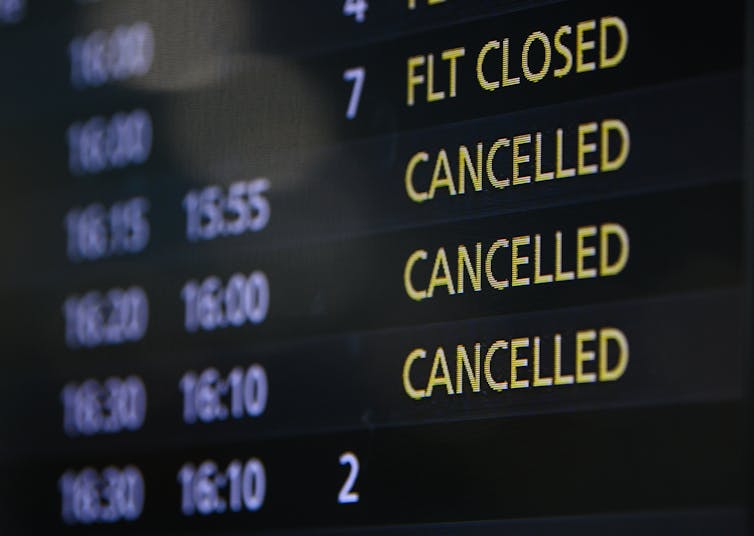 Reduced air travel is helping drive global emissions down.
James Gourley/AAP
Reduced air travel is helping drive global emissions down.
James Gourley/AAP
A tale of two emergencies
Climate change has been declared a global emergency, yet to date the world has largely failed to address it. In contrast, the global policy response to the coronavirus emergency has been fast and furious.
There are several reasons for this dramatic difference. Climate change is a relatively slow-moving crisis, whereas coronavirus visibly escalates over days, even hours, increasing our perception of the risks involved. One thing that history teaches us about politics and the human condition in times of peril, we often take a “crisis management” approach to dealing with serious threats.
Read more: How changes brought on by coronavirus could help tackle climate change
As others have observed, the slow increase in global temperatures means humans can psychologically adjust as the situation worsens, making the problem seem less urgent and meaning people are less willing to accept drastic policy measures.
 The human ability to adapt to climate change can make it seem less urgent.
CHAMILA KARUNARATHNE/EPA
The human ability to adapt to climate change can make it seem less urgent.
CHAMILA KARUNARATHNE/EPA
Key lessons from coronavirus
The global response to the coronavirus crisis shows that governments can take immediate, radical emergency measures, which go beyond purely economic concerns, to protect the well-being of all.
Specifically, there are practical lessons and opportunities we can take away from the coronavirus emergency as we seek to tackle climate change:
Act early: The coronavirus pandemic shows the crucial importance of early action to prevent catastrophic consequences. Governments in Taiwan, South Korea and Singapore acted quickly to implement quarantine and screening measures, and have seen relatively small numbers of infections. Italy, on the other hand, whose government waited too long to act, is now the epicentre of the virus.
Read more: Running out of things to do in isolation? Get back in the garden with these ideas from 4 experts
Go slow, go local: Coronavirus has forced an immediate scale-down of how we travel and live. People are forging local connections, shopping locally, working from home and limiting consumption to what they need.
Researchers have identified that fears about personal well-being represent a major barrier to political support for the degrowth movement to date. However with social distancing expected to be in place for months, our scaled-down lives may become the “new normal”. Many people may realise that consumption and personal well-being are not inextricably linked.
 Stimulus spending should be directed to clean energy.
EPA
Stimulus spending should be directed to clean energy.
EPA
New economic thinking is needed. A transition to sustainable degrowth can help. We need to shift global attention from GDP as an indicator of well-being, towards other measures that put people and the environment first, such as New Zealand’s well-being budget, Bhutan’s gross national happiness index, or Ecuador’s social philosophy of buen vivir (good living).
Spend on clean energy: The International Energy Agency (IEA) says clean energy should be “at the heart of stimulus plans to counter the coronavirus crisis”.
The IEA has called on governments to launch sustainable stimulus packages focused on clean energy technologies. It says hydrogen and carbon-capture also need major investment to bring them to scale, which could be helped by the current low interest rates.
Governments could also use coronavirus stimulus packages to reskill workers to service the new “green” economy, and address challenges in healthcare, sanitation, aged care, food security and education.
 More people are shopping locally during the pandemic.
AAP/STEFAN POSTLES
More people are shopping locally during the pandemic.
AAP/STEFAN POSTLES
Looking ahead
As climate scientist Katharine Hayhoe said this month:
What really matters is the same for all of us. It’s the health and safety of our friends, our family, our loved ones, our communities, our cities and our country. That’s what the coronavirus threatens, and that’s exactly what climate change does, too.
The coronavirus crisis is devastating, but failing to tackle climate change because of the pandemic only compounds the tragedy. Instead, we must draw on the lessons of coronavirus to address the climate challenge.
Authors: Natasha Chassagne, University Associate, University of Tasmania, University of Tasmania


 Daily Bulletin


