

The Playground as Classroom: How Line Markings Are Reinforcing What Students Learn Inside
For a long time, the playground was treated as a break from learning rather than part of it. A place to run off energy before heading back to the classroom, with little connection to what was actually being taught that day. That's beginning to change.
Schools are increasingly seeing outdoor space as an extension of the classroom rather than a separate zone entirely. And one of the most practical tools making that shift possible is something surprisingly simple: playground line markings.
What educational playground markings actually look like
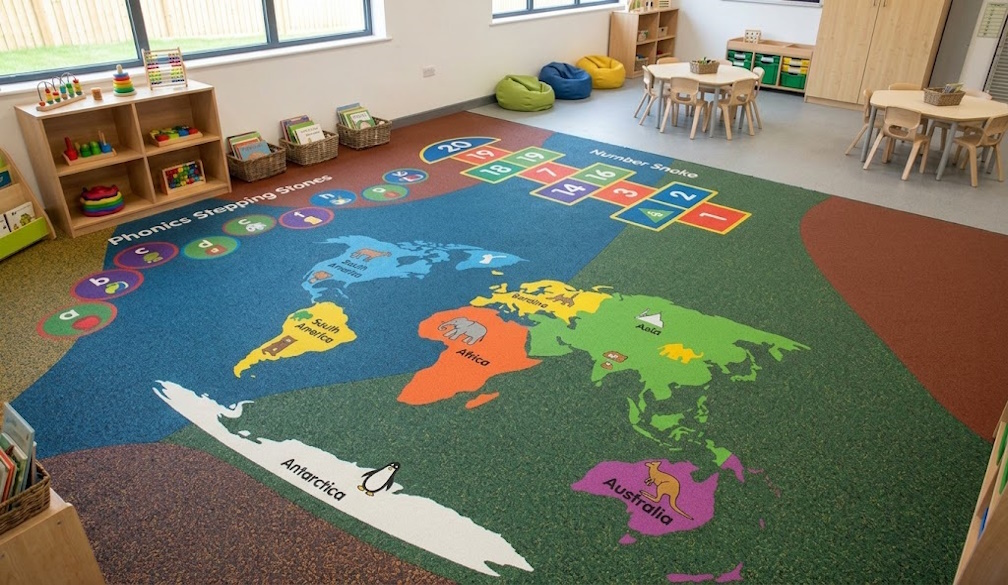
Educational playground markings are permanent designs applied directly onto existing tarmac or asphalt, rather than freestanding equipment that needs to be built or installed. Common examples include number grids, alphabet paths, multiplication tables, phonics games, geometry patterns and storytelling circles.
Part of what makes them so practical is how little they ask of a school. Unlike fixed play equipment, these markings occupy minimal footprint and require no ongoing maintenance once installed. A single playground marking can sit alongside existing equipment rather than replacing it, adding educational value to space a school already has.
Why movement helps learning stick
The idea behind this trend comes down to something fairly intuitive. Children tend to retain information better when they're physically engaged with it, rather than repeating the same content at a desk. Learning through movement gives literacy and numeracy concepts a second life outside the classroom, practised through walking, jumping, hopping and hands-on interaction with a design rather than a worksheet.
A number grid becomes something a student walks across while counting. A multiplication table becomes something they hop through. The concept doesn't change, but the way it's experienced does.
Curriculum alignment, not just decoration
It would be easy to assume these markings are purely decorative, a way to make a playground look more colourful and inviting. In reality, the better designs are built to align directly with curriculum objectives and specific key stages, giving teachers a genuine teaching resource rather than a novelty feature.
What makes this particularly useful is the flexibility. School line markings can be built into structured lessons, with a teacher actively directing an activity outdoors. Just as easily, they can be used independently during breaks, with students engaging with them on their own, practising counting, spelling or problem solving without needing supervision or additional resourcing from the school.
Supporting different kinds of learners
Not every student thrives in a traditional classroom setting, and that's part of what makes this shift meaningful. Hands on, physically engaged learning through play gives students another way to practise and experience the same content, one that suits a different learning style entirely.
This connects naturally to the broader inclusive design trends already reshaping playgrounds more generally. A playground designed with intention doesn't just support movement and play. It supports different ways of learning too.
A cost effective, long lasting investment for schools
For schools weighing up where to invest limited budget, playground markings offer a genuinely practical option. Because they use durable, weather resistant materials and are applied directly to surfaces the school already has, they represent a lasting improvement without the cost or disruption of installing entirely new play equipment.
It's a low maintenance way to add ongoing educational value to outdoor space, rather than a one-off feature that loses relevance once the novelty wears off.
Closing thought
Playgrounds are increasingly being designed with real intention behind them, not just for movement and fun, but as a genuine extension of the classroom. Something as simple as a line marking on the ground is quietly changing what break time can offer, keeping students engaged with what they're learning long after the bell goes.


 Daily Bulletin


