

DFI Retail Group releases Sustainability Report 2023 – Demonstrating the significant progress in its sustainability and ESG journey
- Written by: Daily Bulletin
- Published in News from Asia
HONG KONG SAR - Media OutReach Newswire - 22 April 2024 - DFI Retail Group (DFI) has published its Sustainability Report 2023, which illustrates the group's steadfast commitment to environmental sustainability and community service.
The report highlights the efforts DFI has made and its accomplishments in various areas of environmental stewardship, such as 19% reduction in Scope 1 and 2 greenhouse gas (GHG) emissions[1] compared to its 2021 baseline, reducing 110 tonnes of plastic usage in Own Brand Health and Beauty products and increasing waste diversion rate. 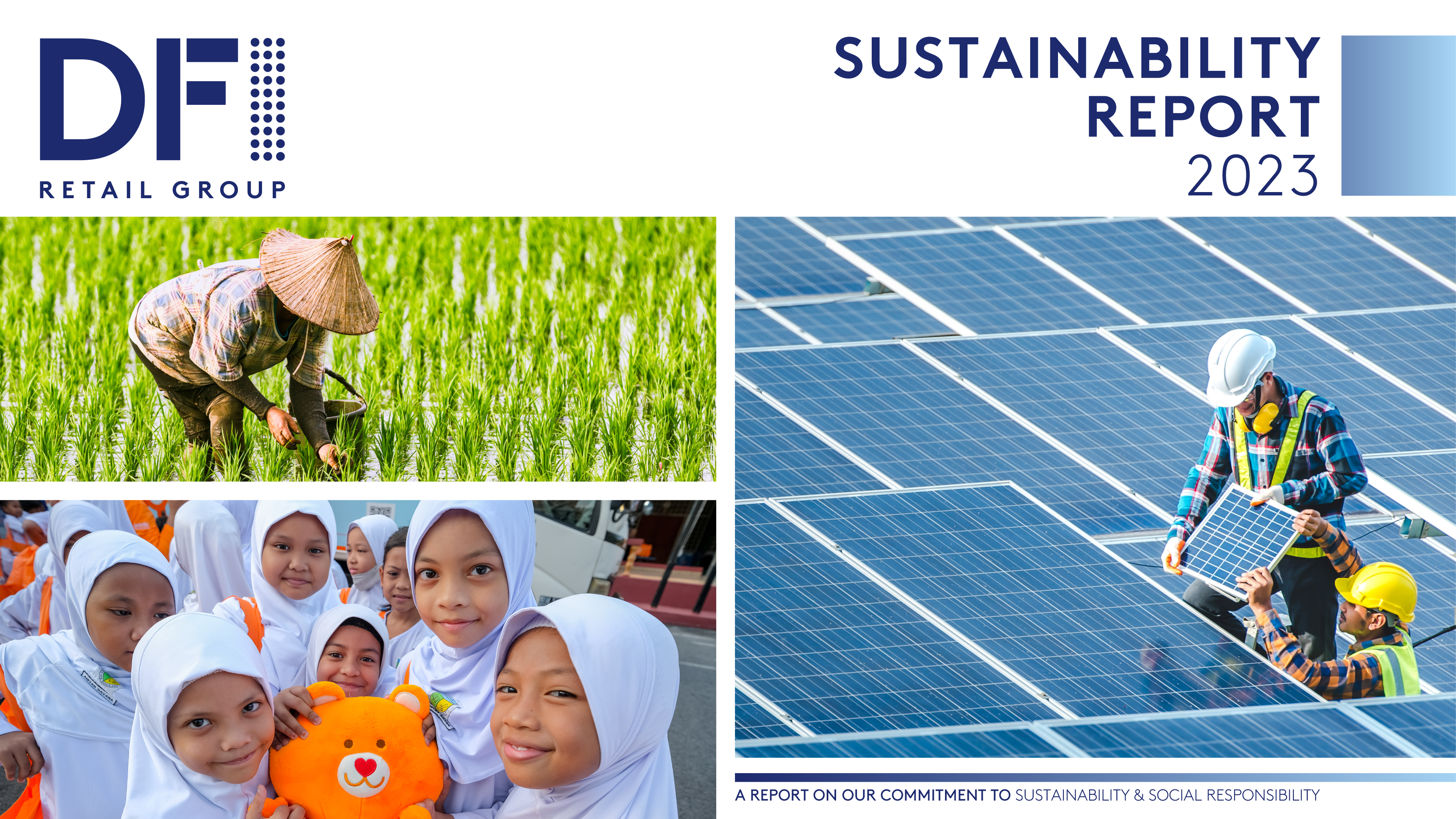 DFI Retail Group releases Sustainability Report 2023
As part of its mission, DFI strives to sustain the planet, source responsibly and serve communities. Within the framework, the goals of which range from reducing energy, plastic usage and waste; to eliminating harmful refrigerants; improving human, animal and land welfare; reducing hunger, the cost of living, and raising self-esteem. These are incorporated in DFI's operations, ensuring sustainable practices that benefit both customers and the communities it serves.
Mr. Scott Price, Group Chief Executive of DFI Retail Group, said, 'As a leading pan-Asian retailer, we have a unique opportunity to contribute to and be a part of the solution to achieving a sustainable future for all our customers, communities, and businesses. We take this responsibility very seriously, and being part of the solution is essential to our Customer First, People Led and Shareholder Driven strategic framework.'
For detailed information on the various initiatives undertaken by DFI towards sustainable development, please refer to the DFI Sustainability Report 2023 here.
Hashtag: #DFIRetailGroup #DFI #ESG #Sustainability #SustainabilityReport Looking forward, DFI is dedicated to further embedding environmental, social, and governance (ESG) principles into daily operations and business strategies. Through a range of sustainability initiatives, DFI strives to achieve its goals in the markets and communities it serves, bringing about positive changes and continuously enhancing the Group's contributions towards a sustainable future.
Key highlights from the 2023 Sustainability Report include:
- Science Based Targets Initiative (SBTi) validation: DFI became one of the first Asian retailers to be validated by SBTi for its near-term GHG emissions reduction targets. For Scope 1 and 2, the committed target is to reduce half emissions by 2030. DFI has also pledged separately to achieve net-zero emissions by 2050, with a yearly plan and investments planned to achieve this long-term goal. SBTi has also validated DFI's Scope 3 emissions reduction target, focusing on purchased goods and services (category 1) and other significant categories.
- Reduction in GHG emissions: DFI achieved a remarkable 19% reduction in Scope 1 and 2 GHG emissions compared to its 2021 baseline. It reflects DFI's ongoing efforts to mitigate direct and indirect emissions and combat climate change.
- Morningstar Sustainalytics rating: DFI ESG risk rating has improved from 25.3 in 2022 to 22.9 in 2023, advancing the company from the top 50% to the top 29% in the Global Food Retail sub-industry rankings. Sustainalytics has given DFI the overall ESG management a "Strong" rating, despite the company's above-average risk exposure for their sub-industry.
- DFI achieved a 54% waste diversion rate in 2023, up from 51% in 2022, underscoring the Group's commitment to diverting waste from landfills and promoting recycling and sustainable waste management practices.
- DFI achieved a commendable 38% reduction in plastic bags and plastic wrap usage compared to 2022. Demonstrating the Group's efforts to minimize the environmental impact of its operations.
- As of 2023, 57% of these Own Brand products' plastic packaging are recyclable. enhancing the circularity of packaging materials.
For detailed information on the various initiatives undertaken by DFI towards sustainable development, please refer to the DFI Sustainability Report 2023 here.
https://sr.dfiretailgroup.com/2023
[1]Scope 1 covers emissions from sources that an organization owns or controls directly; Scope 2 are emissions that a company causes indirectly and come from where the energy it purchases and uses is produced; Scope 3 encompasses emissions that are not produced by the company itself and are not the result of activities from assets owned or controlled by them, but by those it's indirectly responsible for up and down its value chain.
The issuer is solely responsible for the content of this announcement.
About DFI Retail Group
DFI Retail Group (the 'Group') is a leading pan-Asian retailer. The Group provides quality and value to Asian consumers by offering leading brands, a compelling retail experience and great service; all delivered through a strong store network supported by efficient supply chains.
The Group (including associates and joint ventures) operates under a number of well-known brands across six divisions. The principal brands are:
Food
Wellcome in Hong Kong; Yonghui in Chinese mainland; Cold Storage and Giant in Singapore; Hero in Indonesia; and Robinsons in the Philippines.
Convenience
7-Eleven in Hong Kong and Macau, Singapore and Southern China.
Health and Beauty
Mannings in Chinese mainland, Hong Kong and Macau; Guardian in Brunei, Cambodia, Indonesia, Malaysia, Singapore and Vietnam.
Home Furnishings
IKEA in Hong Kong and Macau, Indonesia and Taiwan.
Restaurants
Hong Kong Maxim's group in Chinese mainland, Hong Kong and Macau S.A.R., Cambodia, Malaysia, Singapore, Thailand, Vietnam and Laos.
Other Retailing
Robinsons in the Philippines operating department stores, specialty and DIY stores.


 Daily Bulletin


