

Preparing Your Family 4WD for a Safe Australian Road Trip
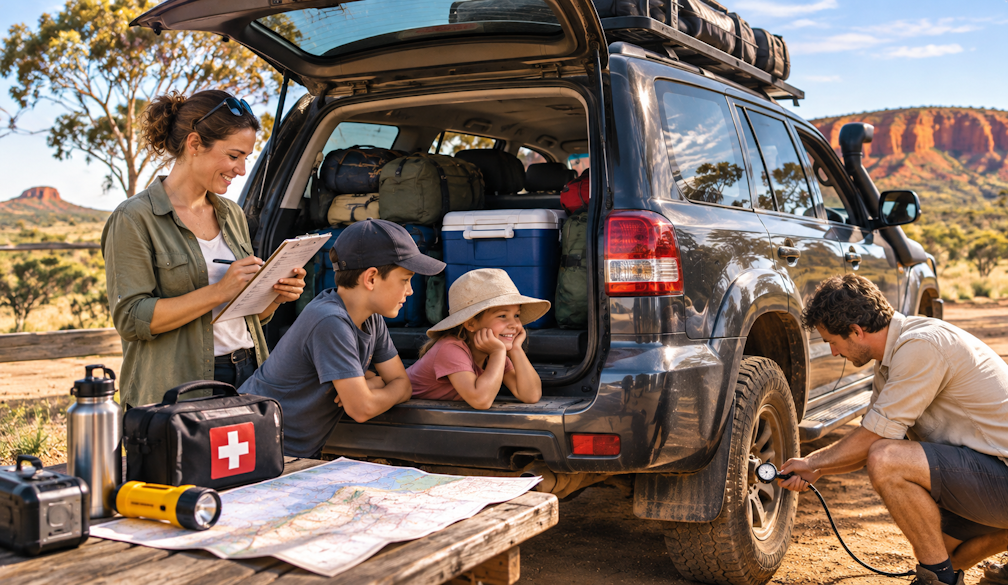
The great Australian road trip is a rite of passage for many families. Loading up the 4WD and heading toward the vast, red horizons of the outback promises adventure, unforgettable memories, and a true escape from city life. Whether you are planning to tackle the iconic Gibb River Road, cross the sprawling Nullarbor Plain, or simply explore the rugged beauty of your home state, touring regional Australia presents unique driving conditions that demand serious respect. Before you point your bonnet toward remote tracks, ensuring your vehicle is properly equipped and mechanically sound is absolutely vital for your family's safety.
Shielding Your Vehicle from Outback Hazards
One of the most significant risks when driving through regional Australia is wildlife. Recent insurance data reveals that over 24,000 wildlife collision claims are recorded nationwide annually. Kangaroos, emus, and wandering livestock are incredibly active around dusk and dawn, especially during the winter months, and they account for the vast majority of these incidents. According to Transport for NSW data, 1 in every 41 casualty crashes on country roads involves a vehicle hitting an animal, highlighting exactly why outback driving requires heightened caution. Places like Dubbo, Broken Hill, and other regional hubs frequently rank as major hotspots for these unpredictable encounters.
Striking a heavy, fast-moving marsupial can result in catastrophic damage to your radiator, steering components, and engine bay. With average repair bills reaching thousands of dollars and the potential to be stranded hundreds of kilometres from the nearest town, a collision can quickly turn a family holiday into an expensive rescue mission. To mitigate this risk, fitting robust frontal protection is a critical investment. For instance, installing ADR-compliant Toyota Fortuner bull bars ensures that your vehicle's vital cooling systems are shielded from unexpected impacts. Modern frontal protection systems are rigorously engineered to work in harmony with factory airbags and autonomous emergency braking sensors, keeping your vehicle fully street-legal while providing essential peace of mind.
Managing Load Weights and Vehicle Balance
When packing for a multi-week trip, it is remarkably easy to overload a vehicle. Every piece of camping gear, extra fuel, water supply, and passenger adds up rapidly. Understanding your Gross Vehicle Mass limit is crucial, as this dictates the absolute maximum legal weight your 4WD can safely carry on public and unsealed roads. Exceeding this limit not only voids your insurance but significantly increases emergency braking distances and raises your centre of gravity.
On uneven or corrugated outback tracks, a top-heavy vehicle faces a much higher likelihood of rolling over. Furthermore, poor load distribution can lift the front wheels slightly off the ground, which severely compromises steering traction and causes premature wear on your suspension system. Distributing heavy items securely, keeping them as low as possible and between the axles, will help maintain predictable handling and keep your family safe on winding mountain passes or rutted desert tracks.
Mechanical Health and Professional Inspections
Even the most capable off-road vehicle requires a thorough mechanical health check before tackling thousands of kilometres of harsh terrain. It is always wise to book a comprehensive inspection with a professional mechanic well before your departure date. They will examine critical safety baselines such as brake pads, fluid leaks, and tyre tread depth. Taking the time to read up on understanding roadworthy certificates in Australia can help you recognise the strict safety standards and critical checks your mechanic must perform during this process.
Beyond the standard checks, ask your mechanic to closely inspect your suspension bushes, wheel bearings, and towing equipment. The relentless vibrations of unsealed roads will quickly expose any underlying weaknesses in your drivetrain. Preventative maintenance is far cheaper than paying for a remote tow truck.
Essential Pre-Trip Safety Checklist
To keep your preparation on track, follow this basic checklist before leaving your driveway:
- Inspect all tyre pressures, including your spare, and ensure you have the correct tools to change a heavy 4WD tyre in the dirt.
- Test all exterior lighting, focusing on headlights, brake lights, and trailer connections.
- Verify that your first-aid kit is fully stocked and easily accessible in an emergency.
- Pack reliable offline communication devices, such as a UHF radio or satellite phone, as mobile reception drops out quickly in rural areas.
- Double-check that all heavy cargo in the rear is securely strapped down to prevent movement during sudden braking.
- Pack basic recovery gear, such as traction boards and a snatch strap, just in case you encounter soft sand or deep mud.
Taking the time to properly prepare your family 4WD transforms a potentially stressful journey into a relaxed and enjoyable adventure. By prioritising front-end protection, respecting your weight limits, and securing a clean bill of mechanical health, you can confidently explore the very best of the Australian outback.


 Daily Bulletin


