

Coronavirus will devastate Aboriginal communities if we don't act now
- Written by: James Ward, Director of POCHE Centre for Indigenous Health, The University of Queensland
As the COVID-19 pandemic evolves, we need to ensure the most vulnerable people in our communities aren’t left behind. This includes Aboriginal and Torres Strait Islander people, especially those living in remote and very remote areas.
COVID-19 particularly impacts the elderly and those with underlying conditions such as cardiovascular (heart) disease and diabetes.
For Aboriginal Australians, COVID-19 has great potential to wreak havoc in our communities.
Read more: Why are older people more at risk of coronavirus?
Around 50% of adult First Nations people live with one of the major chronic diseases such as cardiovascular (heart) disease, kidney disease or cancer. Almost one-quarter have two or more of these chronic conditions.
These risks are compounded by where we live. One in eight First Nations people live in overcrowded housing. This means COVID-19 could spread rapidly. And overcrowding poses real challenges for isolating suspected cases.
This overcrowding is worse in remote settings, which face significant challenges in containing and responding to the COVID-19 pandemic because:
health services are already at capacity
the workforce is already reliant on fly-in-fly-out staff, including many from New Zealand which has imposed quarantine restrictions
there is little access to testing for COVID-19, with long delays for results
little information is available, especially for those who speak English as a second, third or fourth language.
How can we mitigate the risk?
Our communities aren’t sitting idle. They have put in place mitigation strategies and are awaiting further instructions, assistance and financial stimulus to help them through this pandemic.
Some regional groups – such as the Northern Land Council, the Anangu Pitjantjara Yankunytjatjara Lands (APY Lands in South Australia) and the Torres Strait Islands and Papua New Guinea border cross regions – have stopped issuing new permits for visitors and cancelled all non-urgent travel and visits by government and non-government agencies.
The Northern Territory government is also considering a full lockdown, Territory wide.
But these measures are only the start of what is required.
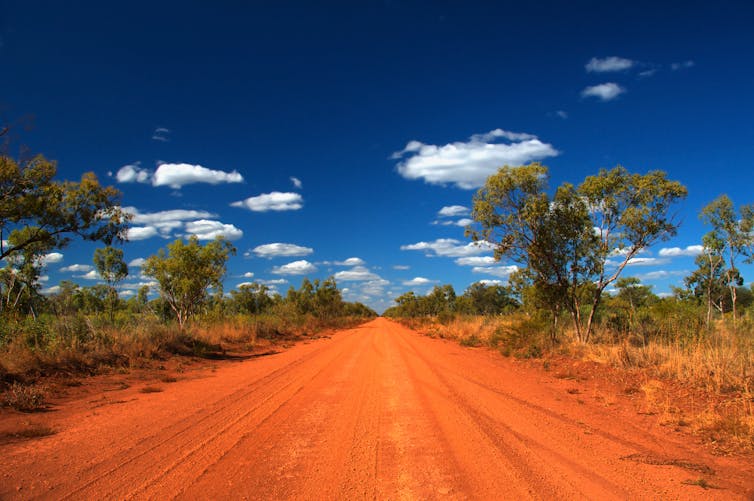 Some communities are already closed for non-essential visits.
Shutterstock
Some communities are already closed for non-essential visits.
Shutterstock
The National Aboriginal Community Controlled Health Organisation (NACCHO), the peak body representing more than 140 Aboriginal community-controlled health services, has called for urgent information about:
evacuation procedures for people with COVID-19 and suspected cases
how to ramp up the workforce and health services in the case of an outbreak
how to get appropriate, clear and concise messaging out to communities.
Read more: Why Singapore's coronavirus response worked – and what we can all learn
The peak body has also called for a suite of measures to help communities prepare for the pandemic, including:
regional COVID-19 testing services to be urgently implemented
support for existing Aboriginal health services to modify their structures and create respiratory clinics away from normal health services
urgent supplies of personal protective equipment (PPE, which includes gowns, masks and goggles) to be made available
urgent identification and sourcing of appropriate housing for suspected and confirmed cases
existing medication supplies not to be interrupted but rather prioritised across all settings
for access to food and other essential items – such as sanitation supplies, cleaning products and soaps – not to be compromised as the pandemic progresses.
We can’t wait long for action
The warnings from around the world are clear: the earlier these requirements are met, the better the outcomes will be.
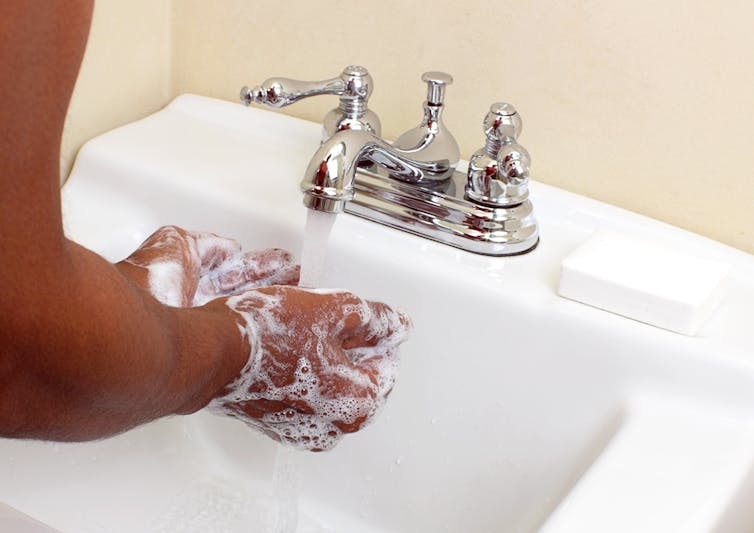 Access to soaps and other sanitation supplies to Aboriginal communities cannot be compromised.
Shutterstock
Access to soaps and other sanitation supplies to Aboriginal communities cannot be compromised.
Shutterstock
We have a moral responsibility to do better than we did in the 2009 H1N1 pandemic. This pandemic ended up with 3.2 times more Aboriginal people admitted to hospital than non-Aboriginal people, four times as many admissions to intensive care units and 4.5 times the number of deaths.
Read more: The 'dreaded duo': Australia will likely hit a peak in coronavirus cases around flu season
The Aboriginal Community-Controlled Health services sector has mobilised and leading an advisory group alongside Governments and is meeting regularly to work on a management plan specific to the Aboriginal and Torres Strait Islander populations.
In the coming days and weeks much more will be required to ensure Aboriginal and Torres Strait Islander communities across Australia have protocols in place to respond to the virus, contain it and eventually recover.
In the meantime, we must do all we can to protect our most vulnerable in our communities including our Elders, who are the keepers of knowledge and stories, and the backbones of our communities. If we don’t, we should all hang our heads in shame.
Authors: James Ward, Director of POCHE Centre for Indigenous Health, The University of Queensland


 Daily Bulletin


