

Can I take the dog for a walk? Can I put the kids to bed? What you should and shouldn't do if you're in coronavirus self-isolation
- Written by: Adam Kamradt-Scott, Associate professor, University of Sydney
Australians who have tested positive to COVID-19 have been advised to self-isolate at home.
The Australian government’s Health Direct website also advises people who have developed a fever or other respiratory symptoms to self-isolate.
You should also self-isolate if you’ve had contact with someone who has tested positive for COVID-19, if you’ve returned from any overseas country or you’re waiting for test results. According to Health Direct: “even if you have a negative result, you should complete the whole 14 days of self-isolation.”
Most people who need to self-isolate will probably be advised to do so for 14 days.
But it’s not always clear what that means in practice, and how it’s different to social distancing.
Here’s what you need to know.
Read more: How to flatten the curve of coronavirus, a mathematician explains
I’ve tested positive for COVID-19, or am awaiting results. Can I take the dog for a walk?
The short answer is no. We want people in this situation – those who have tested positive to COVID-19 or are awaiting test results – to remain in their houses, preferably in the bedroom and avoid interacting beyond those four walls.
You should avoid interacting with delivery people.
Yes, you can go out to the garden, but if you must cough or sneeze, do so into your elbow and wash your hands.
The virus is not airborne – so simply breathing while in the garden is unlikely to, for example, spread it to your neighbour’s garden.
But if people in this category cough and sneeze on their their hand and then touch a door handle or a mug, it could spread the virus to the next person to touch that handle or mug. So you should be washing your hands often, with soap, to reduce the risk of passing it around to other household members.
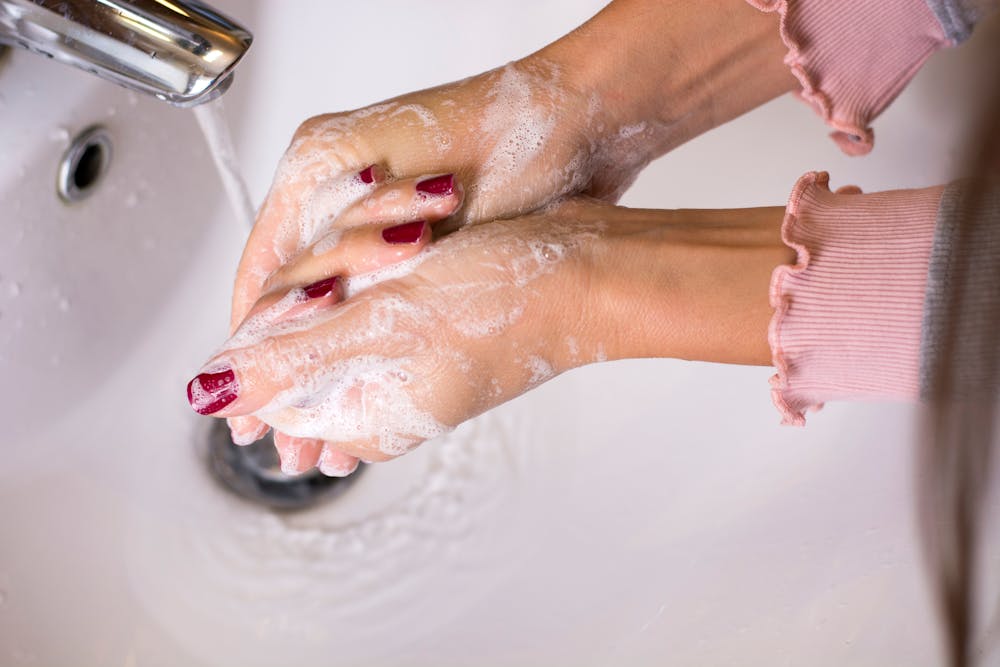 Wash your hands often, with soap.
People who have tested positive to COVID-19, or are awaiting test results, should not be putting the kids to bed.
They should isolate themselves in a bedroom. If they go into a communal space they should wear face masks, avoid contact with others, and wash hands regularly. They do not need to wear their face masks while they are in their bedroom by themselves – but their partner should sleep in a different room during the quarantine period.
If someone walks into the bedroom by accident or opens the door to deliver a tray of food, they are not at risk of being exposed to the virus. But when taking plates and utensils away, the person who puts it in the dishwasher or washes it up afterwards (either the unwell person or another household member) needs to ensure they immediately wash their hands with soap and water afterwards and clean the surfaces (like the tray) with disinfectant.
You can see more recommendations on the Australian government’s Health Direct website here.
 If an infected household member is continuing to move around the house, then cleaning surfaces is important – particularly door handles.
Read more: Coronavirus while pregnant or giving birth: here's what you need to know
In short, people should avoid contact with any person in their household who has tested positive for COVID-19 or is awaiting test results.
If an infected household member is continuing to move around the house, then cleaning surfaces is important – particularly door handles, mugs, utensils, counters or any area they may touch. In general, people in these households should exercise a higher degree of caution.
If you have got someone in your home that’s infected, the people most vulnerable are the people over 60 with pre-existing medical conditions - so you should avoid contact with people in that category.
What about social distancing for people who haven’t been advised to self-isolate?
I am of the view that those of us who have not been advised to self-isolate should continue to live our lives as normally as possible, for now.
That’s because when wider social distancing measures come into force, then those measures could be in place for an extended period of time.
We are not talking about just two weeks and then everything goes back to normal. It could be six weeks or more where people are discouraged from interacting with others.
We know from past events that an extended period of self-isolation can have unintended mental health effects and other health impacts such as a lack of physical exercise.
So for now, until there’s evidence of widespread community transmission, then its important to maintain normalcy as much as possible while exercising an extra degree of caution around personal hygiene by:
- washing hands regularly with soap and water
- practising good cough and sneeze etiquette (by sneezing into the crook of your elbow)
- avoiding people who are visibly sick.
But if you’re on a bus and you see someone sneeze or cough, please don’t recoil in horror.
Everyone has to make their own determination as to how much risk they are willing to accept. And it is important to stress that the advice is rapidly changing.
If there’s a sharp increase in the number of cases of people with no travel history or contact with people with no travel history who have tested positive, that would suggest the virus may be circulating more broadly in the community. If we see evidence of such wider community transmission then the advice will likely change. We need to be prepared for that, and listen carefully to what our health authorities have to say about next steps.
In the meantime, it is important for people to remain calm. Through exercising sensible infection control measures, we can all reduce our personal risk of exposure and protect those in our community who are most vulnerable. These are challenging times, but we can, and we will, get through this together.
Authors: Adam Kamradt-Scott, Associate professor, University of Sydney


 Daily Bulletin


