

what you need to know to prepare and respond
- Written by: Karleen Gribble, Adjunct Associate Professor, School of Nursing and Midwifery, Western Sydney University
If you have a baby, you may be worried about them catching the coronavirus, particularly after media reports of an Australian infant diagnosed with it.
The good news is, the evidence so far is babies almost never get seriously ill from the coronavirus. And even if infected, they may have no symptoms.
However, the coronavirus could affect infants in other ways. For instance, there may be difficulties accessing health care, consumer goods and child care.
Thinking about these possibilities now, and preparing for them, can help you manage what may come.
Read more: Coronavirus is stressful. Here are some ways to cope with the anxiety
Health care access may be tricky, but there are ways
If the coronavirus becomes widespread, the health system will struggle to cope for a while.
Up to 20% of people who get COVID-19 need treatment in hospital for up to two weeks or more.
Hospitals and general practices may be overwhelmed by others sick with the coronavirus, which may make it difficult to access health care if your baby gets sick for any reason.
Recognising this, the Australian government recently announced special provisions for parents of newborns to be bulk-billed when consulting a doctor or nurse via phone or videocall rather than in person.
There are also things you can do to help keep your baby healthy so they don’t need medical treatment. By protecting them, you also protect the people around them who may be more vulnerable to serious illness from the coronavirus.
Think about hygiene
The first thing you can do is to practice good hygiene yourself. This includes frequently washing your hands, avoiding close contact with other people as much as you can, coughing or sneezing into your bent elbow or a tissue, and avoiding touching your eyes, nose and mouth.
Here’s how the World Health Organisation recommends you wash your hands.Because babies put their hands in their mouths no matter what, frequently washing their face and hands and cleaning surfaces and objects they might touch will help protect them from any infection.
How about daycare?
It will come as no surprise to most parents that babies who attend daycare are sick more often.
That’s because babies and small children have an immature immune system, are in very close contact with one another, and may end up sharing saliva with one another by mouthing and touching one another and the same toys.
So, if you can, keep your baby away from daycare. However, if you need to use it, when you pick up your baby from daycare, wash their hands and face, change their clothes, then wash your own hands, before scooping them into that big, warm hug.
Make sure vaccinations are up to date
Routine vaccination is the safest, most effective way to protect babies and children from illness.
So, keep your child’s vaccinations up-to-date to minimise the chance they’ll need medical attention while the health system is dealing with the coronavirus.
Read more: No, combination vaccines don't overwhelm kids' immune systems
If you’re breastfeeding
Breast milk contains many ingredients to help prevent and fight infection. It is recommended babies be fed only breast milk until they are six months old and continue breastfeeding with other foods into their second year of life.
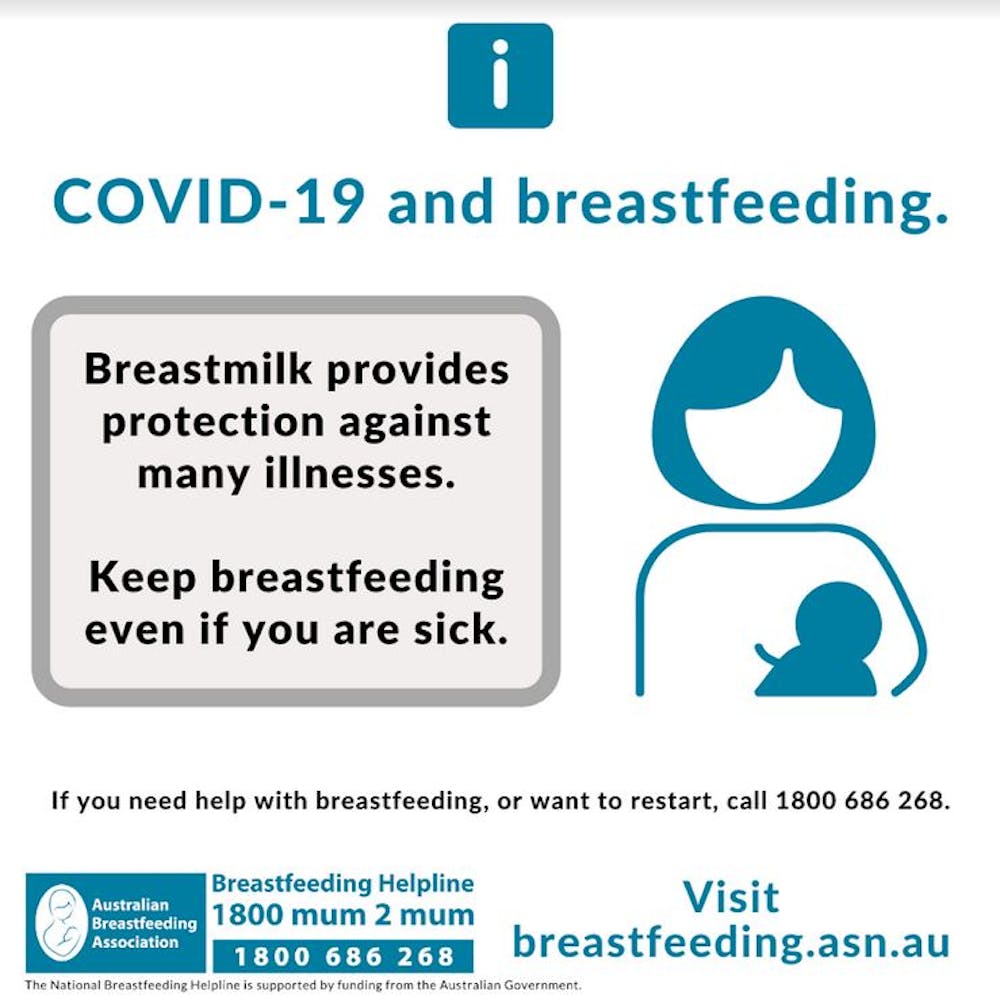 Keep breastfeeding, is the latest advice.
Australian Breastfeeding Association, Author provided
Keep breastfeeding, is the latest advice.
Australian Breastfeeding Association, Author provided
If your baby is under six months and breastfeeding, offering them only breast milk protects them from a range of infections and reduces their need for medical treatment or hospitalisation.
If your baby is breastfeeding and using formula, consider replacing formula feeds with breastfeeds.
If you have stopped breastfeeding altogether, it is possible to start breastfeeding again if you want to (contact the national Breastfeeding Helpline for assistance).
If you have an older baby or toddler who is still breastfeeding, keeping breastfeeding will help protect them from other illnesses until after the coronavirus pandemic has passed.
If you’re using formula
It is easy to accidentally introduce germs into bottles while you’re preparing infant formula. So, because medical care may be hard to access, it is worth taking extra care to prevent this.
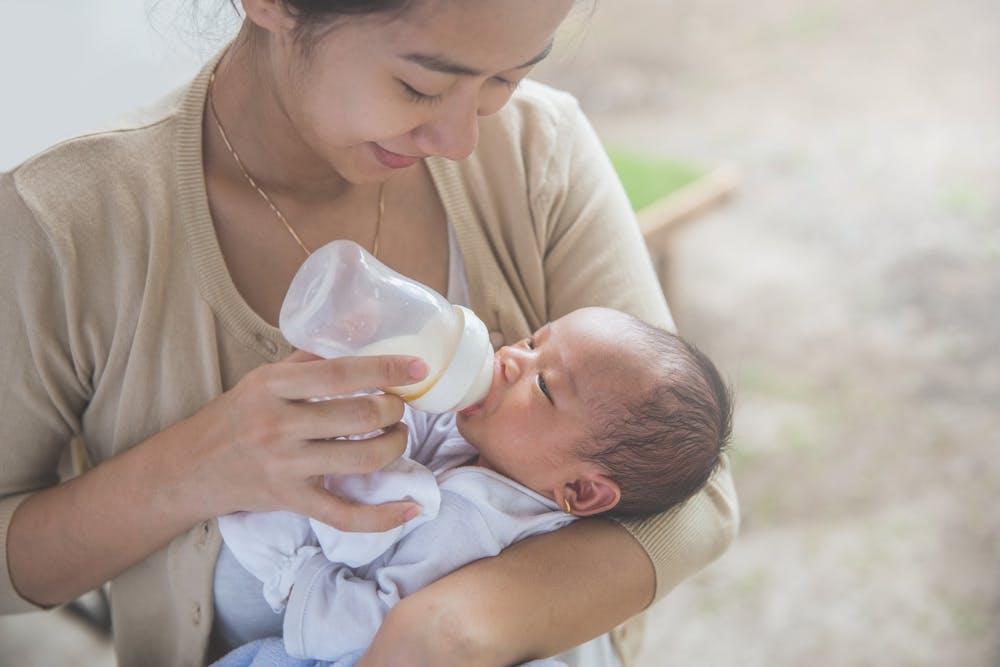 If your baby is on formula, take extra care when preparing bottles to avoid infection.
Shutterstock
If your baby is on formula, take extra care when preparing bottles to avoid infection.
Shutterstock
Be extra careful about preparing bottles. This means always washing your hands thoroughly with soap, washing bottles thoroughly, sterilising them after every use, and making up formula with hot water.
Remember to cool down the bottle in the fridge, give it a gentle shake, and check it’s not too hot before giving it to your baby.
Shop for supplies, such as nappies
Supply chains may be disrupted if lots of people get ill. And you may not be able to shop if you need to self-isolate at home.
It is recommended you have two to three weeks worth of supplies at home to prepare for this possibility. Consider stocking up on nappies for this length of time, or keeping washable (cloth) nappies on hand.
If you are formula feeding, buy enough infant formula for three weeks but check the expiry dates.
What if mum contracts the coronavirus?
Mothers are more at risk of becoming sick from the coronavirus than their babies.
And if you’re breastfeeding and you’re infected, it is recommended you continue breastfeeding. That’s because the virus has not been found in breastmilk.
Wearing a mask when you are with your baby (including during feeding), washing hands before and after contact with your baby, and cleaning and disinfecting surfaces and any feeding equipment will help prevent your baby catching the virus from you.
If you are are hospitalised or separated from your baby, you can express breastmilk for them.
Think about keeping grandparents safe
If you or your partner get ill, someone else may need to help care for the baby or other children.
Babies like to share their saliva with their caregivers and they may be infected with the coronavirus but have no symptoms. So they may easily spread the infection to the people looking after them.
Read more: Worried about your child getting coronavirus? Here's what you need to know
Many parents call on grandparents to help with child care. Unfortunately people over 60 are the most likely to get seriously ill or die from the coronavirus.
So, if your standby carers are over 60, now is the time to think about making alternate childcare arrangements.
Talk with grandparents about how they can reduce their risk of infection if they need to look after the baby.
Authors: Karleen Gribble, Adjunct Associate Professor, School of Nursing and Midwifery, Western Sydney University


 Daily Bulletin


