

Victorian changes to gender on birth certificate will not increase sexual violence. Here's why
- Written by: Bianca Fileborn, Lecturer in Criminology, University of Melbourne
The Victorian government is considering changes to the Births, Deaths and Marriages Registration Act 1996. The changes will mean transgender and gender diverse (TGD) people can change the sex recorded on their birth certificate without having to undergo medical or surgical intervention.
Other Australian and international jurisdictions have recognised the value of this kind of reform. Earlier this year, Tasmania passed laws similar to the ones being considered in Victoria. The Australian Capital Territory, Northern Territory, South Australia and Western Australia have also removed the requirement for surgical intervention.
Read more: Explainer: why removing sex from birth certificates matters to gender diverse people
There is no evidence that these changes have had negative effects in any of these jurisdictions. Despite this, these legislative amendments have prompted fierce debate.
Why are these changes necessary?
A person’s access to legal documentation that accurately reflects their identity should not depend on first having to undergo body modification procedures. In some cases, these may be unwanted and may also cause unwanted effects such as sterilisation, given that “sex affirmation surgery” requires modifying reproductive organs.
TGD people also have diverse needs: some need or want to use surgery to help affirm their identity, others do not. Moreover, surgery is expensive, tightly regulated by medical practitioners, and often inaccessible for many TGD people.
It is unfair and discriminatory for appropriate legal documentation to be offered only to those who want and/or are able to access these surgeries for financial, social or other reasons.
Should this reform pass, it will represent part of a broader shift towards removing discriminatory recognition barriers for TGD people.
Do these changes conflate sex and gender?
Critics have claimed changes like the ones proposed collapse sex with gender. “Sex” is generally a term used to refer to a range of biological markers and is often understood in terms of “male” versus “female”.
However, contrary to popular belief, biological sex is much more complex than these two binary categories. Determining “sex” is highly debated and may be based on a range of factors, including chromosomes, sexual organs, secondary sex characteristics, and hormone levels.
Gender is generally used to refer to the social and cultural interpretations of “sex”, as well as an individual’s identification with such categories. It is also more complex than the often presumed binary of “man” versus “woman”.
The relationship(s) between sex and gender are deeply contested. Despite a common assumption that sex and gender are the same thing, historically feminists have articulated the need for a distinction between sex as biology and gender as cultural.
Crucially, “sex” as it is recorded on birth certificates operates as a social marker of gender (as identity), not simply as a marker of biology.
Read more: What’s the point of sex? It frames gender expression and identity – or does it?
For TGD people, a perceived discrepancy between the “sex” recorded on their official documents and their stated gender identity can “out” someone as transgender or gender diverse. This can lead to extra scrutiny, surveillance and stigmatisation and can be used to deny access to government and other services.
For this reason, “sex” as it is recorded on birth certificates and other legal documents is best thought of as a legal gender marker. As some have argued, it may be better to remove “sex” from birth certificates altogether, to avoid any concerns over conflation of biology with identity.
This is a debate for another time. For now, it is imperative that TGD people are offered an even playing field when it comes to accessing appropriate legal documentation.
Will these changes increase the risk of sexual violence?
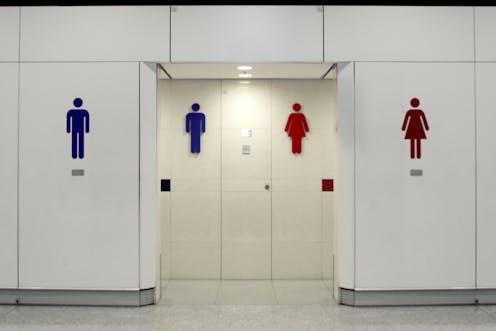
Another critique that has been raised is that this kind of reform leads to increased sexual offending against cisgender women, particularly in public toilets and other “sex”-segregated spaces (again here, “sex” is often deployed in ways that conflate biology with gender identity).
This critique has several strands: that male offenders will change their legally documented sex to access women’s spaces; and/or that women will be less able to challenge men who access women’s spaces.
Sexual violence is extremely common, with an estimated one in five women experiencing it in their lifetimes. Any potential risk to women’s safety should, of course, be taken very seriously.
However, we need to critically interrogate these claims. First, is it possible that sexual offenders could use the reforms in these ways? And, second, how likely is this?
The answer to the first question is “yes” – we can never rule out the remote possibility that someone could take advantage of the reforms in this way. However, possibility alone is not sufficient grounds for good policy.
Rather, we need to focus on the relative likelihood of this occurring. To answer this, we turn to the research on what we know about sexual offending.
Survivors overwhelmingly experience sexual violence in the context of interpersonal relationships. And the majority of this violence takes place in private locations. Perpetrators are most often someone known to the survivor, such as a current or former partner, friend, family member or acquaintance.
In contrast, the critiques raised above are based on the misconception that sexual violence is only perpetrated by a stranger in public spaces. This reinforces damaging and narrow understandings of what “real” sexual violence is, and of where women (and other survivors) face the most risk.
This critique also assumes “sex”-segregated spaces are currently safe or protective ones for women. However, sexual violence has been documented in public toilets.
These (relatively rare) cases suggest that perpetrators already access these spaces to offend. The cases documented in research and media reporting also suggest it is the isolated nature of these sites that facilitates perpetration.
Such instances have nothing to do with what “sex” is officially recorded on someone’s legal documents. Ultimately, good policy should be founded on research-based evidence, not on remote or unlikely “what ifs”.
TGD people are at higher risk of violence
Also missing in this debate is acknowledgement of the extent to which TGD people experience disproportionate rates of sexual (and other) violence, including within interpersonal relationships and in public spaces.
While we lack a robust evidence base on sexual violence experienced by LGBTQ+ communities in general, the best available evidence indicates that these communities experience this violence at rates similar to, if not higher than, cisgender heterosexual women. Transgender women experience particularly high rates of sexual violence.
There is no evidence that TGD people pose a greater risk of perpetration than cisgender men or women.
Toilets (and similar sex/gender-segregated spaces) have also been identified as heightened spaces of violence, abuse and harassment for TGD people, particularly transgender women. For example, in research by one of the authors, one participant discussed how her trans partner often experienced sexual and physical violence from cisgender men who believed they were using the “wrong” toilet.
Other research has shown how the strict regulation of space through binary understandings of “sex” results in harassment, abuse and violence against people who do not present their gender in a normative way, regardless of whether they identify as cis, trans, or otherwise.
In other words, “sex”-segregated spaces are themselves often sites of victimisation, particularly but not exclusively for TGD people.
These reforms are important and should go ahead
All of this suggests that concerns raised in relation to the proposed reforms are largely based on misplaced understandings of sexual offending, while ignoring the extent to which TGD people already experience violence. This is also concerning given that the strict policing of binary and narrow understandings of both sex and gender contribute towards sexual violence.
These reforms will not only affirm TGD people’s identities and remove barriers to navigating their daily lives more safely, but also help to make gender categories in general less strictly defined.
They will contribute to the broader feminist project of dismantling the oppressive patriarchal system that reduces gender to a narrow and limiting binary. In disrupting these norms, we all have the potential to benefit.
Anyone needing support can contact 1800 RESPECT or Qlife: https://qlife.org.au/
Authors: Bianca Fileborn, Lecturer in Criminology, University of Melbourne


 Daily Bulletin


