

how do babies learn to talk?
- Written by: Christa Lam-Cassettari, Interim Leader MARCS Institute BabyLab, Western Sydney University
Curious Kids is a series for children. If you have a question you’d like an expert to answer, send it to curiouskids@theconversation.edu.au You might also like the podcast Imagine This, a co-production between ABC KIDS listen and The Conversation, based on Curious Kids.
How do babies learn to talk? – Ella, age 9, Melbourne.
What a great question, Ella!
Babies are born ready to learn and although they don’t “talk” in the first weeks of life, they know how to communicate what they are feeling. They do this by crying. And it is something they do a lot before they produce words.
Babies begin to learn the rules of language as soon as the little bones inside their ears and connections to their brain have grown. They can hear the rhythm and melody of their mother’s voice for three months before they are born and this changes the way their brain develops.
The experience that babies get from eavesdropping on their mother’s conversations in utero helps their brain tune into the language that they will learn to speak once they are born.
Read more: Curious Kids: Can chimpanzees turn into people?
Infant-directed speech
Have you ever heard someone talking to a baby with a funny voice that sounds almost like they are singing? People often use a higher pitch, speak slower and repeat what they say when they talk to babies.
Research from baby labs all over the world shows that adults help babies work out the sounds of language by using this special style of speech. Researchers call it infant-directed speech.
Scientists have developed different methods to test what babies like to listen to. We know that in the first year of life, babies turn their heads towards a speaker using infant-directed speech. Or they may suck on a dummy that will play recordings of someone who is using infant-directed speech instead of the flatter style of speech adults use to talk to each other.
This shows that babies prefer infant-directed speech to adult-directed speech.
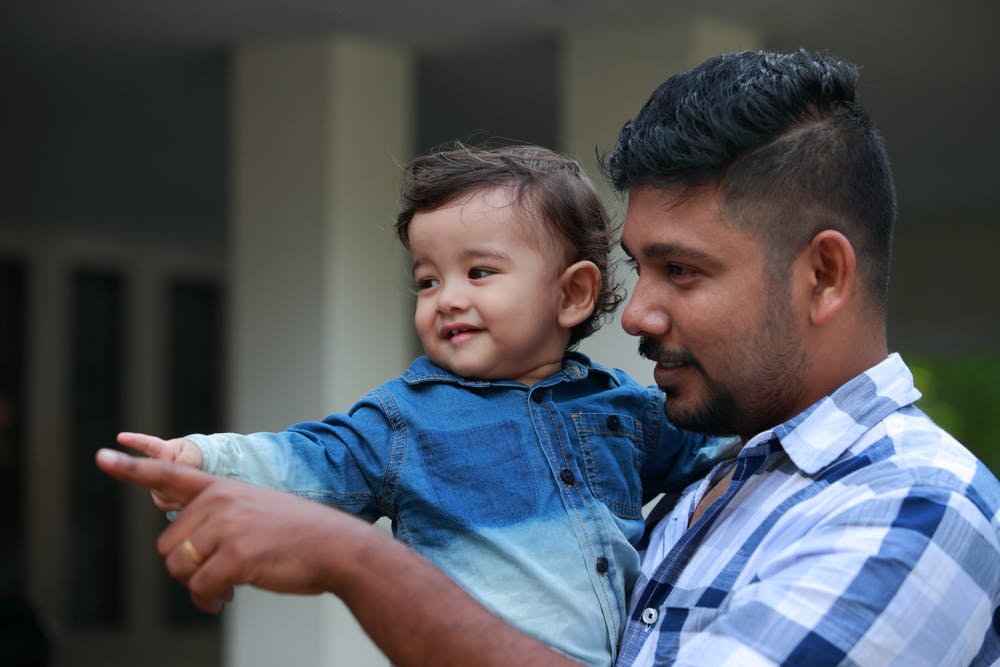 Have you ever heard someone talking to a baby with a funny voice that sounds almost like they are singing? Research suggests babies prefer it.
AJP/shutterstock
Have you ever heard someone talking to a baby with a funny voice that sounds almost like they are singing? Research suggests babies prefer it.
AJP/shutterstock
Using a sing song voice helps babies tell the difference between words like “mummy” or “daddy” because:
1) the higher pitch draws the baby’s attention to speech
2) speech sounds like “ma” and “da” are exaggerated, simplified or repeated. That gives babies a better chance at hearing the difference between them.
3) the affectionate tone of voice encourages infants to play with caregivers who draw attention to different words by speaking more loudly or slowing down their speech.
Learning a language
When babies listen to lots of speech, the connections in their brains are more sensitive to speech that is spoken in the environment around them.
So a baby who hears lots of Cantonese or Mandarin, for example, will learn that the difference in the tone of the speaker’s voice is important and can change the meaning of a word.
A baby learning English, on the other hand, will learn that the tone of a speaker’s voice does not necessarily have the same effect on meaning.
Did you know?
Parents who respond to their baby’s happy babbling sounds by imitating them or talking about the sounds they were making might be onto a good idea. Researchers found that this was linked to the baby making more complex sounds and developing language skills sooner.
 Infants can understand many words before they can say them.
Olena Yakobchuk/shutterstock
Infants can understand many words before they can say them.
Olena Yakobchuk/shutterstock
Infants can understand many words before they can say them. By nine months of age, babies can usually understand words like “bye-bye” and wave when somebody says it.
As infants get older, they babble more and their babble begins to sounds more like words than non-speech sounds.
By the time babies reach their first birthday, most infants have started to produce their first words. At one year of age, babies can usually understand as many as 50 words, and can say one or two words like “mama” or “dada”.
The story of how babies learn to talk is a fascinating one, Ella. It is amazing to think that you and I, and even your own parents were once little babies learning how to use language to communicate.
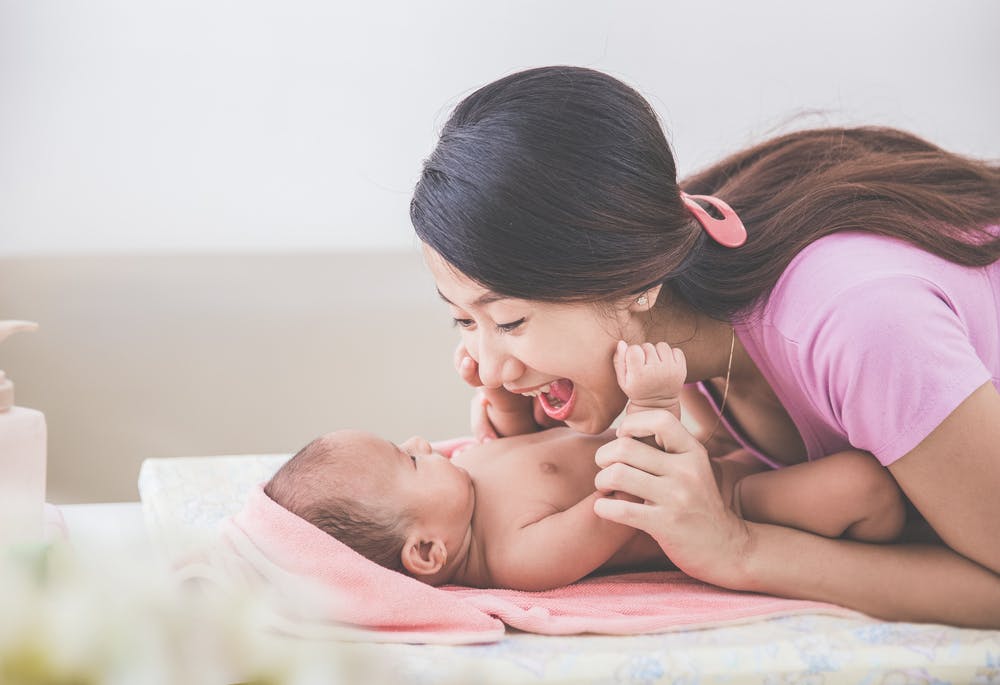 Ahhh-boo!
Shutterstock
Ahhh-boo!
Shutterstock
Read more: Curious Kids: Why do birds sing?
Hello, curious kids! Have you got a question you’d like an expert to answer? Ask an adult to send your question to curiouskids@theconversation.edu.au
 CC BY-ND
Please tell us your name, age and which city you live in. We won’t be able to answer every question but we will do our best.
CC BY-ND
Please tell us your name, age and which city you live in. We won’t be able to answer every question but we will do our best.
Authors: Christa Lam-Cassettari, Interim Leader MARCS Institute BabyLab, Western Sydney University
Read more http://theconversation.com/curious-kids-how-do-babies-learn-to-talk-111613


 Daily Bulletin


