

Why your veterinarian may refuse to euthanise your pet
- Written by: Simon Coghlan, Senior lecturer in health ethics, University of Adelaide; Research fellow in robot ethics, University of Melbourne
Vets often grapple with the moral dilemma of when a client wants to kill an inconvenient pet. Clients might, for instance, hint that caring for the pet has become too much trouble, or that it interferes with their lifestyle or living situation. This is called “convenience euthanasia”.
Most vets have no qualms about euthanasia and believe it’s necessary for animals suffering severely or threatening public safety because of uncontrollable aggression.
But vets may also feel strongly that killing animals for insufficient reasons is, though legal, contrary to their professional role.
Read more: Why you shouldn’t bury your pet in the backyard
A recent North American study found nearly 27% of vets across different practice types “sometimes or often” received what they considered inappropriate requests for ending animal lives. Most vets had received such requests at least once, only about 7% had never received them.
Just over 75% said they never or only rarely carried out “inappropriate” euthanasia.
Another 2018 study focusing on small animal practice found 83% of vets did not agree that euthanasia was always ethical.
I argue in a recent journal article vets should be strong advocates for their patients. A veterinary professional who is a strong patient advocate works diligently on behalf of animal patients to promote their interests.
As health care professionals, vets are powerfully guided by a duty to protect their patients from harm, including premature death.
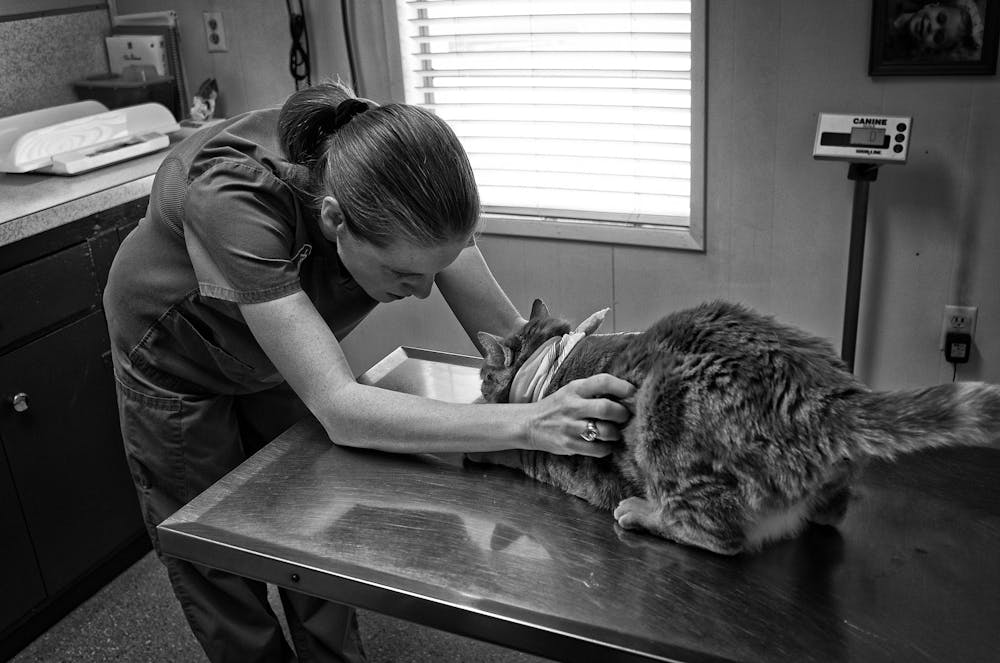 Veterinarians have a professional duty to advocate for their patients.
Anne Worner, CC BY-SA
Veterinarians have a professional duty to advocate for their patients.
Anne Worner, CC BY-SA
Moral dilemmas
Veterinary boards and associations say euthanasia is sometimes morally necessary and should occur when suffering cannot be relieved. Vets often have to persuade clients it’s time to “let go”.
It’s true some medical and behavioural conditions cannot be adequately treated. But sadly, some owners cannot afford veterinary treatment for treatable problems. This can lead to agonising moral decisions for both pet owners and veterinarians.
Some owners assume vets must administer a lethal injection to their pet on request.
But vets are free to conscientiously decline “inappropriate euthanasias”. The Guidelines of the Veterinary Practitioners Registration Board of Victoria make this professional freedom explicit:
Veterinary practitioners may refuse to euthanise animals where it is not necessary on humane grounds if they have a moral objection but must give the client the option of seeking the service elsewhere.
Euthanising healthy or treatable animals
What if the animal presented for euthanasia is healthy, or has a problem that is treatable and affordable? What if the client has overestimated the severity of the condition, refuses to explore other options, or is mistaken about the animal’s quality of life?
Read more: Vets can do more to reduce the suffering of flat-faced dog breeds
Even when requests for euthanasia go beyond mere “convenience”, they can still be deeply morally troubling for vets. This can cause moral distress to veterinarians.
Moral distress is thought to be one reason why veterinarians suffer professional burnout and compassion fatigue. In fact, vets have a higher suicide rate than the general population.
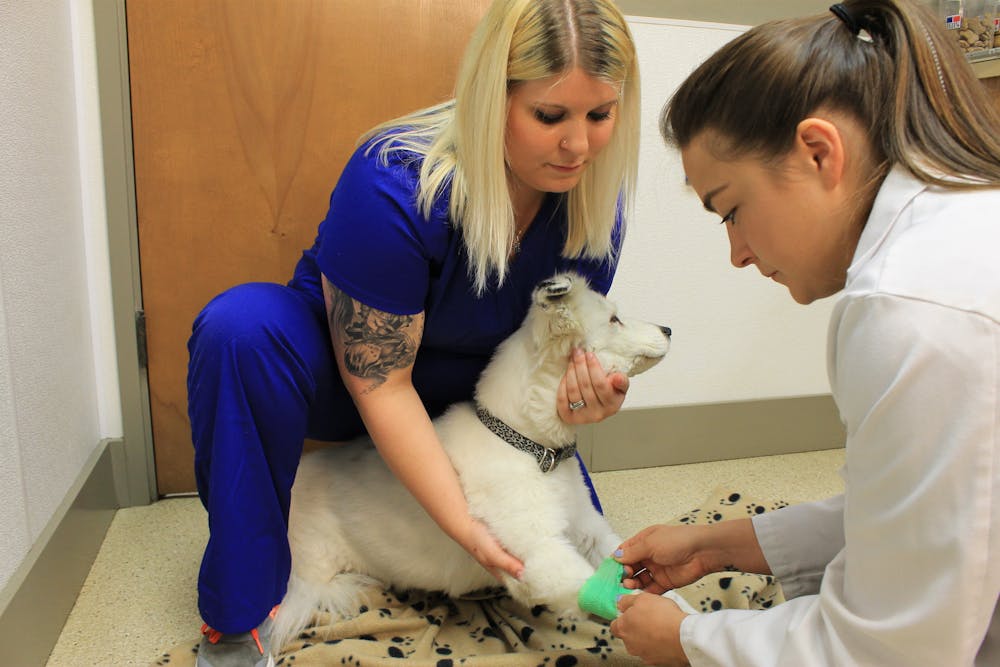 Veterinarians can decline carrying out euthanasia.
Shutterstock
Veterinarians can decline carrying out euthanasia.
Shutterstock
Of course, vets should not ignore clients’ genuine interests and should foster the bond between humans and animals. Vets should be prepared to sympathetically explore with clients why they are struggling to care for their pets, and to suggest other options where appropriate.
The problem with refusing euthanasia
Some vets worry that euthanasia refusals risk owners illegally mistreating or killing the animal themselves. This assumption may sometimes be true, but it often lacks evidence.
Read more: Pets and owners - you can learn a lot about one by studying the other
Owners absolutely intent on killing their healthy or treatable pets can still attend a willing vet clinic or animal shelter. But it is possible that in light of the vet’s clear moral stance, some owners will reconsider their decision to end their pets’ lives – now and in the future. And at least some owners will be persuaded to surrender their pet to another home.
Another concern is that conscientious objection unfairly shifts responsibility from one vet to another. But declining to kill animals for inadequate reasons should be prioritised over any notion of being “unfair” to other vets.
What’s more, many clients who love their pets may be reassured that their vet is a strong patient advocate who does not kill animals for frivolous or inadequate reasons.
So, when your pet is suffering irremediably, your veterinarian is very likely to recommend euthanasia. But when a companion animal is not ready to die, you may or may not find that your vet will, for ethical and professional reasons, decline a request to end the animal’s life. And often it will be their moral imperative to do so.
Authors: Simon Coghlan, Senior lecturer in health ethics, University of Adelaide; Research fellow in robot ethics, University of Melbourne
Read more http://theconversation.com/why-your-veterinarian-may-refuse-to-euthanise-your-pet-110263


 Daily Bulletin


