

The presence of people is slowing shark recovery on the Great Barrier Reef
- Written by: Justin Rizzari, Lecturer in Fisheries Science, Deakin University
Much of the Great Barrier Reef is legally protected in an effort to conserve and rebuild the fragile marine environment. Marine reserves are considered the gold standard for conservation, and often shape our perception of what an “undisturbed ecosystem” should look like.
However our research, published today in Frontiers in Ecology and the Environment, suggests that “no-take” marine reserves may be failing shark populations on the Great Barrier Reef.
After 40 years of protection, the average amount of reef sharks in no-take reserves (areas where fishing is forbidden but people can boat or swim) was only one-third that in strictly enforced human exclusion areas. The difference, we argue, is down to poaching, raising serious questions about the effectiveness of no-take reserves.
Read more: More than 1,200 scientists urge rethink on Australia's marine park plans
Sharks on coral reefs
Three species of shark are dominant on Indo-Pacific coral reefs: grey reef sharks, blacktip reef sharks, and whitetip reef sharks. All three of these species are considered high-level predators, but the combination of slow reproductive rates and high fishing pressure has depleted reef shark populations across much of their range.
Well-designed and enforced no-take marine reserves help rebuild reef shark populations, but it is not known whether these reserves can facilitate full recovery to baseline (unexploited) levels, or how long the recovery process might take.
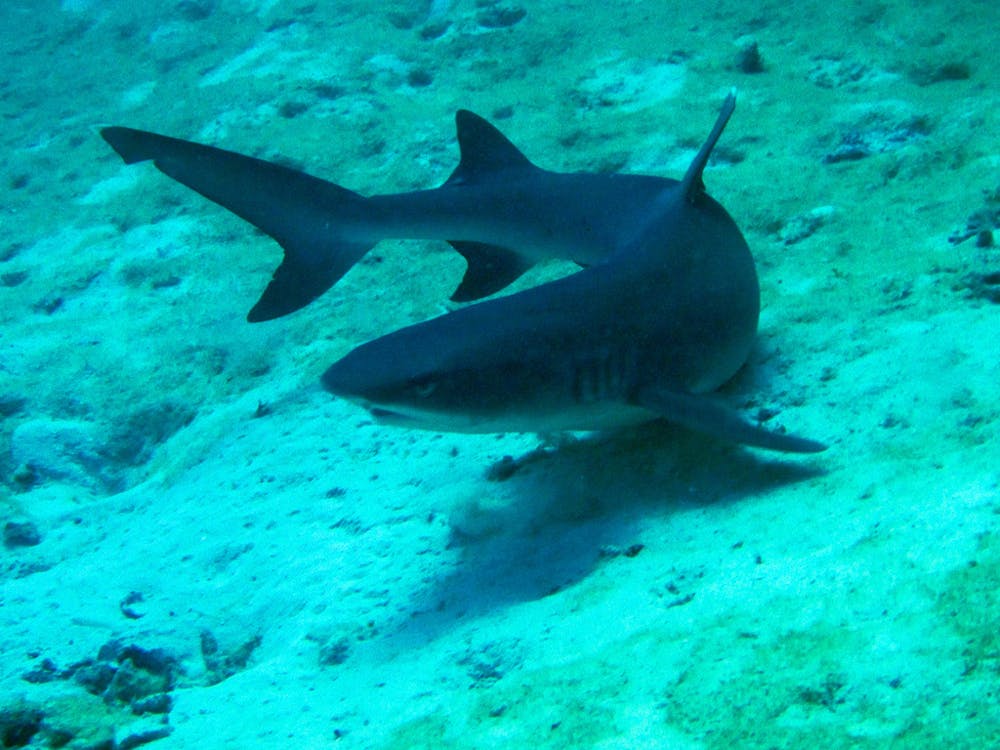 People can swim and use boats in no-take reserves.
Jon Connell/Flickr, CC BY
People can swim and use boats in no-take reserves.
Jon Connell/Flickr, CC BY
No-take marine reserves
No-take marine reserves are firmly advocated as an effective way to combat overfishing. With few exceptions, well-enforced no-take marine reserves result in rapid increases in target fish populations, leading to flow-on benefits such as better fisheries in outlying areas.
In many cases, no-take marine reserves are considered to have intact ecology and therefore drive our perceptions of what undisturbed ecosystems should look like.
The entire Great Barrier Reef was open to fishing until 1980, when no-take reserves were established. More reserves were created over the next two and a half decades, resulting in reserves that vary in age from 14-39 years. A small number of no-entry reserves, which are completely off limits to humans, were also implemented during this period to guard against the potential effects of activities such as boating and diving.
Given that fishing is prohibited in both no-take and no-entry reserves, we expected shark populations to be similar in both areas. Due to the exclusion of humans from no-entry reserves, shark populations within these areas are largely unknown and have only been assessed once, 10 years after protection.
Read more: Killing sharks is killing coral reefs too
This past research revealed that shark populations were much greater inside no-entry reserves compared to no-take reserves, but this does not allow us to determine whether recovery is ongoing or complete. The diverse ages of marine reserves within the GBR provide a unique opportunity to investigate the potential recovery of reef shark populations and evaluate the performance of no-entry and no-take reserves as tools for shark conservation.
What we found
Using underwater survey data from 11 no-take reserves and 13 no-entry reserves, we reconstructed reef shark populations through the past four decades of protection. Surprisingly, we found shark populations were substantially higher – with two-thirds more biomass – in no-entry reserves than in no-take reserves, indicating that the latter do not support near-natural shark populations.
We looked at potential drivers of shark abundance and found that coral cover, habitat complexity, reef size, distance to shore, and the distance to the nearest fished reef could not explain the large differences between no-take and no-entry reserves.
We argue the disparity between no-entry and no-take reserves is likely due to poaching in no-take reserves. Recent research found up to 18% of recreational fishers admit to fishing illegally.
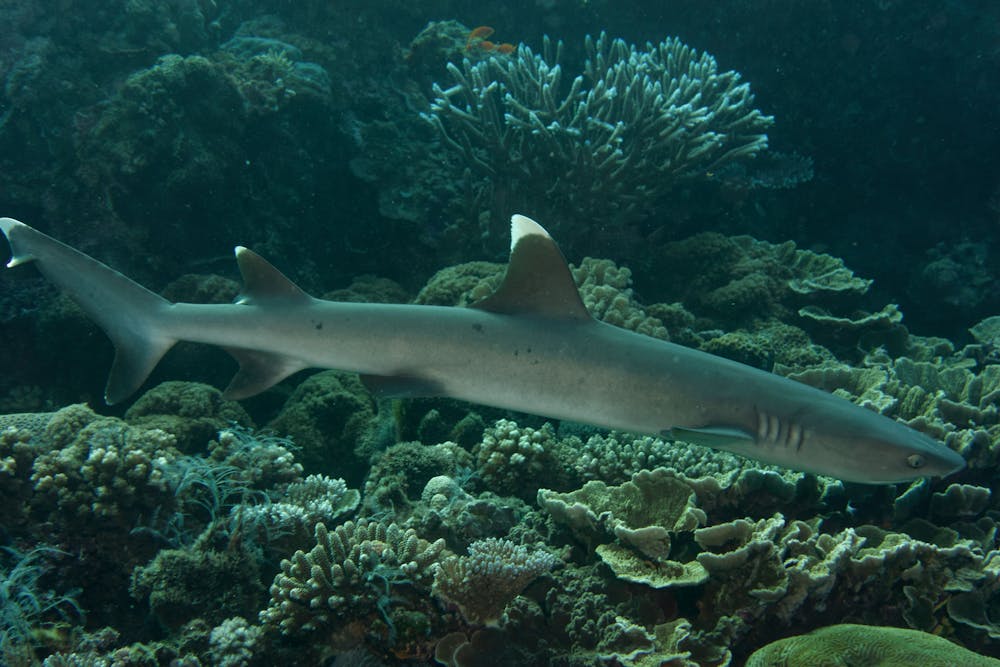 Sharks in no-take reserves are vulnerable to poaching.
Mattia Valente/Flickr, CC BY-NC-SA
Sharks in no-take reserves are vulnerable to poaching.
Mattia Valente/Flickr, CC BY-NC-SA
Enforcement of no-entry reserves is much easier than no-take reserves as evidence of fishing is not required for prosecution. On the other hand, vessels are allowed to be present in no-take reserves, leaving these areas susceptible to poaching. Given the slow reproductive rate of reef sharks, even small amounts of fishing may reduce their populations.
The Great Barrier Reef is one of the most intensely managed marine parks in the world. Despite this, our results reveal that no-take reserves fall well short of restoring shark populations to near-natural levels, and that up to 40 years of strong protection is required to rebuild shark populations.
These results also highlight that no-take marine reserves inadequately reflect ecological baselines and that we may need to reevaluate what we consider to be a natural, intact reef ecosystem.
Read more: The majority of people who see poaching in marine parks say nothing
While the creation of more and larger no-entry reserves may solve the problem, this approach is likely to be unpopular and politically undesirable. An alternative approach, would be to tackle poaching by enlisting fishing communities in the fight against illegal fishing, better education, and increasing enforcement.
Authors: Justin Rizzari, Lecturer in Fisheries Science, Deakin University


 Daily Bulletin


