

Culture wars reignite, but in the end it's all about the money
- Written by: Tim Pitman, Senior Researcher Fellow, Curtin University
This is a longer read at just over 1,300 words. Enjoy!
In 2018, the relationship between the Australian higher education sector and the federal government finished as it began: with the announcements of more funding cuts.
In between these financial bookends, the sector experienced somewhat of a culture war revival. Debate raged over Western civilisation values, academic freedom and what research was considered to be in the national interest.
We begin with a funding cut in late 2017
In late 2017, the federal government announced that funding for Commonwealth-supported places in 2018 would be capped at 2017 levels. This decision was designed to limit increases to higher education spending without needing to repeal the demand-driven system, a bill that the government believed might not pass the Senate.
Institutions could continue to enrol as many students as they wished. But they would not be funded for the extra numbers.
Unsurprisingly, the sector reacted angrily to the A$2.1 billion in cuts, warning these “would result in a smaller share of Australians having the chance of a university education in future”.
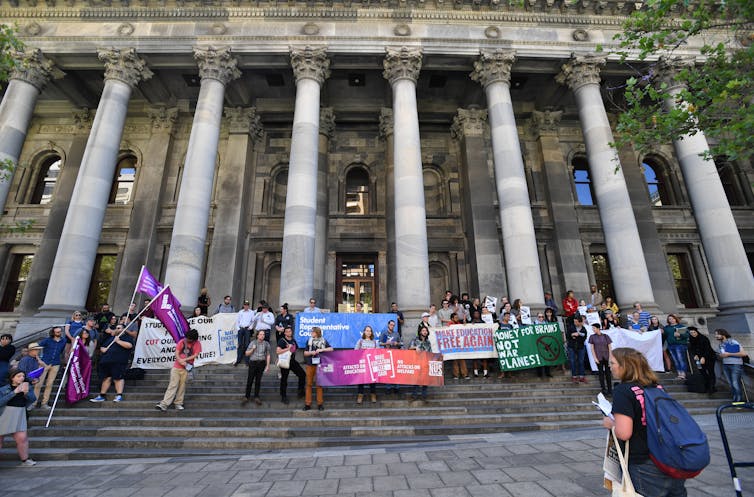 Protesters gathered in Adelaide early this year to protest the government’s cuts to university funding.
David Mariuz/AAP
Protesters gathered in Adelaide early this year to protest the government’s cuts to university funding.
David Mariuz/AAP
In response, the government argued the freeze was necessary to ensure the viability of the sector so “future generations also get to go to university with no upfront fees”.
Almost one year on, the actual impact of the funding freeze is not yet clear. This is because official enrolment figures for 2018 will not be released until 2019.
Furthermore, as some universities had already made strategic decisions on future enrolment levels, it may take some time for the effects to fully flow through the system – should a future government not reverse the cuts.
Academic freedom … again
Money aside, two words sum up a year’s worth of interaction between the government and the Australian higher education sector: “academic freedom”.
In reality, this is a perennial debate. The only thing that changes from year to year is what issue will be the tinder and where the spark will come from.
In 2018, there were two primary sources. The first had its roots in a cultural battle dating back to 2011, when Tony Abbott – then opposition leader and future prime minister – reportedly started discussing with billionaire Paul Ramsay the possibility of funding a Western civilisation university program based around reading the “great books” of the tradition.
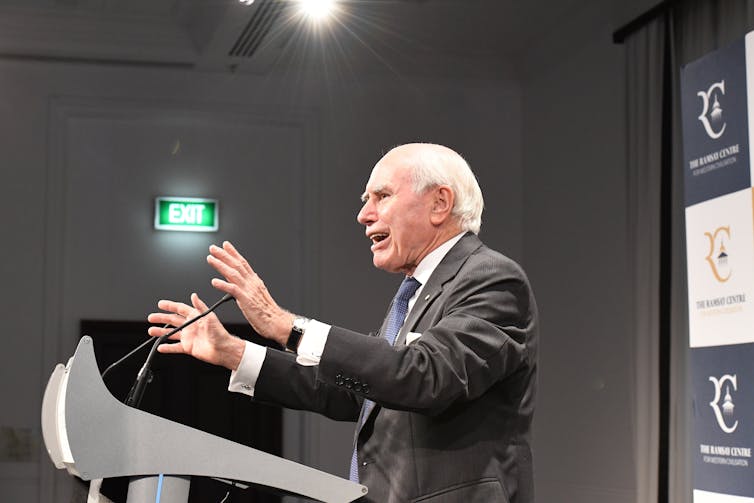 Former prime minister John Howard speaking at the launch of the Ramsay Centre for Western Civilisation in Sydney.
Peter Rae/AAP
Former prime minister John Howard speaking at the launch of the Ramsay Centre for Western Civilisation in Sydney.
Peter Rae/AAP
The Ramsay Centre for Western Civilisation was established in March 2017. In early 2018, negotiations began with the Australian National University (ANU) to develop and run course offerings.
From the outset critics of the program saw it as an ideological rather than educational venture. In evidence, they pointed to Abbott’s own statements, such as:
The key to understanding the Ramsay Centre for Western Civilisation is that it’s not merely about Western civilisation but in favour of it.
Concerns about the erosion of academic freedom and standards were raised and eventually ANU withdrew from negotiations, stating:
… alarm bells rang … as the Ramsay Centre continued to propose amendments to the evolving draft MOU, which amounted to more and more control over key academic matters.
Responding to this, Liberal Senator James Paterson called for universities to face fines for failing to uphold free speech. He argued financial penalties “would go some way to preventing the ‘administrative cowardice’ behind the Australian National University’s decision”.
The Ramsay Centre turned to the University of Sydney to host the program. A name change to the course was offered, but the same concerns arose.
The issue simmered throughout the latter half of the year until December, when the University of Wollongong announced it would host the centre. Wollongong academics immediately criticised the decision. The issue is almost certain to percolate into and beyond 2019.
Read more: The concept of 'Western civilisation' is past its use-by date in university humanities departments
Ministerial intervention in research grants
While the Ramsay Centre issue revolved around the control exerted by private funders over higher education teaching, the second issue inflaming the culture wars debate in 2018 concerned taxpayer-funded research.
In October, many Australian scholars were outraged to discover the former federal education minister, Simon Birmingham, had personally intervened to reject several Australian Research Council (ARC) funding grants.
The ARC is one of the peak bodies for allocating research funds and being awarded an ARC research grant is akin to winning Olympic gold for many scholars. It’s not an overstatement to say that, in many cases, academic careers are made or broken by grants (or lack thereof) won through the ARC.
The fact that all the grants Birmingham had rejected were humanities projects didn’t go unnoticed. Attacking the decisions, ALP Senator Kim Carr tweeted:
In support of his decision, Birmingham argued:
I‘m pretty sure most Australian taxpayers preferred their funding to be used for research other than spending A$223,000 on projects like ‘Post orientalist arts of the Strait of Gibraltar’.
Many peak academic, research and teaching organisations issued denunciations of Birmingham’s action. They pointed out not only had the peer-reviewed funding recommendations been overturned, the researchers in question had not been told this was due to ministerial veto (as opposed, for example, to reasons of academic rigour or the quality of the research).
The public universities called on the new federal education minister, Dan Tehan, to follow expert advice and not veto any grants in the future. Tehan declined to offer this assurance, but said he would instruct the ARC to let researchers know in the future when the minister had vetoed their grant.
Read more: Simon Birmingham's intervention in research funding is not unprecedented, but dangerous
Australian universities rated on freedom of speech
The year-long debate surrounding academic freedom culminated in a report released in December by the Institute for Public Affairs (IPA). It rated each Australian university in terms of policies specifically enacted to protect free speech and/or policies hostile to free speech on campus.
The report headlined 35 out of Australia’s 42 universities were “red-rated” for policies and actions hostile to free speech on campus. This, said the IPA, was an increase from 33 in 2016 and 34 in 2017.
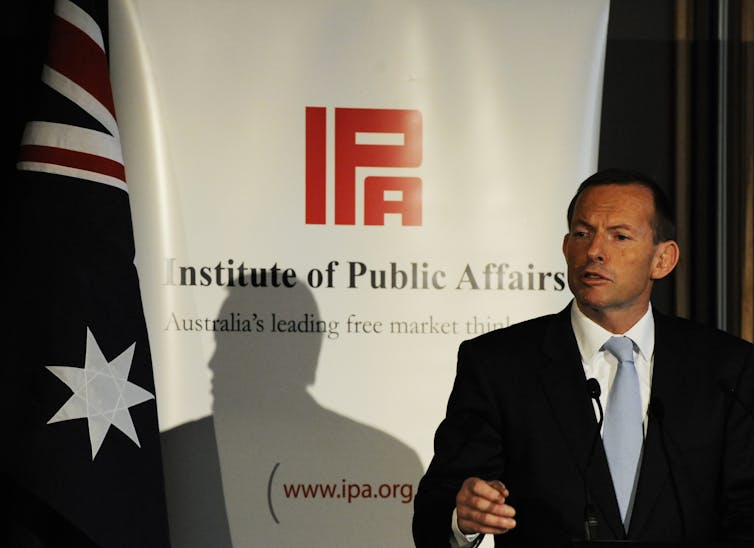 Former prime minister Tony Abbott speaking to an Institute of Public Affairs audience in Sydney.
Mick Tsikas/AAP
Former prime minister Tony Abbott speaking to an Institute of Public Affairs audience in Sydney.
Mick Tsikas/AAP
Critics of the report, including Glyn Davis, the former vice-chancellor of Melbourne University, responded that the report was US-centric and not reflective of the Australian experience. On the wider issue of academic freedom, Davis noted that many times cases were offered as evidence of wider trends without providing evidence for those trends. He clarified that the separate issues of academic freedom and freedom of speech are frequently conflated.
More coal in university Christmas stockings
And finally, just as it did the year before, the government’s midyear budget update previewed a further A$328.5 million in funding cuts, this time to university research. The government claimed this would allow it to allocate additional spending for teaching at regional universities. But Universities Australia labelled it a “ram raid”.
Read more: MYEFO rips A$130 million per year from research funding despite budget surplus
So, higher education policy in 2018 was mostly about arguments over money and academic freedom. Then again, there’s nothing new in that.
Recommended reading from The Conversation in 2018
Read more: To fix higher education funding, we also need to fix vocational education
Read more: Six things Labor’s review of tertiary education should consider
Authors: Tim Pitman, Senior Researcher Fellow, Curtin University


 Daily Bulletin


