

Driverless cars really do have health and safety benefits, if only people knew
- Written by: Simone Pettigrew, Professor, School of Psychology, Curtin University
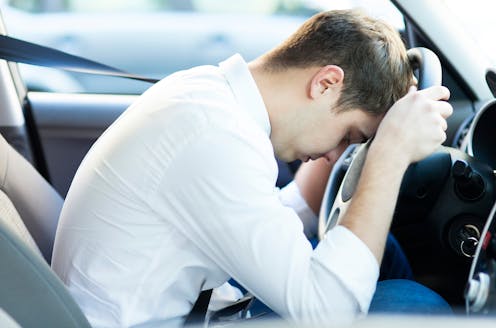
Driverless cars promise many benefits, including an improvement in safety, but new research shows many people are still not aware of this.
A paper, co-authored by me and published today in the Australian and New Zealand Journal of Public Health, reports that almost two thirds (63%) of the 1,624 people surveyed had neutral or negative attitudes towards driverless cars.
Men were more positive than women about driverless cars.
Read more: We asked people if they would trust driverless cars
There was some but little change in response depending on the age of people surveyed.
Interestingly, more non-drivers (46%) than drivers (37%) had a positive response to driverless cars (though drivers represented the majority (96%) of the total people surveyed).
When asked to explain their feelings, very few people surveyed appeared to be aware of the substantial social benefits that may be the likely outcomes of the wide-scale use of autonomous vehicles.
Some (21%) thought there would be fewer crashes, but others (13%) predicted more accidents on our roads. Virtually no-one mentioned increased mobility for the elderly and disabled, emission reduction or stress reduction. Not a single respondent reported that cyclists would be safer.
The driverless future
Yet driverless cars are coming, and they’re going to change our lives. For some of us, the changes will be enormous and liberating. Once fully implemented, autonomous vehicles are projected to prevent more than 1,000 deaths and 30,000 hospitalisations each year in Australia and save the economy more than A$16 billion a year in crash-related costs alone.
But their effects will be much greater than just preventing accidents. Autonomous vehicles have the potential to greatly reduce traffic emissions, cyclists will likely be safer once cars can carefully monitor their movements, road rage will be less likely, and those who can’t drive will have unprecedented freedom to move around.
We are fascinated by these new forms of technology, and a bit terrified as well. The few accidents to date have received massive coverage, despite more than 1.25 million people dying on the roads globally each year with little notice.
But how much do we think about the positive aspects of a world where cars (and potentially buses) come to us and deliver us to our destinations while we work, rest, or play during transit?
Attitudes change with information
The picture looks very different when people are invited to contemplate the likelihood of specific social benefits of driverless cars.
In the same survey, we found people’s attitudes changed once they were asked to consider the various positive outcomes, and were prompted with specific examples.
Around half of the respondents then agreed autonomous vehicles are likely to result in fewer accidents, reduced stress levels while in transit, lower emissions, and greater safety for cyclists.
Of note is that the figure was much higher for belief in the benefits for the elderly and disabled. Almost three-quarters of respondents agreed enhanced mobility for these groups was a likely outcome.
This high level of prompted understanding of the benefits of driverless cars for older people is important for countries, such as Australia, that have rapidly ageing populations.
As more of us are unable to hold a license due to the effects of ageing on our vision and cognitive faculties, vehicle autonomy is arriving just in time.
Staying socially connected is a vital part of healthy ageing. Becoming isolated and dependent in later life is associated with greater illness and a shorter lifespan. This illustrates maintaining our ability to get ourselves out and about through the use of driverless cars could be a massive boon to older generations.
Of course those with vision impairments and other disabilities that prevent driving may benefit hugely from being able to independently control their own transport.
Driverless cars can help those not able to drive.So who will really benefit?
Although the community can see (when prompted) the advantages of autonomous cars for the elderly and disabled, a key question is whether these potential benefits will be optimised in the roll-out of driverless cars.
The private sector dominates the development and implementation of driverless cars at the moment, with tech giants Google, Uber, Tesla and others pushing ahead. That means the well-being of vulnerable groups that are less likely to be cashed up is unlikely to be a priority.
Read more: Preliminary report on Uber's driverless car fatality shows the need for tougher regulatory controls
There is an obvious role for government in ensuring driverless cars bring advantages to society as a whole, and vulnerable population segments in particular.
The survey results indicate the public would be on-side if efforts are made to inform them of the benefits that should result from the wide-scale introduction of autonomous vehicles, and how these benefits will be spread across society as well as among those who most need assistance.
The potential savings to the economy alone should make this an important and pressing task.
Authors: Simone Pettigrew, Professor, School of Psychology, Curtin University


 Daily Bulletin


