

Read The Times Australia

Daily Bulletin

New Zealand puts an end to new permits for exploration of deep-sea oil and gas reserves

  • Written by: James Renwick, Professor, Physical Geography (climate science), Victoria University of Wellington
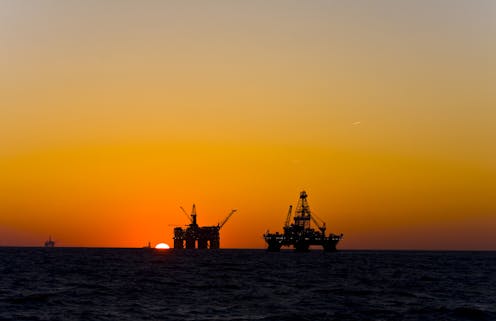
New Zealand puts an end to new permits for exploration of deep-sea oil and gas reserves

The New Zealand government’s announcement that it will not issue any new permits for offshore exploration for oil and gas deposits is exciting, and a step in the right direction.

We know that we can’t afford to burn much more oil if we want to meet the Paris Agreement target of keeping global temperature rise this century well below two degrees above pre-industrial levels. Almost all of the already known reserves must stay in the ground, and there is no room to go exploring for more.

Pursuing further reserves would only lead to stranded assets and would waste time and resources in the short term.

Read more: Why New Zealand should not explore for more natural gas reserves

Moving away from fossil fuels

New Zealand currently has 31 active permits for oil and gas exploration, and 22 of these are offshore. A program set up by the previous government invites bids each year for new onshore and offshore exploration permits. But this year it is restricted to the onshore Taranaki Basin, on the west coast of the North Island.

Complementing the move to shut down the exploration of new deep-sea fossil fuel reserves, the government’s new transport funding plan aims to reduce demand for fossil fuels by putting emphasis on public transport, cycling and walking.

This gets away from the outdated mantra of more roads and more cars that we have seen over the past decade and will tackle the transport sector, which has seen very rapid growth in emissions since 1990. This will help New Zealand onto a low-carbon pathway and promises a more people-focused future.

New Zealand is a small player in global emissions of greenhouse gases but our actions can carry symbolic weight on the world stage. Given our present position of 80% renewable electricity and an abundance of solar, wind, wave and tidal energy, if any country can become zero-carbon, surely New Zealand can. It can only benefit New Zealand - socially, economically and politically - to lead in this crucial race to stabilise the climate.

Read more: A new approach to emissions trading in a post-Paris climate

Rising emissions

As the government announced its ban on new offshore exploration permits, the latest greenhouse gas inventory was also released, showing some good news. New Zealand’s gross emissions went down slightly from 2015 to 2016.

But gross emissions are up nearly 20% since 1990, and net emissions (actual emissions minus the “sinks” from forestry) are up 54% over that time. The main factors that contributed to the increase were dairy intensification and increased transport and energy emissions.

Even though agriculture is still the largest source of emissions overall, energy and transport are close behind. We have seen a near-doubling in carbon dioxide emissions from road transport over the past 27 years.

It is encouraging to see a decrease in emissions from the waste sector. Per head of population, New Zealanders throw away significantly above the OECD average of rubbish, a lot of which is green waste that decomposes and releases methane, another potent but short-lived greenhouse gas.

While New Zealand emits a tiny fraction of the world’s greenhouse gases, on a per-capita basis we are sixth-highest among developed countries. We have as much responsibility as any country to reduce our emissions.

Even though emissions have risen, we are set to meet our national target for 2020 (a 5% reduction on 1990 levels) because of “carry-over” credits from the first Kyoto reporting period from 2008 to 2012. But to live up to more stringent future targets, we need a lot more action than we’ve seen over the last decade. The government plans to introduce zero-carbon legislation that will commit New Zealand to reaching the goal of carbn neutrality by 2050.

This will require serious investment and commitment to renewable technologies, changes in the transport sector, changes to agriculture and land use, and ultimately changes in the way we all live our lives.

Authors: James Renwick, Professor, Physical Geography (climate science), Victoria University of Wellington

Read more http://theconversation.com/new-zealand-puts-an-end-to-new-permits-for-exploration-of-deep-sea-oil-and-gas-reserves-94921

Business News

Australian organisations are relying on business continuity plans built for a far more predictable world

Tariff escalations, supply chain fragility, geopolitical events, and the ongoing threat of cyber disruption have reshaped the risk environment facing Australian organisations. The problem is that ma...

Daily Bulletin - avatar Daily Bulletin

How to Rent a Car for Uber in Melbourne: What Every New Driver Needs to Know

Starting out as an Uber driver in Melbourne is not as complicated as it sounds but getting the vehicle right is where most new drivers get stuck. Uber has strict requirements around vehicle age, condi...

Daily Bulletin - avatar Daily Bulletin

When Should You Speak to a Lawyer About a Legal Issue?

Legal issues can begin with a simple question, then become harder to manage once formal steps are involved. Many people wait until a matter feels urgent before seeking guidance, even though earlier ...

Daily Bulletin - avatar Daily Bulletin

The strategic rise of Bali as Australia’s next essential healthcare support hub

As Australian healthcare providers grapple with unprecedented operational bottlenecks, a new nearshore model is quietly transforming patient care delivery. Forward-thinking organisations,  including...

Daily Bulletin - avatar Daily Bulletin

Cost Savings and Benefits of Using Used Pallets in Logistics

In today’s competitive logistics and supply chain industry, businesses are constantly looking for ways to reduce operational costs without compromising efficiency and reliability. One of the most prac...

Daily Bulletin - avatar Daily Bulletin

How Fulfilment Services in Australia Help Businesses Scale Efficiently

The growth of e-commerce and modern retail has transformed customer expectations. Consumers now expect fast shipping, accurate order processing, and seamless delivery experiences regardless of where...

Daily Bulletin - avatar Daily Bulletin

Practical Ways Australian Workplaces Can Reduce Operating Costs

Reducing business costs doesn’t always mean cutting staff, shrinking services or making the workplace feel bare-bones. In many cases, the smarter savings are hiding in everyday operations: the light...

Daily Bulletin - avatar Daily Bulletin

Executive Recruitment Solutions That Help Organisations Secure Exceptional Leaders

Leadership has a direct impact on organisational performance, employee engagement, strategic growth, and long-term success. Businesses operating in increasingly competitive environments require experi...

Daily Bulletin - avatar Daily Bulletin

Why A WooCommerce Website Designer Matters For Online Growth

Running an online store today requires more than simply listing products and waiting for customers to arrive. Businesses need a website that is fast, reliable, easy to navigate, and designed to suppor...

Daily Bulletin - avatar Daily Bulletin

The Daily Magazine

DIY Rodent Control Vs Professional Help: When Is It Time To Call The Experts?

Rodents are one of the most frustrating pest problems for Australian property owners. Rats and mic...

Lighting Shop in Perth: How The Right Lighting Can Transform Your Home And Business

The right lighting can completely change the look, feel, and functionality of any space. Whether it ...

Traffic Light System Solutions For Safer And More Efficient Traffic Management

Modern cities and growing communities rely heavily on effective traffic management to ensure safety...

Gold Migration Lawyers in Liquidation: How the Closure Affects Your ART Appeal

If your appeal was with Gold Migration Lawyers, a recent change to how the Tribunal decides cases ...

The pressure cooker: life in urban Australia in 2026

Australian cities have always been demanding. Long commutes, rising housing costs, busy schedules a...

What Actually Makes a Good Criminal Lawyer in Melbourne

Most people only think about this question once. That is usually too late. Most people charged wi...

Why Working With A Chatswood Tutor Can Improve Academic Performance

Academic expectations continue increasing for students across primary school, high school, and senio...

Is It Worth Getting Solar Panels in Melbourne?

The real question is not whether solar works in Melbourne. It works. The question is what it is co...

How A Diploma Of Project Management Builds Practical Skills For Modern Work Environments

Developing the ability to plan, execute, and deliver outcomes efficiently is a key requirement in to...