

Should emissions from coal burned overseas be considered in Australian mine approvals? For the first time, the High Court will decide
- Written by: Maria Nawaz, Project Lead, Australian Climate Accountability Project at the UNSW Australian Human Rights Institute, UNSW Sydney
Australia’s High Court will today hear its first ever climate case. It could have real implications for fossil fuel producers across the country.
The nation’s highest court has been asked to decide whether decision-makers must consider the likely climate impacts of fossil fuel projects on the communities where the mines operate.
The case revolves around a single coal mine in New South Wales, but it could have a much wider impact. When the High Court makes a ruling, it sets binding legal precedents. The outcome could directly shape how coal and gas projects are assessed in NSW – by requiring local climate impacts to be taken into account – and influence other states and territories.
This case comes after the International Court of Justice last year found nations are legally obliged to prevent harms caused by climate change. Recent advances in climate attribution science make it possible to link emissions from individual fossil fuel projects to measurable climate damage, such as extreme heat, heat-related deaths and coral reef loss.
We won’t know the legal outcome for some time. But one thing is certain – this case will have influence.
What’s this case about?
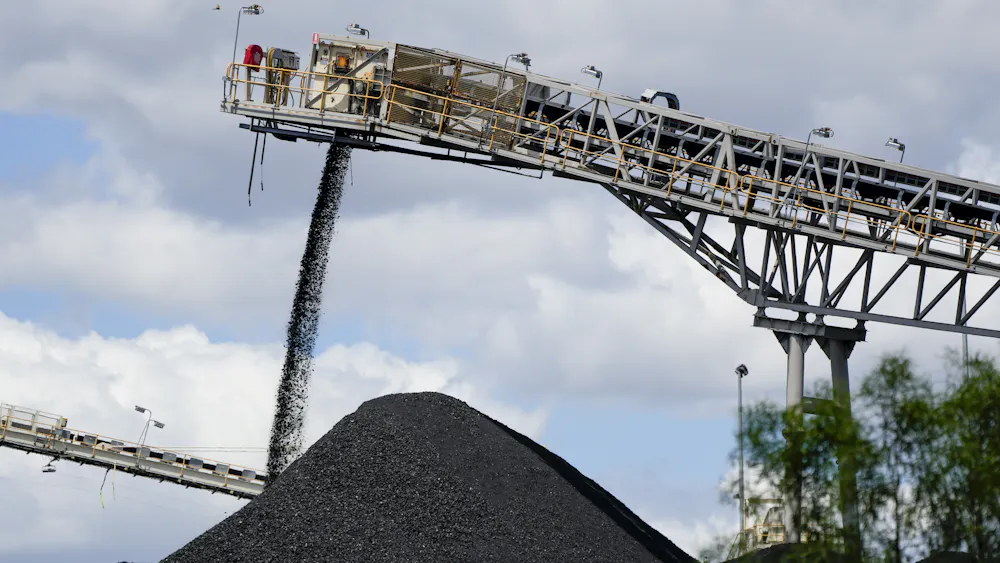
In 2021, coal miner MACH Energy sought approval from NSW authorities to keep its Mount Pleasant Coal mine open until 2048 and expand operations.
The extension would make Mount Pleasant the biggest open-cut coal mine in the state and result in an estimated 406 million tonnes more mined coal. Of this, 98% would be exported and burned overseas. These exported emissions are known as “Scope 3” emissions. They don’t count towards Australia’s domestic emissions tally.
The NSW Independent Planning Commission approved the extension of the mine in 2022, after considering the climate effect of the remaining 2% of emissions occurring within Australia but not the 98% burned overseas.
In 2022, a local community group challenged the approval, arguing the planning commission had failed to consider the likely impacts of Scope 3 emissions in contributing to local environmental impacts. Possible impacts include heatwaves, bushfires, droughts and floods.
The community group lost at the NSW Land and Environment Court, but won on appeal last year. In its findings, the NSW Court of Appeal held that while climate change is a global phenomenon, the planning commission was still required to consider the causal link between the project and likely local impacts of climate change.
MACH Energy appealed to the High Court, arguing the law does not require decision-makers to consider local environmental impacts when assessing a project or to conduct a causal inquiry as to the impacts of climate change.

What’s the context?
Australia is a giant gas and coal exporter. It ranks as the world’s second largest exporter of emissions, behind only Russia.
Australian state and territory governments routinely greenlight new fossil fuel export projects – even while working to cut domestic emissions.
To date, Australian courts assessing fossil fuel proposals have generally considered Scope 3 emissions, and the resulting climate impacts, under public interest assessments that evaluate whether a project provides a net benefit to the community.
For example, in the landmark 2019 Rocky Hill case, the NSW Land and Environment Court refused a proposed coal mine partly on climate grounds. It found the Scope 3 emissions of a mine must be considered in the public interest assessment.
One reason the MACH Energy High Court case is significant is because it’s the first time the courts have been asked to decide whether emissions from Australian coal burned overseas have to be considered in assessing likely impacts local to the mine site.
International law in the High Court?
The case is unfolding in the wake of last year’s landmark Advisory Opinion from the world’s top court, which found:
Failure of a state to take appropriate action to protect the climate system from […] emissions – including through fossil fuel production […] – may constitute an internationally wrongful act which is attributable to that state.
The International Court of Justice (ICJ) noted that establishing a causal link between emissions and climate harms “is not impossible”.
A rare unanimous decision of all 15 ICJ judges, these findings are authoritative. They represent a clear statement of the obligations of international law in relation to climate change.
The MACH Energy case will be the first time arguments about this international Advisory Opinion will be considered in Australia’s highest court.
Three international parties been granted leave to appear as amici curiae (“friends of the court”) at the High Court, in a sign of the global significance of the case. These include the Sabin Center for Climate Change Law and the Union of Concerned Scientists, both based in the United States.
What’s at stake?
The NSW policy landscape has shifted considerably since the coal mine extension was originally granted in 2022. In 2023, the state legislated emissions reduction targets and created the Net Zero Commission to advise whether departmental policies align with these targets.
Last year, the Net Zero Commission warned:
Continued extensions or expansions to coal mining in NSW are not consistent with the emissions reduction targets in the Climate Change Act or the Paris Agreement temperature goals it gives effect to.
In March this year, the NSW Labor government announced a ban on new coal mines – but kept the door open for future extension or expansion of existing coal mines. In April, the state government announced plans to open up new areas for gas exploration.
The High Court case is taking place against this complex policy backdrop. The court’s decision could establish a precedent that the full climate impacts of fossil fuel projects must be assessed in the local area, including emissions from fuel burned overseas.
Or it could keep the status quo, where the impact of Scope 3 emissions on the local area aren’t given significant weight.
Communities, boardrooms and governments will be watching closely when the High Court hands down its decision. Given Australia’s role as a major fossil fuel exporter, the world will be watching too.
Authors: Maria Nawaz, Project Lead, Australian Climate Accountability Project at the UNSW Australian Human Rights Institute, UNSW Sydney


 Daily Bulletin


