

Government is “Selling the Sizzle Without the Sausage” in EV Policy, Warns Automotive Expert Raffy Sgroi
The Federal Government announcement (on 5 May 2026) re “fairer tax treatment to encourage affordable electric vehicles” is being positioned as a major step toward cheaper EVs and faster adoption.
But there is a growing gap between what is being sold to Australians and what the system is actually capable of delivering.
Right now, we are being sold the sizzle but without any real clarity on the sausage – that is, the infrastructure, the safety assurance, the servicing networks, and the long-term costs that sit behind mass EV ownership.
We are incentivising rapid EV adoption without having the infrastructure, regulatory consistency, or safety validation systems to properly support it.
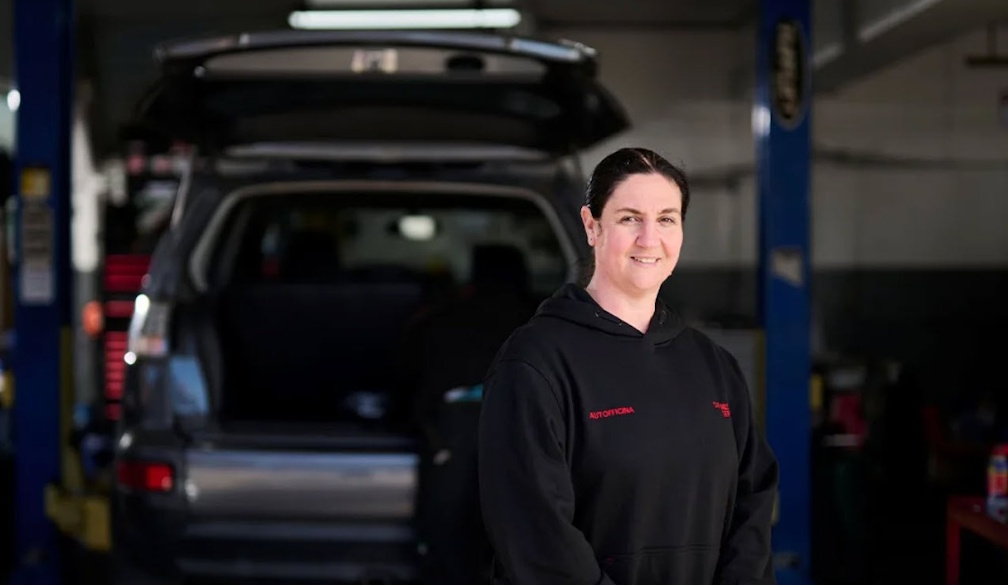
As an automotive expert, a vocal advocate for independent repairers, and someone who serves on several federal and state advisory committees shaping automotive safety and policy, I see firsthand where the system is strong, and where it is dangerously behind.
I am also co-founder and CEO of Canberra-based Car Mechanical Services, a multi-award-winning small business I have led for more than two decades. From that vantage point, the gap between policy ambition and workshop reality is impossible to ignore.
At the heart of this issue is not just affordability, but assurance.
Electric vehicles are no longer simple mechanical products. They are software-driven systems, constantly updated, connected, and increasingly complex. That raises a critical question: how do we independently verify their safety and performance at scale once they are on Australian roads?
Unlike jurisdictions such as the EU and parts of the United States, Australia does not yet require comprehensive real-world transparency reporting on vehicle software performance, including system disengagements, near misses, or long-term behavioural data.
In a software-defined vehicle era, we are no longer just importing cars. We are importing rolling data systems with limited independent visibility.
That concern becomes more relevant as lower-cost Chinese-imported EVs enter the market at scale.
The Government has recently taken strong action on technology security in other contexts, including removing surveillance equipment from Parliament House over espionage concerns linked to foreign technology risks. That raises a broader and fair question for consumers: how do we approach trust, transparency, and visibility in increasingly connected vehicles?
Not all risk is the same but the principle is consistent: when systems are embedded, connected, and continuously updated, oversight matters.
At the same time, Australia’s EV pricing narrative often focuses on upfront affordability. But cost does not disappear. Rather, it shifts.
Insurance is already emerging as a key pressure point, with insurers assessing long-term battery replacement cycles, software-related faults, and increasingly expensive repair pathways. Those costs will ultimately flow back to consumers.
Lower purchase prices don’t remove cost. Lower purchase prices just redistribute it across insurance, repairs, and long-term ownership risk.
Then there is the battery reality.
EV batteries degrade over time. Much like the batteries within smartphones and other such consumer electronics, performance declines with age, and replacement becomes necessary. In some cases, that replacement cost can represent a significant proportion of the vehicle’s value.
For everyday Australians, that raises a serious question about long-term viability - not just purchase price.
Infrastructure adds another significant layer of complexity.
Across Australia, charging remains heavily concentrated in major cities, while regional areas and outer suburbs continue to lag behind. National coordination remains fragmented between federal and state systems, resulting in inconsistent rollout and uneven access.
We are building a national EV transition on fragmented infrastructure and inconsistent state-based policies.
Housing is another overlooked barrier. Many strata and apartment buildings are not currently willing or able to install EV charging infrastructure without major cost disputes, governance challenges, or lengthy approval processes.
For many Australians, EV ownership is determined not just by income but by where they live.
There is also a growing uncertainty around servicing capacity and parts availability, particularly if EV uptake accelerates faster than local repair ecosystems can scale.
As someone deeply embedded in the independent repair sector, this is a critical blind spot. We have not yet ensured that workshops, technicians, and supply chains are prepared for the volume or complexity of EV servicing demand.
We have seen similar challenges in other imported vehicle markets where spare parts and servicing networks lag behind demand. That risk becomes more significant when vehicles are highly software-dependent and manufacturer-controlled.
Consumers assume full lifecycle support but in reality, that support system is still catching up.
Internationally, leading EV markets took a different approach. They built infrastructure first, strengthened regulatory oversight and transparency, and then scaled incentives. Whereas Australia is attempting all three at once, without yet having the system maturity to support it.
The result is a policy mismatch: fast-moving incentives layered over slow-moving infrastructure and evolving regulation.
Affordability without readiness is not transition. Affordability without readiness is in-fact, acceleration without safeguards.
If Australia is serious about electric vehicle adoption, the focus must shift beyond price incentives and toward system integrity. It must refocus on infrastructure rollout, national consistency, transparency standards, and honest disclosure of full lifecycle costs including batteries, insurance, servicing, and home readiness.
Otherwise, we risk building a transport future that looks appealing in the showroom but becomes far more complicated once consumers are left holding the keys.
— Raffy Sgroi
Automotive expert | CEO, Car Mechanical Services | Independent repairer advocate | Federal & state automotive advisory committee member


 Daily Bulletin


